The Battle of Vicksburg Civil War Museum
How do you inspire empathy within a contested history?
- Institution
- The Battle of Vicksburg Civil War Museum
- Location and Date
- Vicksburg, MississippiConcept & Design Development, 2026
- Role
- Executive Creative Director
- Press
4 articles
- Responsibilities led
- Experience strategyNarrative and interpretive directionIntegrated experience designTeam and client leadership
Overview
The museum presents the Battle of Vicksburg through the lives of the people who experienced it. Interwoven stories of soldiers and civilians reveal how war reshaped individual lives, families, and the city itself. Immersive media, artifacts, and personal accounts create empathy within a divided history without simplifying the conflict or its consequences.
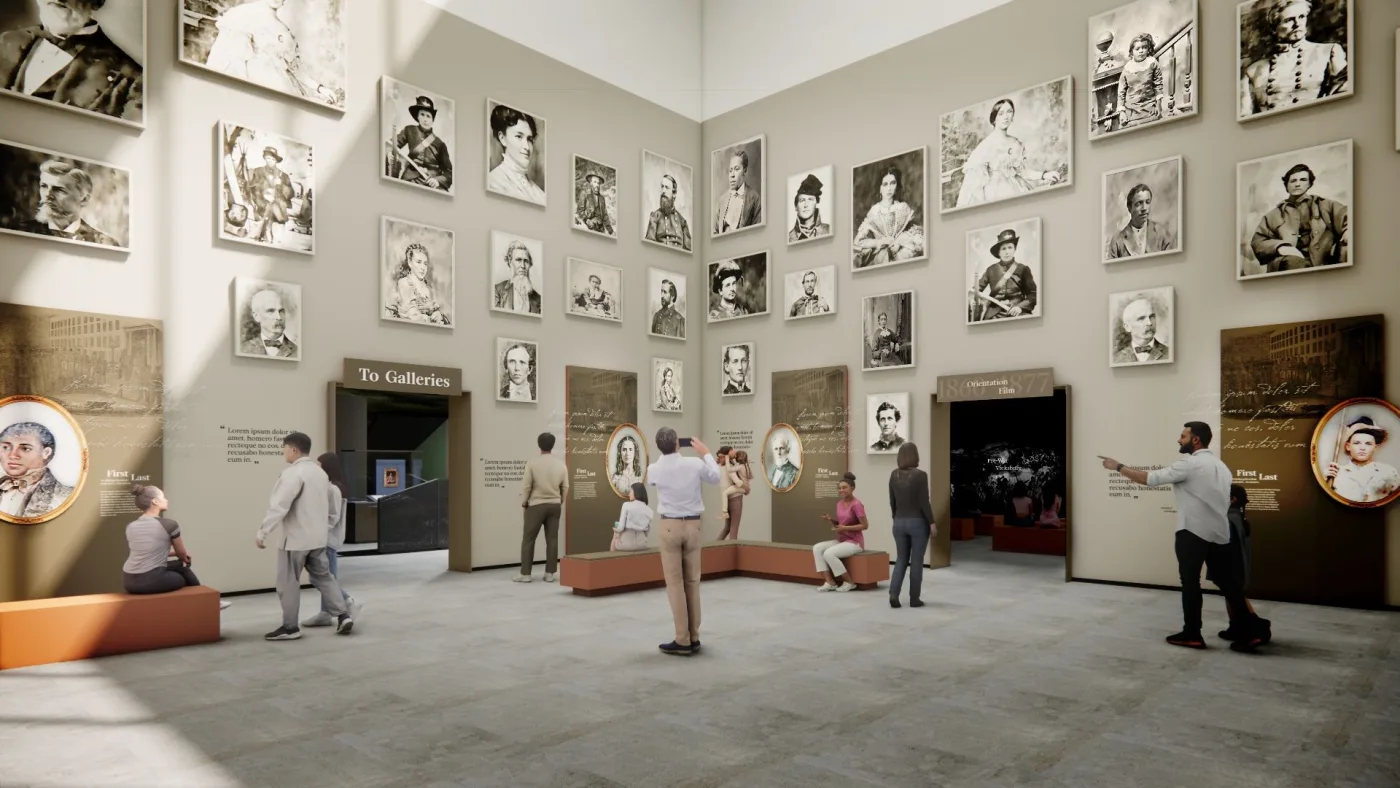
I led the experience strategy and creative direction, working with the client and design team to organize the museum around six interwoven lives. That narrative structure became a framework for the orientation experiences, gallery sequence, and integration of artifacts and media, keeping individual people at the center of a complex history.
Six interwoven lives
Vicksburg is usually told one side at a time: Union or Confederate, armies and battlefields. But the story belongs just as much to civilians, free and enslaved, and it doesn’t end with the surrender. The way in couldn’t ask visitors to pick a side.
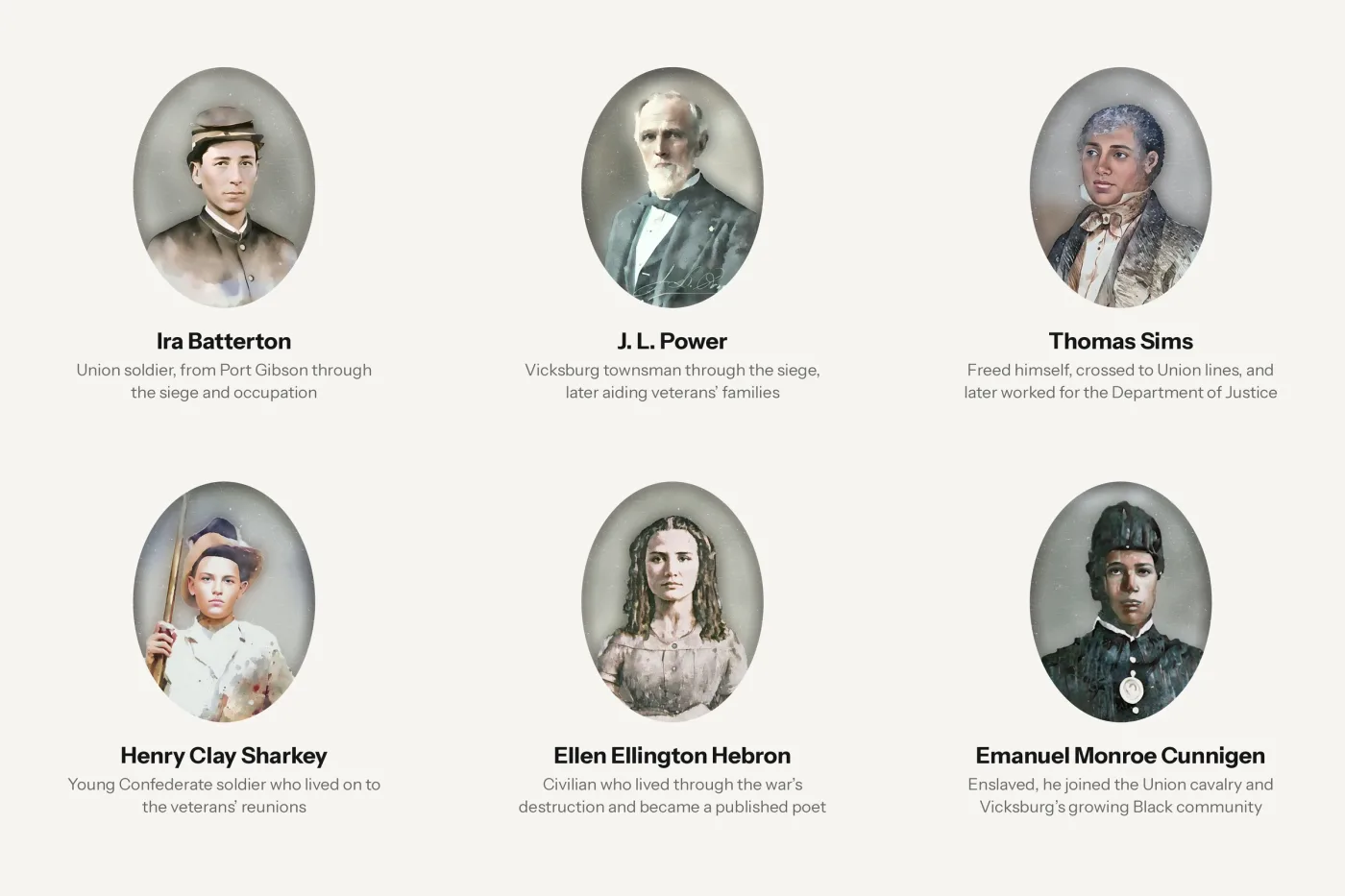
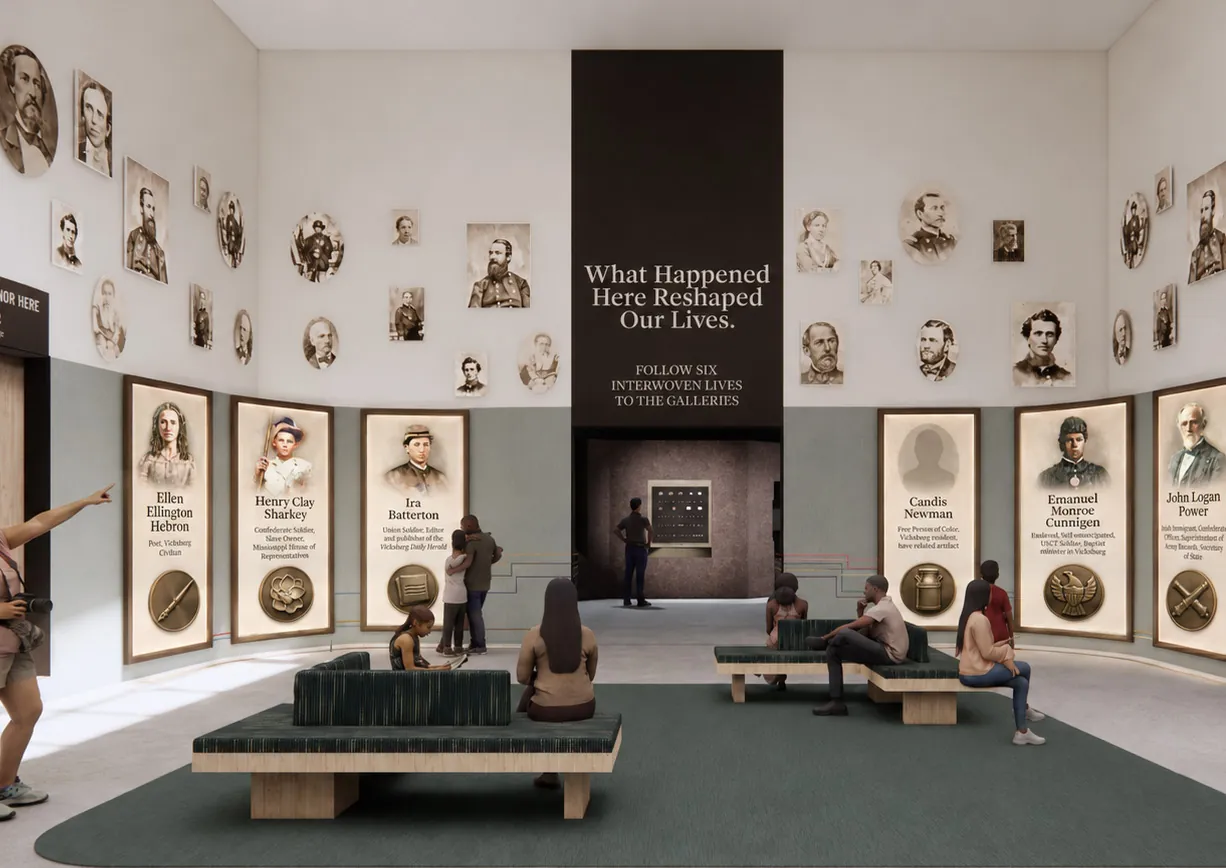
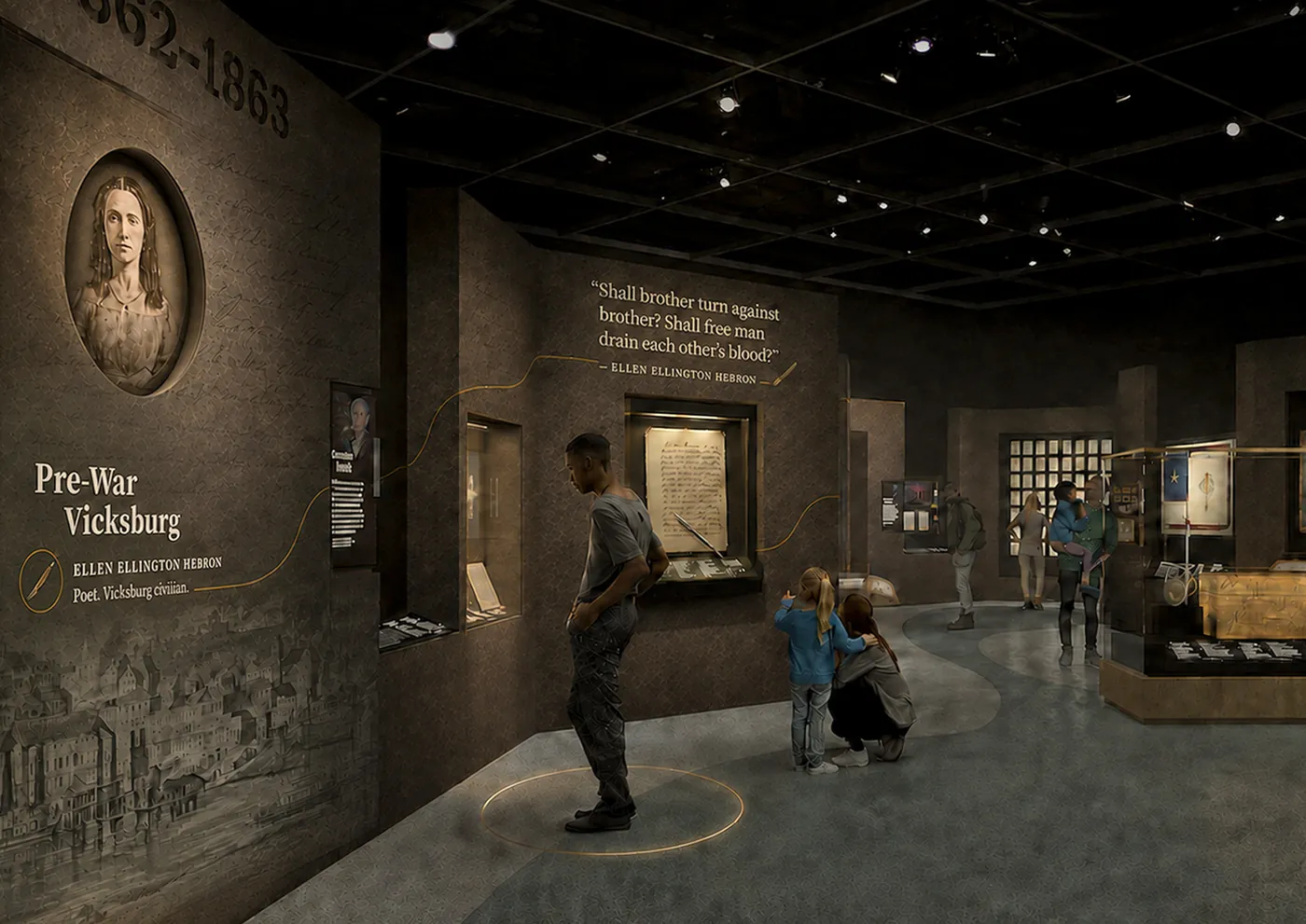
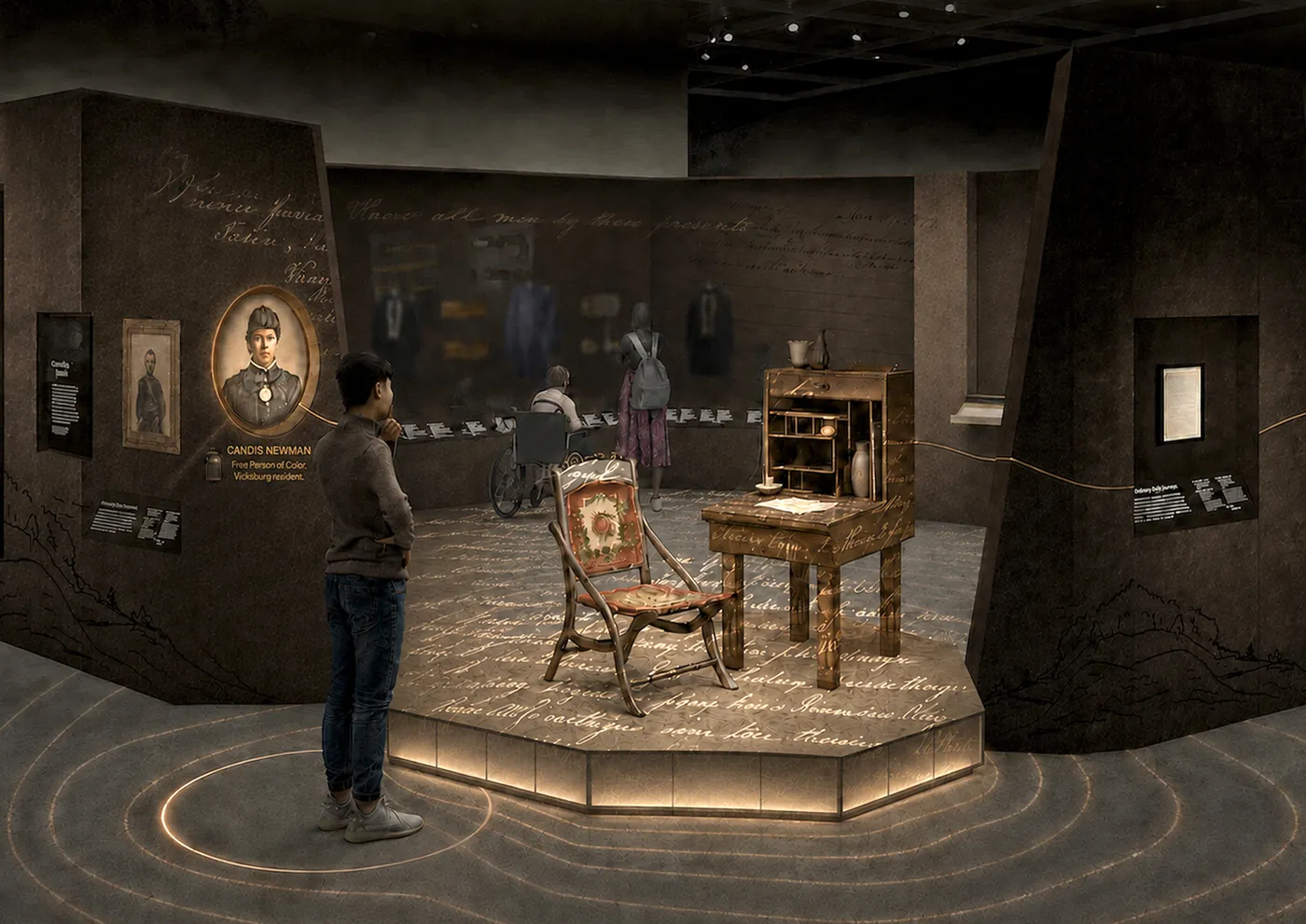
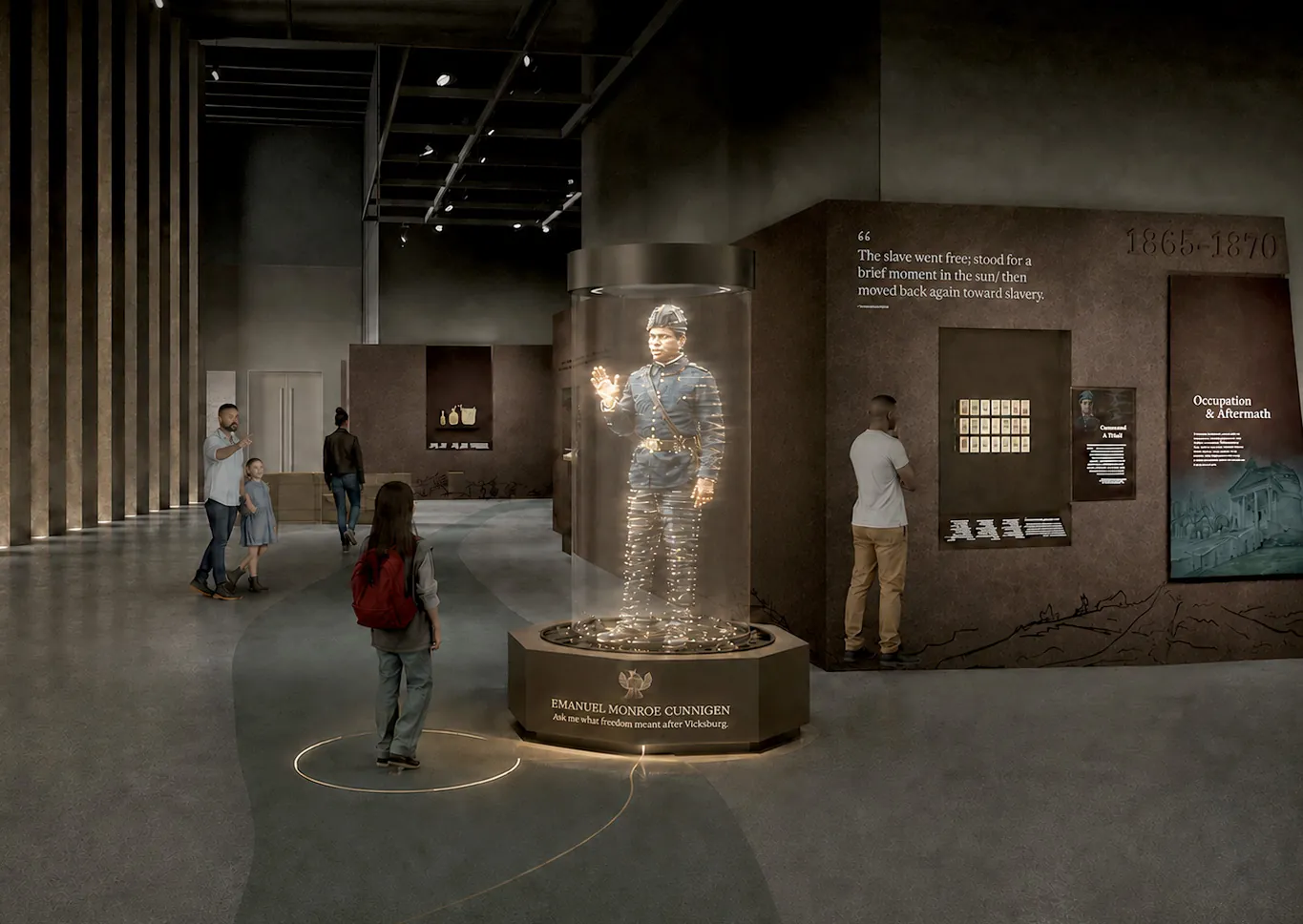
Visitors meet six people at the start: a soldier from each army, a Vicksburg townsman, a civilian woman, and two enslaved men, one who freed himself by crossing to Union lines and one who went on to serve in the Union cavalry. The same six reappear throughout the galleries. Where their stories meet, and where they split apart, is where empathy does its work.
“We want to find personal stories, civilian stories — stories that haven’t been told before.”
Three ways in
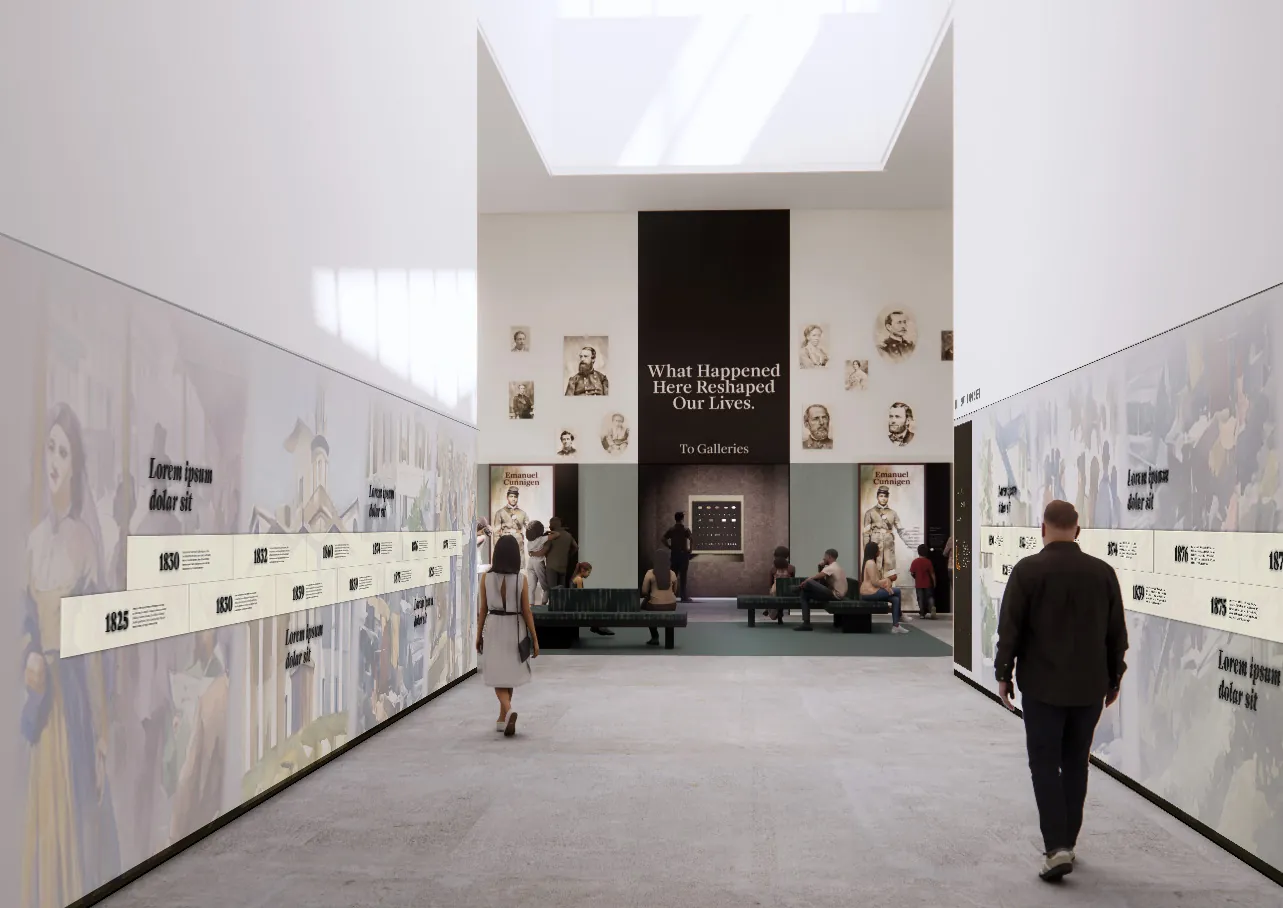
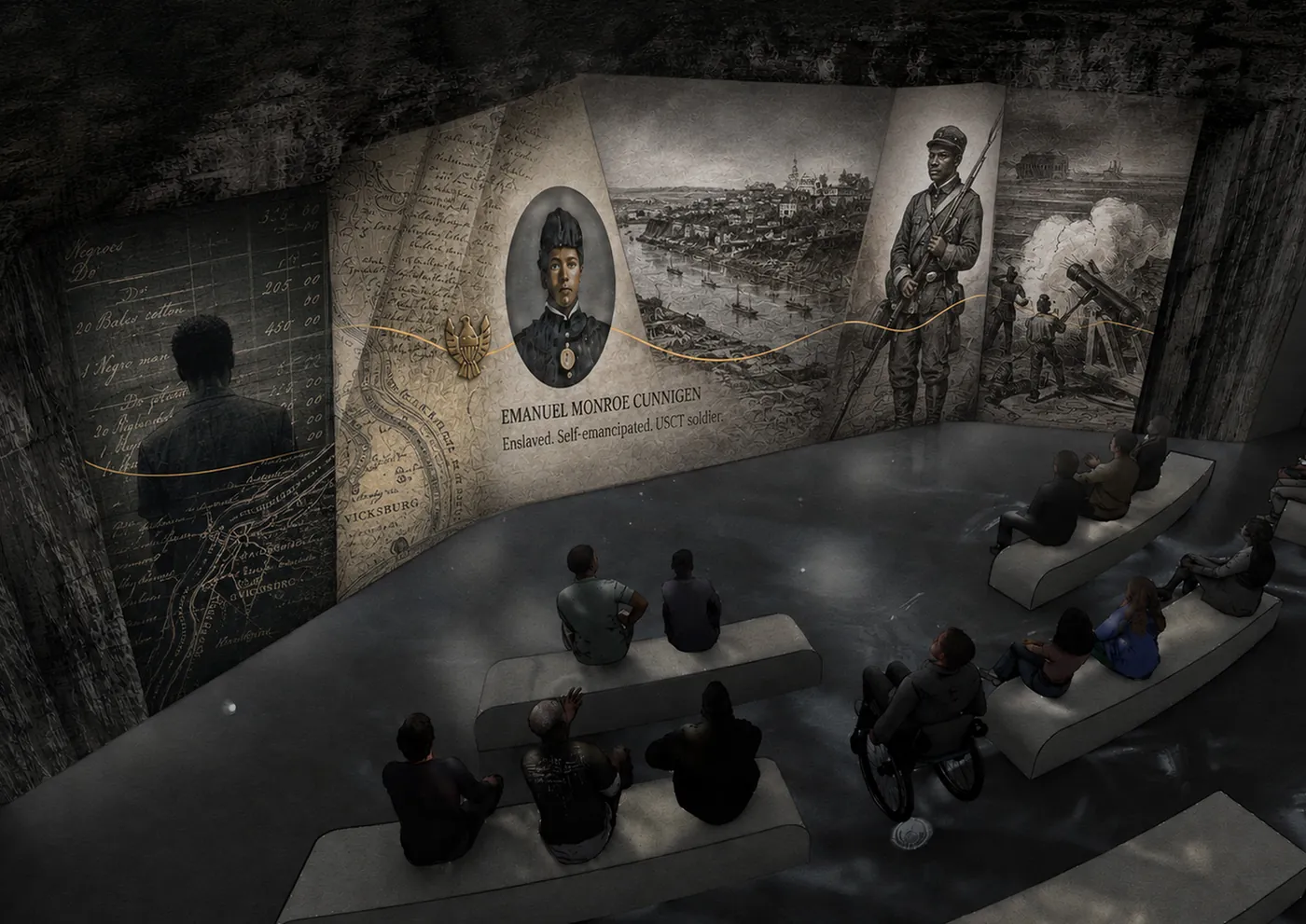
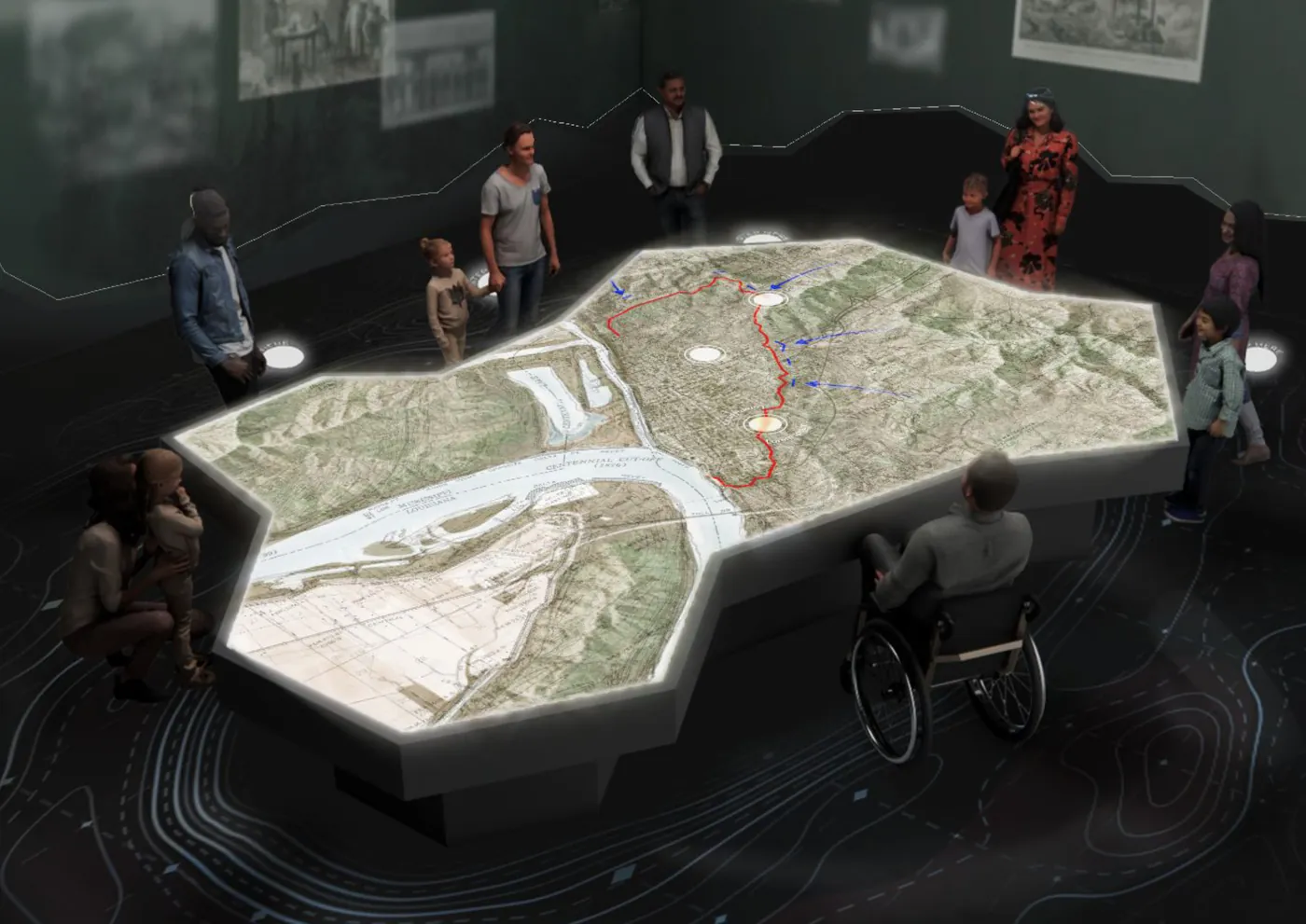
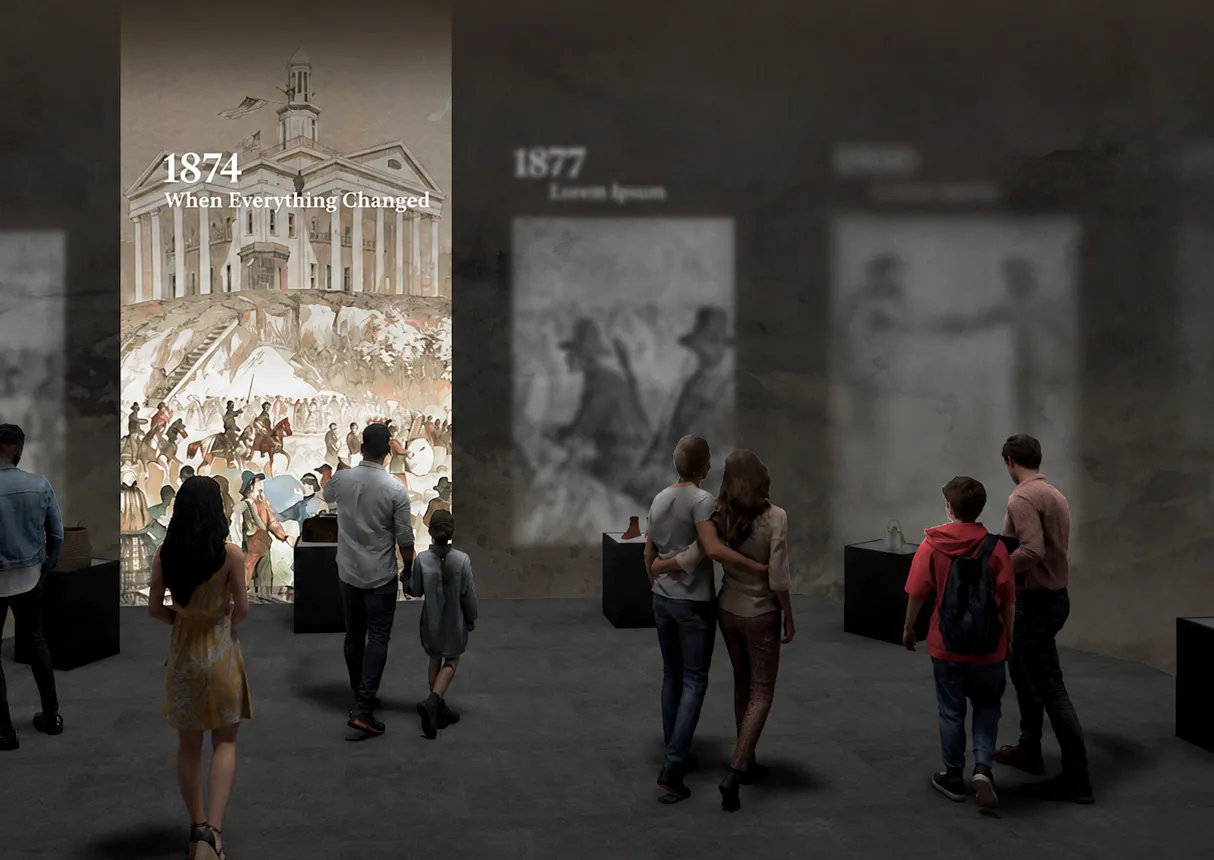
Three orientation spaces set the frame. A film shows why this bend in the river became the key to the war. A room-scale battle map puts visitors alongside the army through every failed attempt, up to the siege. A timeline of Reconstruction moves from hope to the rise of Jim Crow, and ends with promises still unfulfilled and the visitor’s own part in them.
Explorations
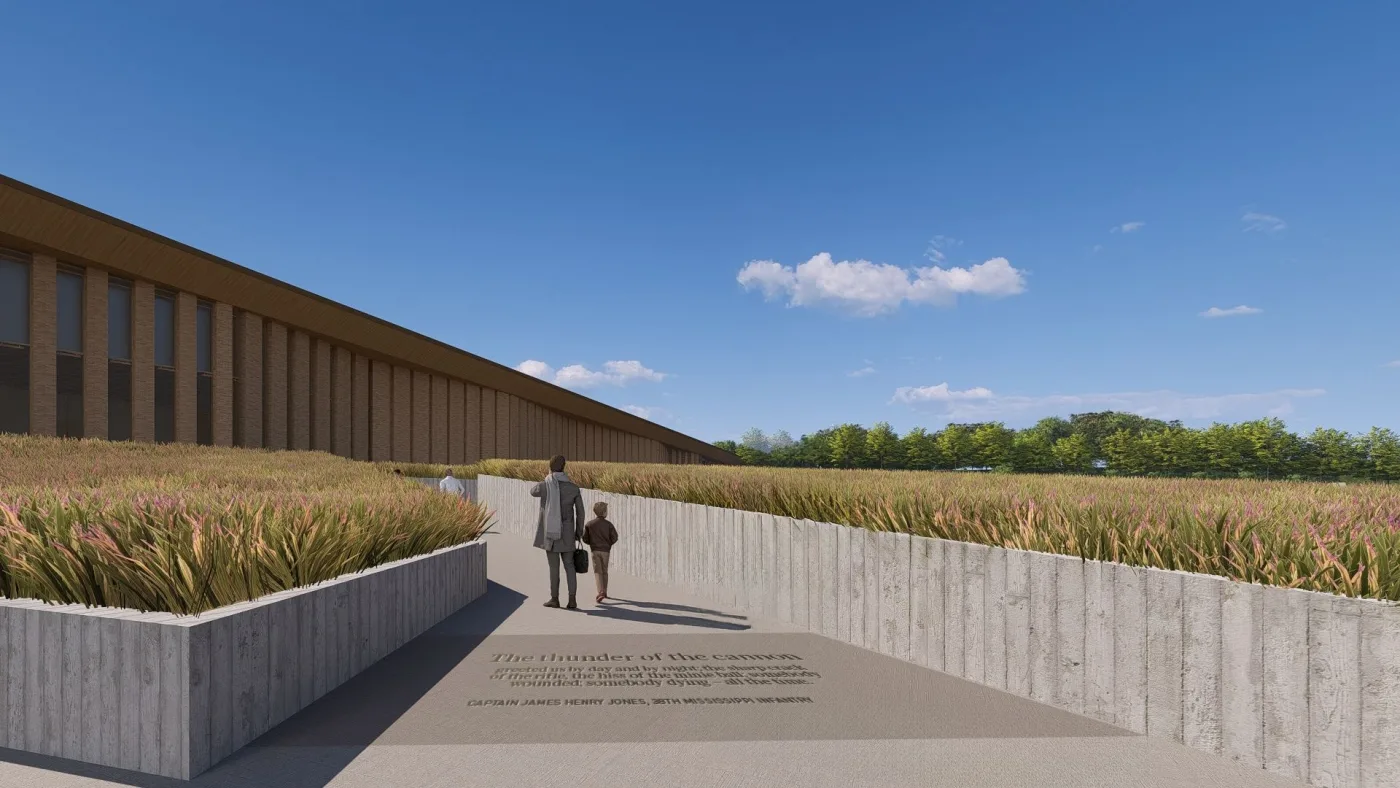
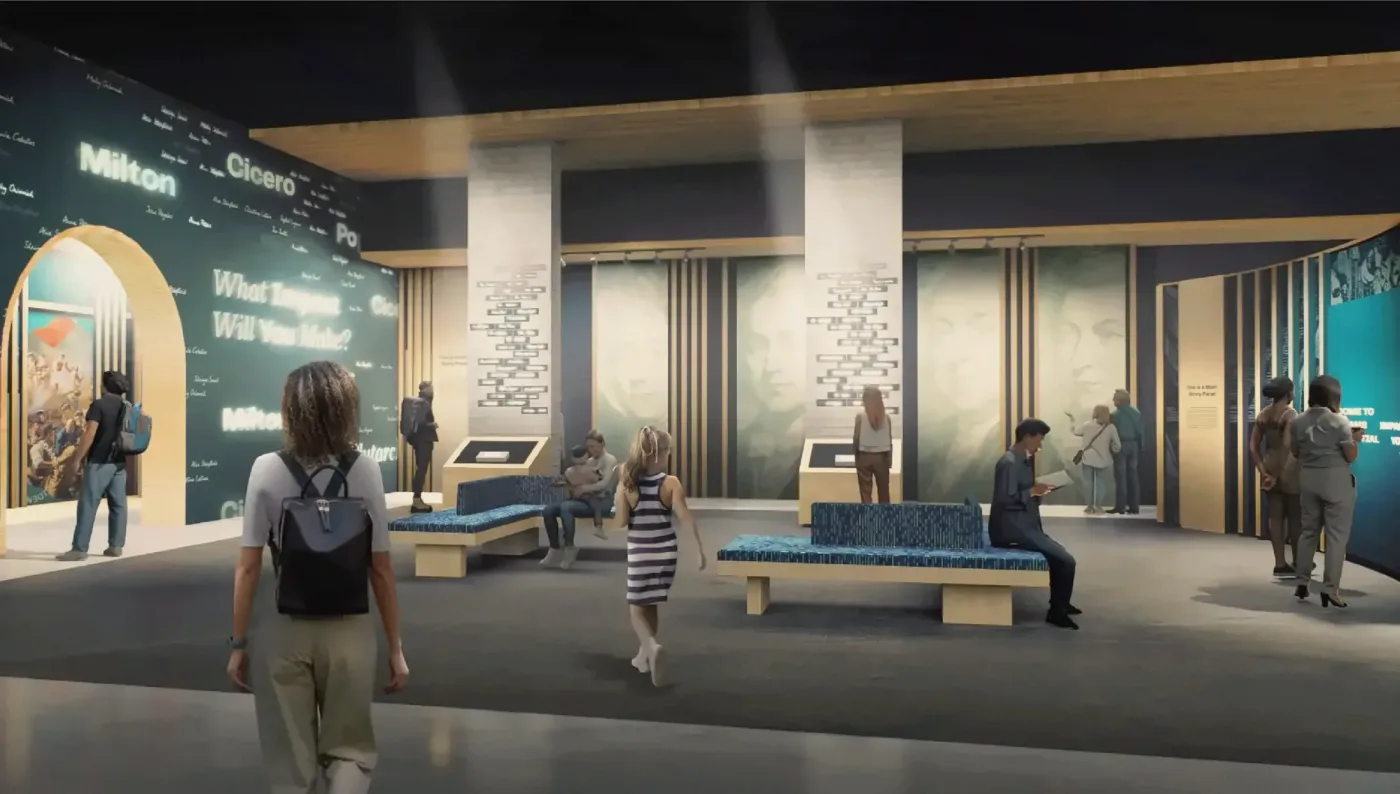
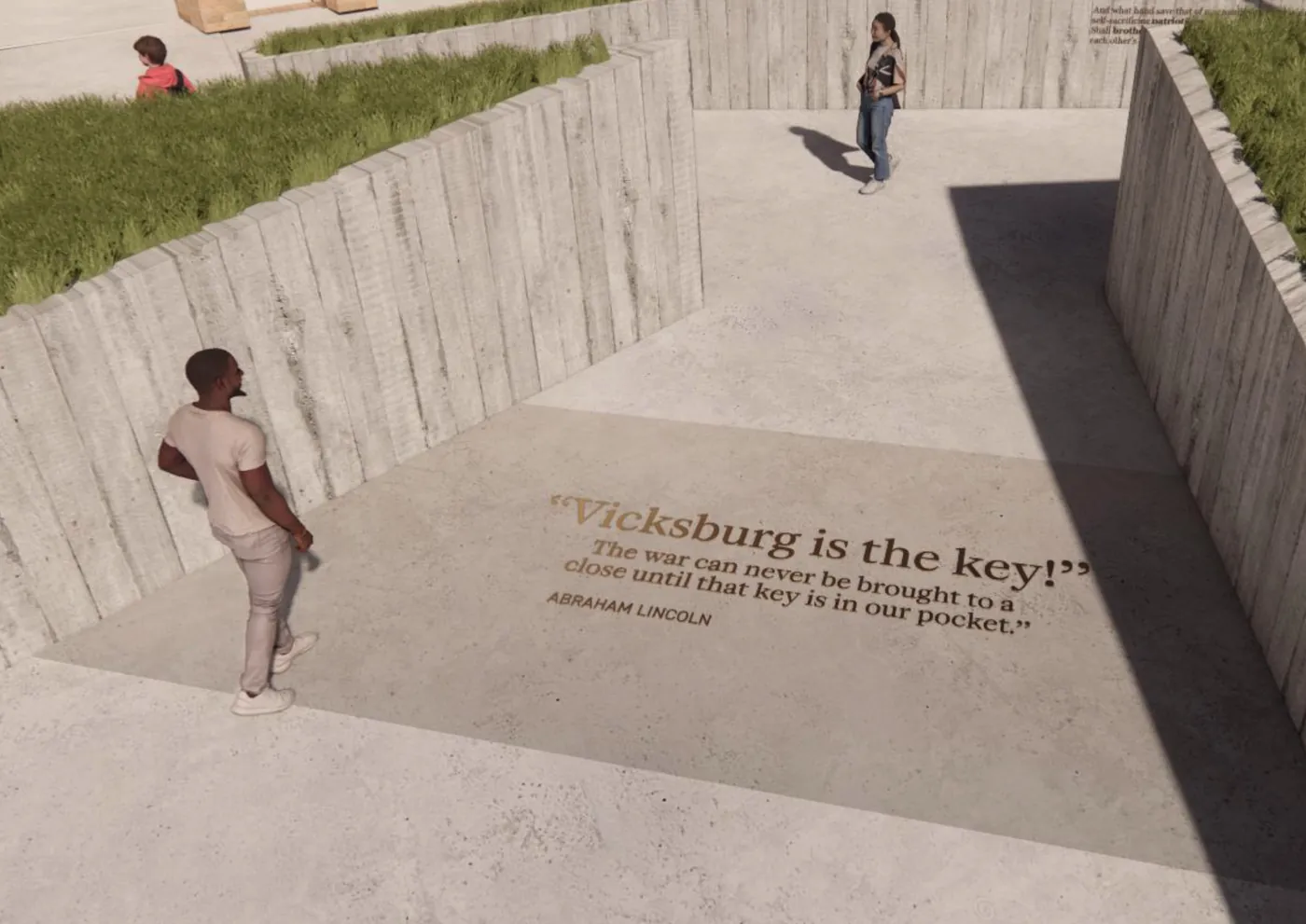
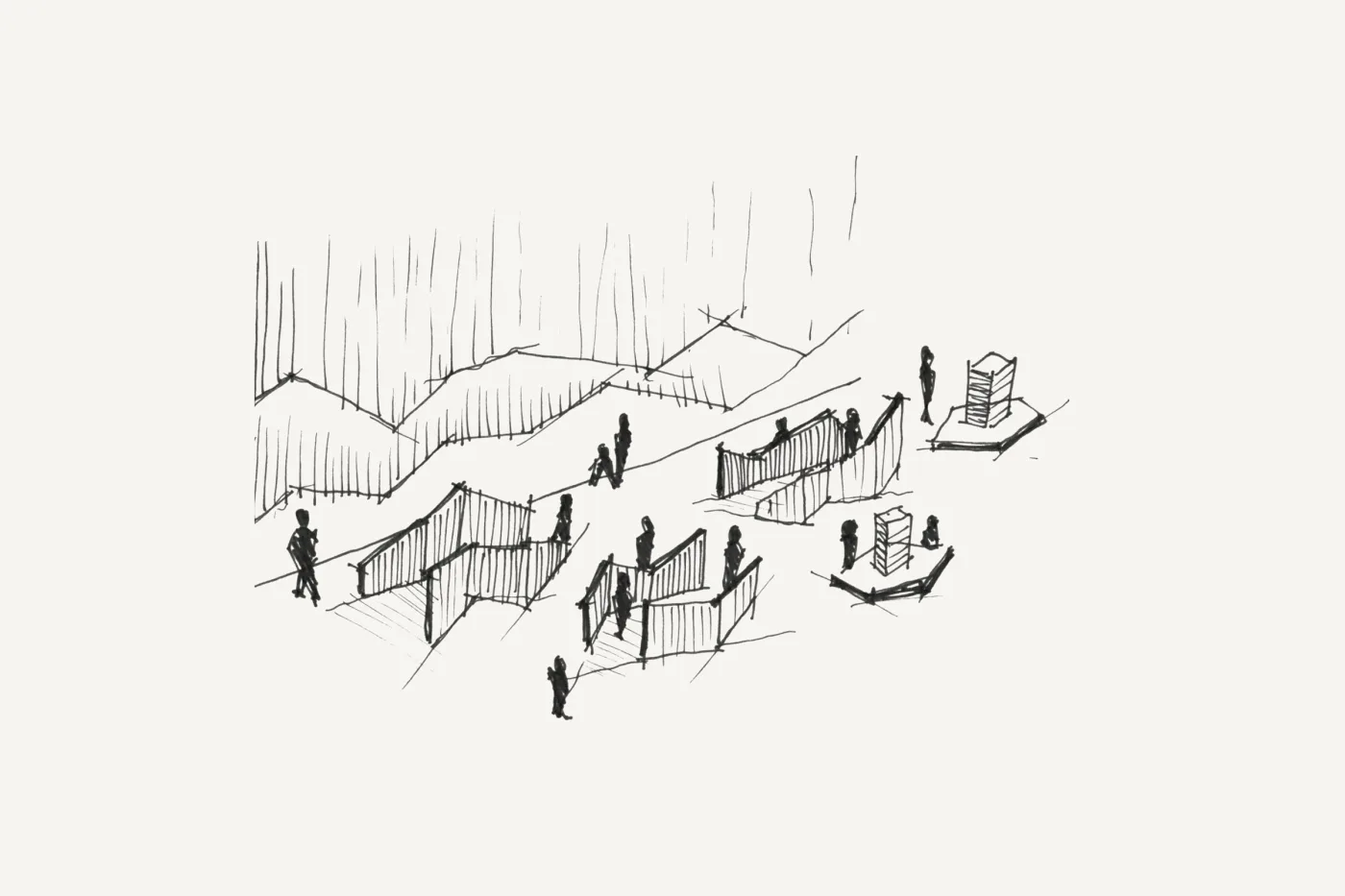
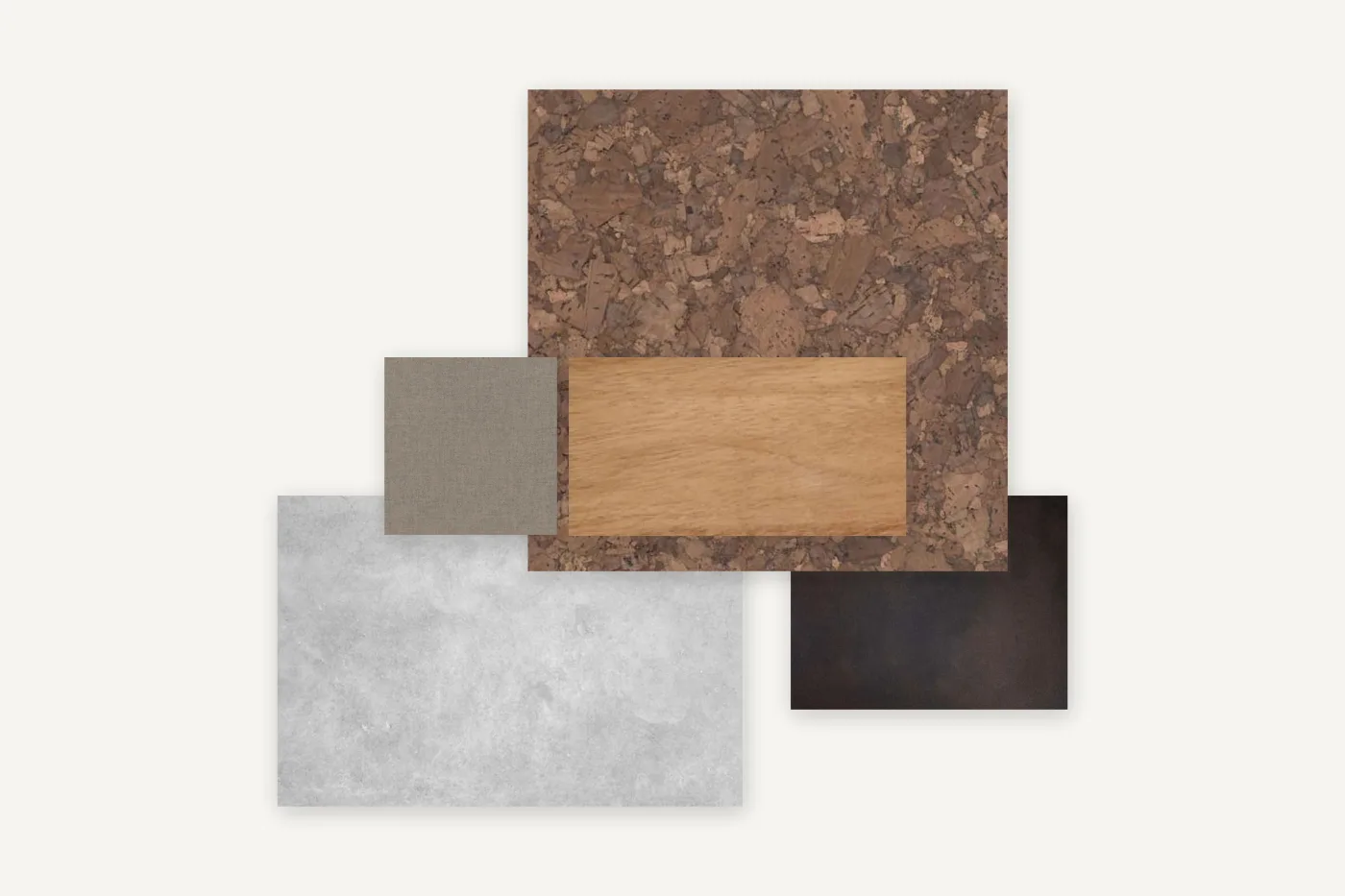
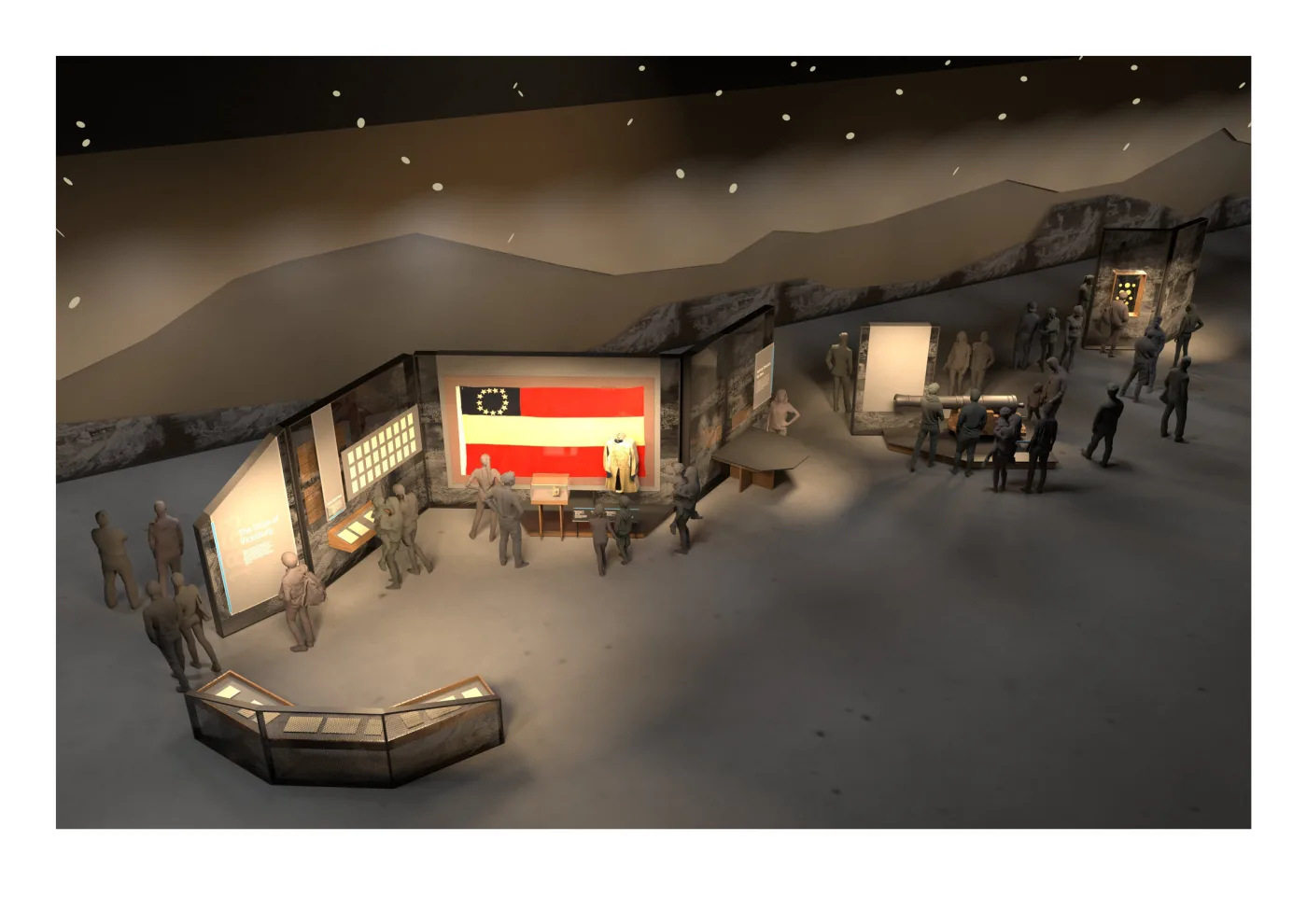
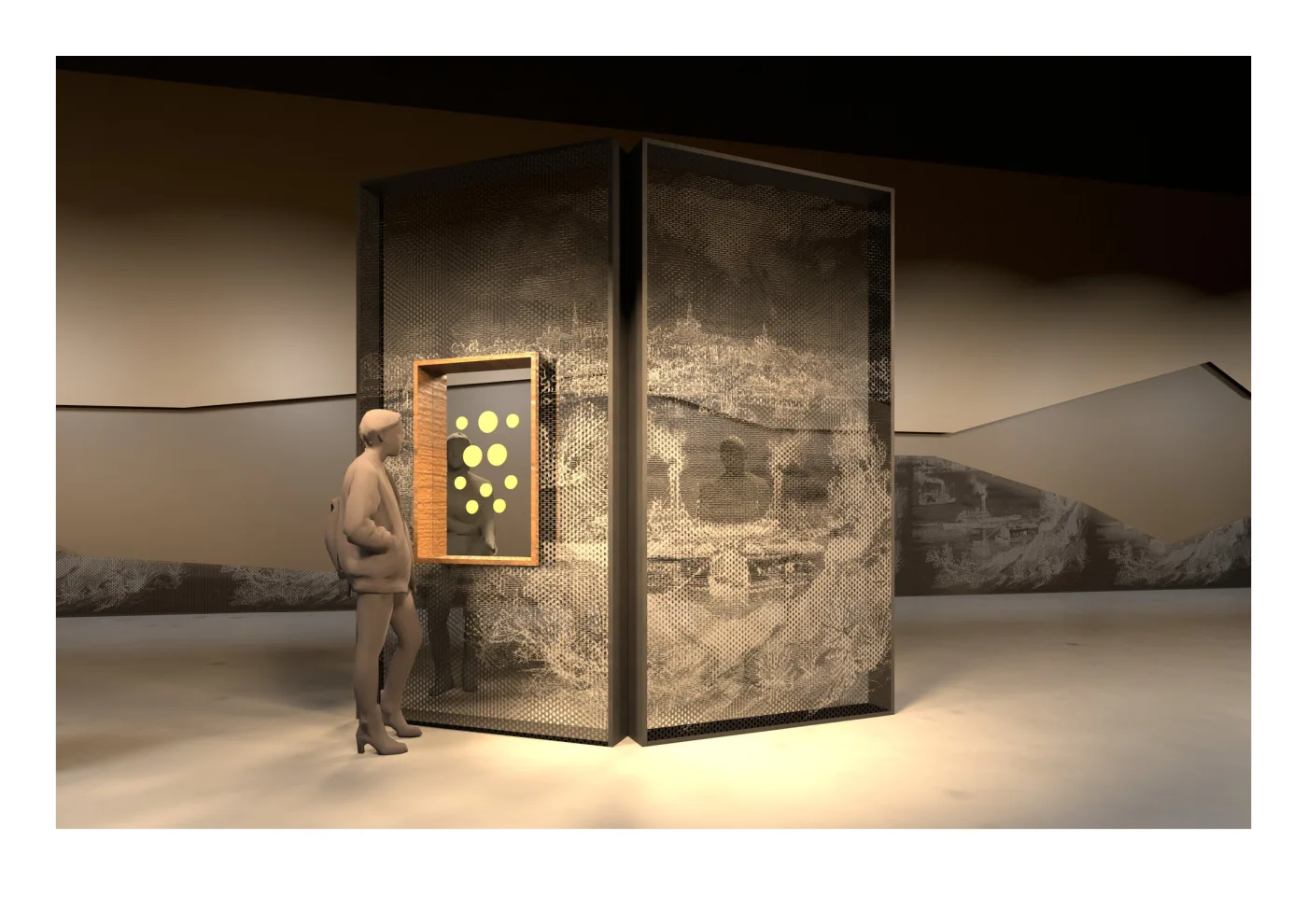
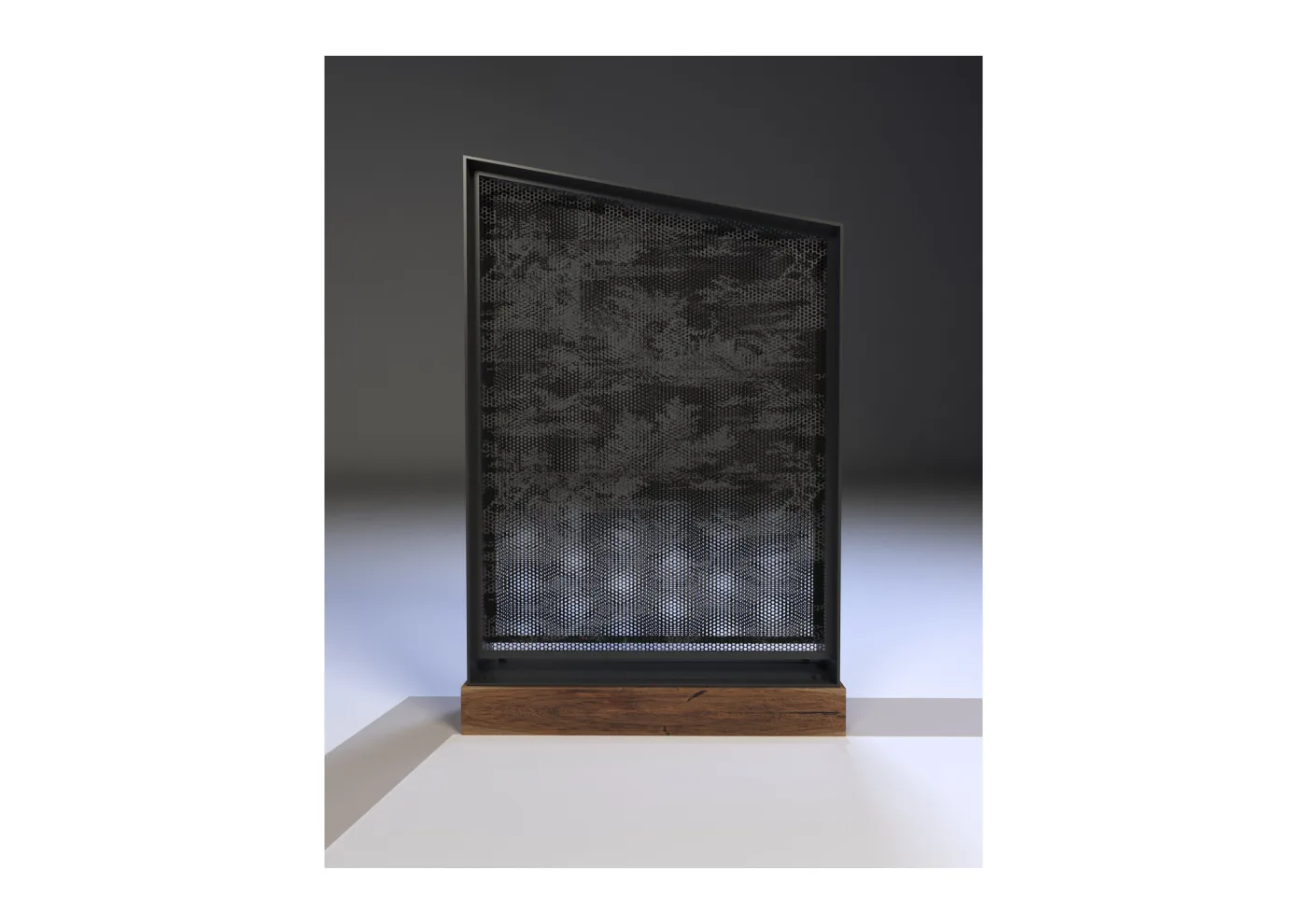
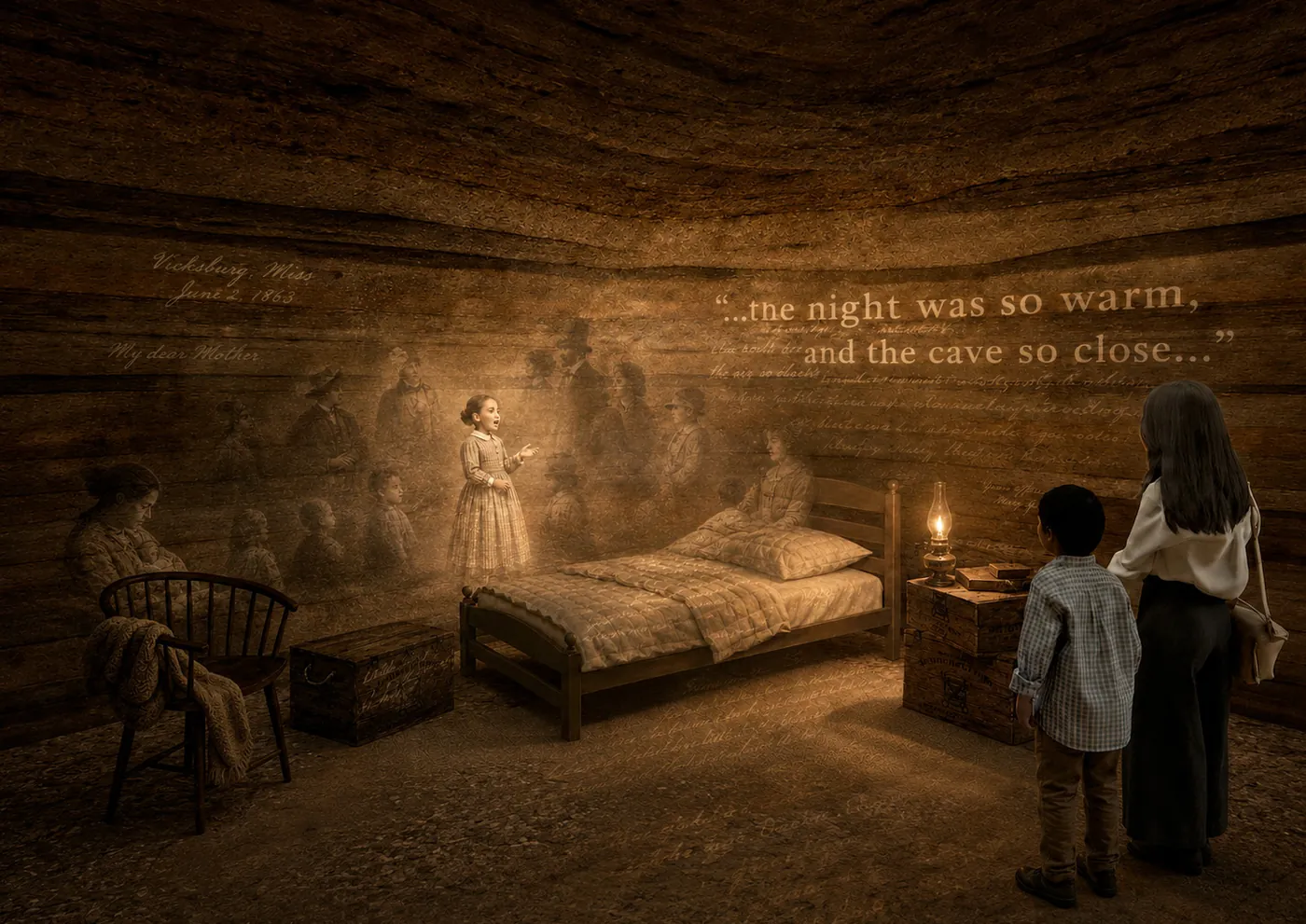
The galleries started on paper. Sketches and material studies worked out the form of each exhibit element until it felt like it belonged to this place and this story. The renders show where those studies led: whole galleries built from one vocabulary of form and material, carrying the visitor from room to room.
Galleries
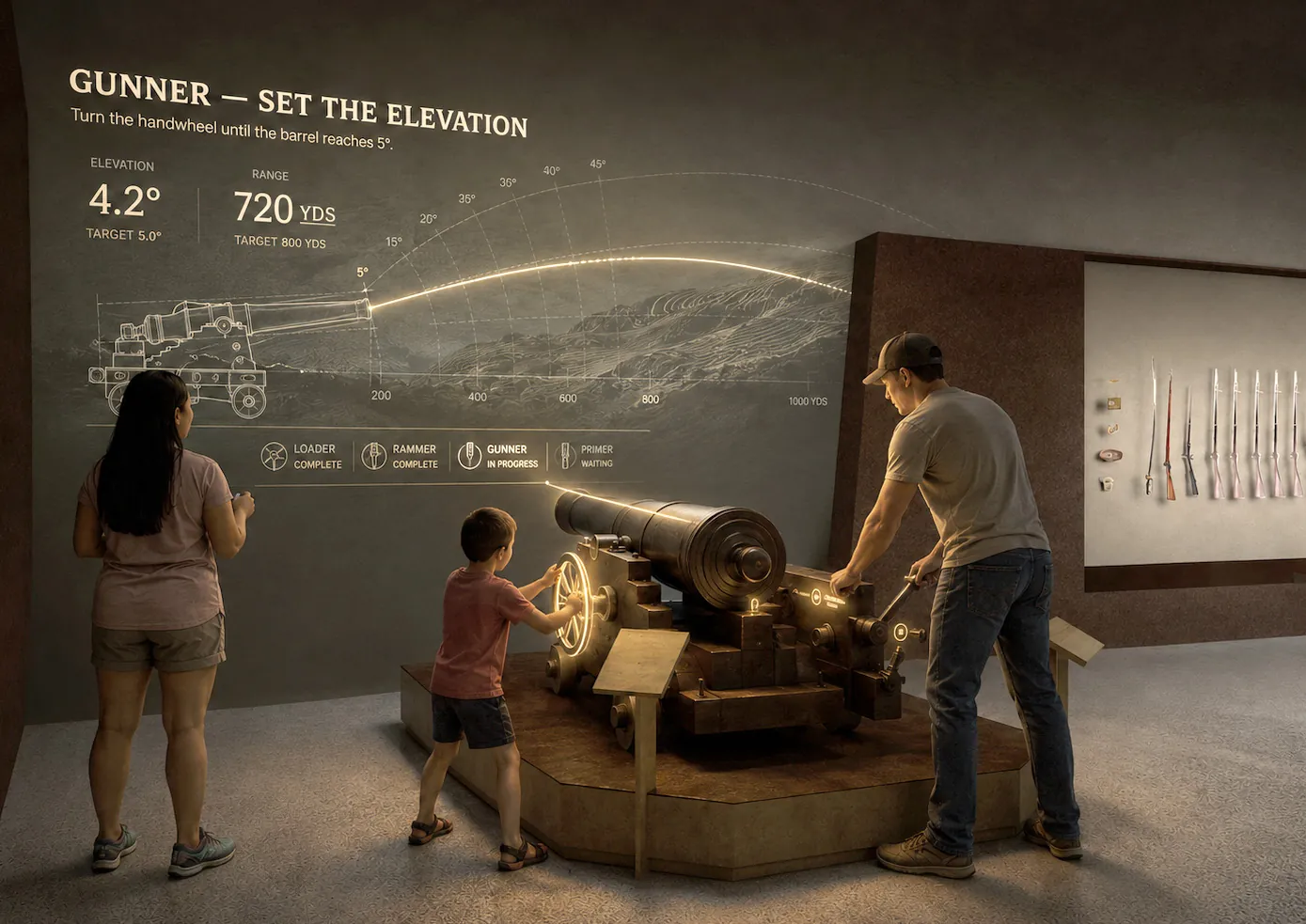
Media is built into the objects and architecture, not set in front of them, so the technology recedes and the story comes forward. Objects come alive with the voices and writing of the people of Vicksburg, and the thread of the six lives runs from room to room, so visitors leave remembering people rather than displays.
After the siege
The six lives don’t end with the surrender, and neither do the galleries. The last rooms follow each of them into Reconstruction and beyond, so visitors leave knowing what became of the people they met at the start, and carry them back out into the landscape where it all happened.