Destination Crenshaw
How do you tell the story of Black Los Angeles in its own voice, along a mile of its own boulevard?
- Client
- Destination CrenshawLos Angeles Council District 8
- Location and Date
- Crenshaw Boulevard, Los AngelesMaster Planning through Design Development, 2018–2021
- Role
- Executive Creative DirectorCompleted at G&A
- Press
4 articles
- GettyDestination Crenshaw
- Artnet NewsSee Sculptures by Kehinde Wiley, Alison Saar, and More Commissioned for Destination Crenshaw
- Alta JournalCrenshaw at the Crossroads
- The Christian Science MonitorLos Angeles Crenshaw mural black art
- Responsibilities led
- Creative direction across all phasesTeam leadershipClient and community liaisonExperience strategy and storytellingInterpretive identity and design systemPhysical, digital and AR integration
Overview
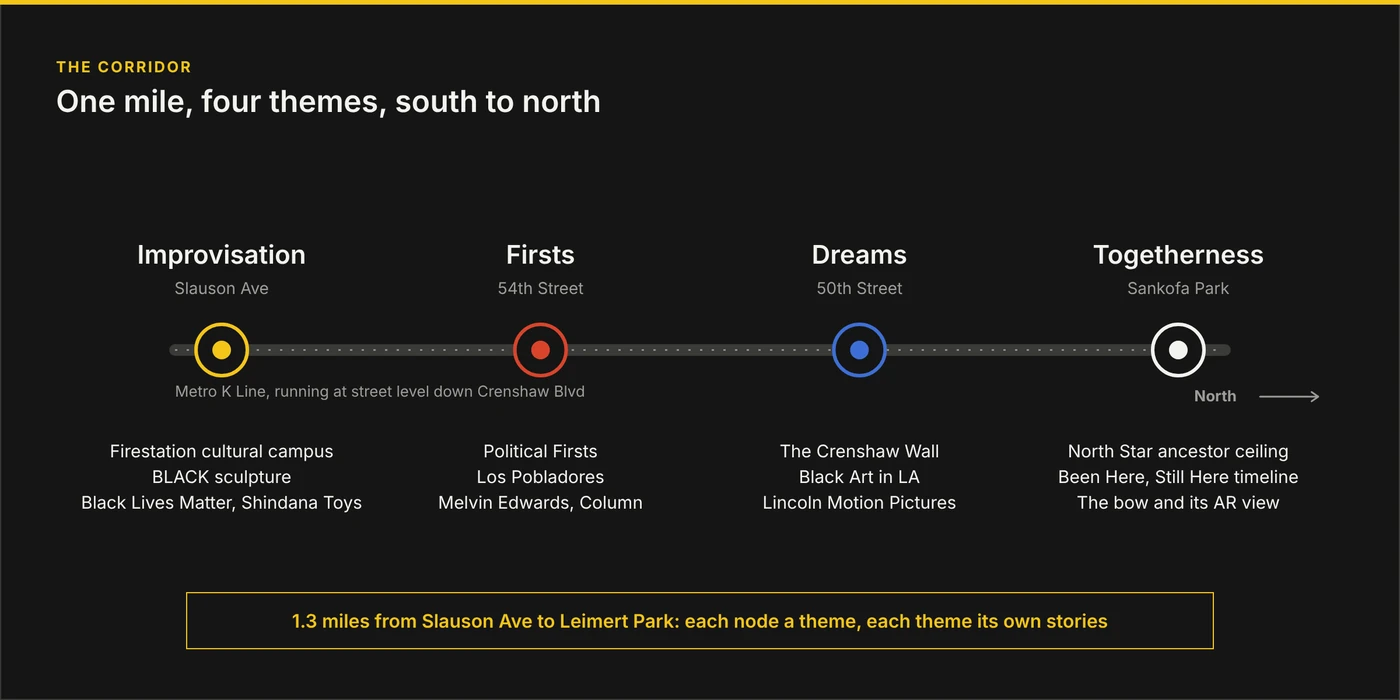
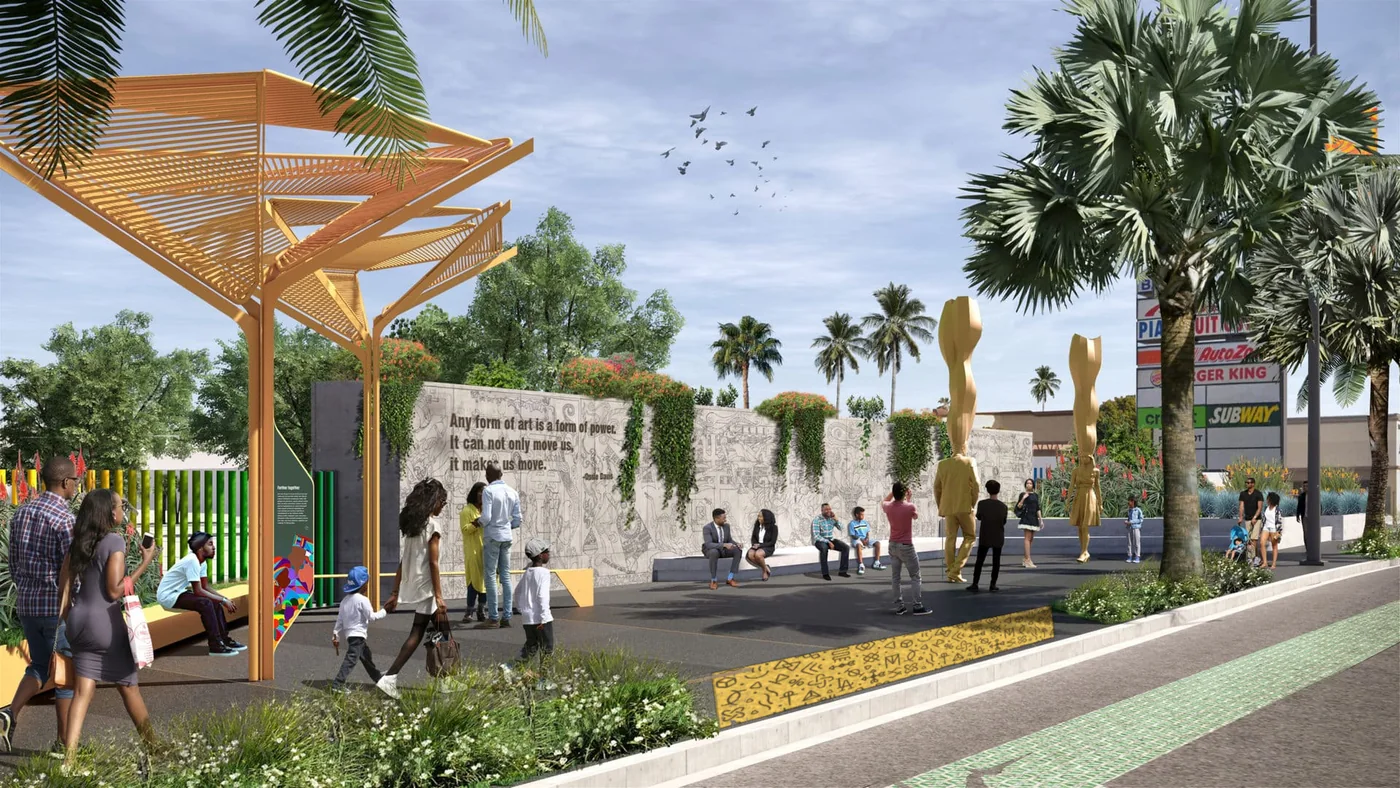
Destination Crenshaw turns 1.3 miles of Crenshaw Boulevard into an open-air museum of Black Los Angeles. I led the interpretive layer as executive creative director at Gallagher & Associates: the stories, the voice, the graphics and the digital experiences that run the length of the corridor, developed with the community from 2018 to 2021.
For the full story of this project read the complete case study
Listening first
Before design development began, the team spent two days with the Community Advisory Panel: artists, organizers, historians and neighbors. They built personas, sorted story cards and walked the sites. Their words set the direction for everything that followed.
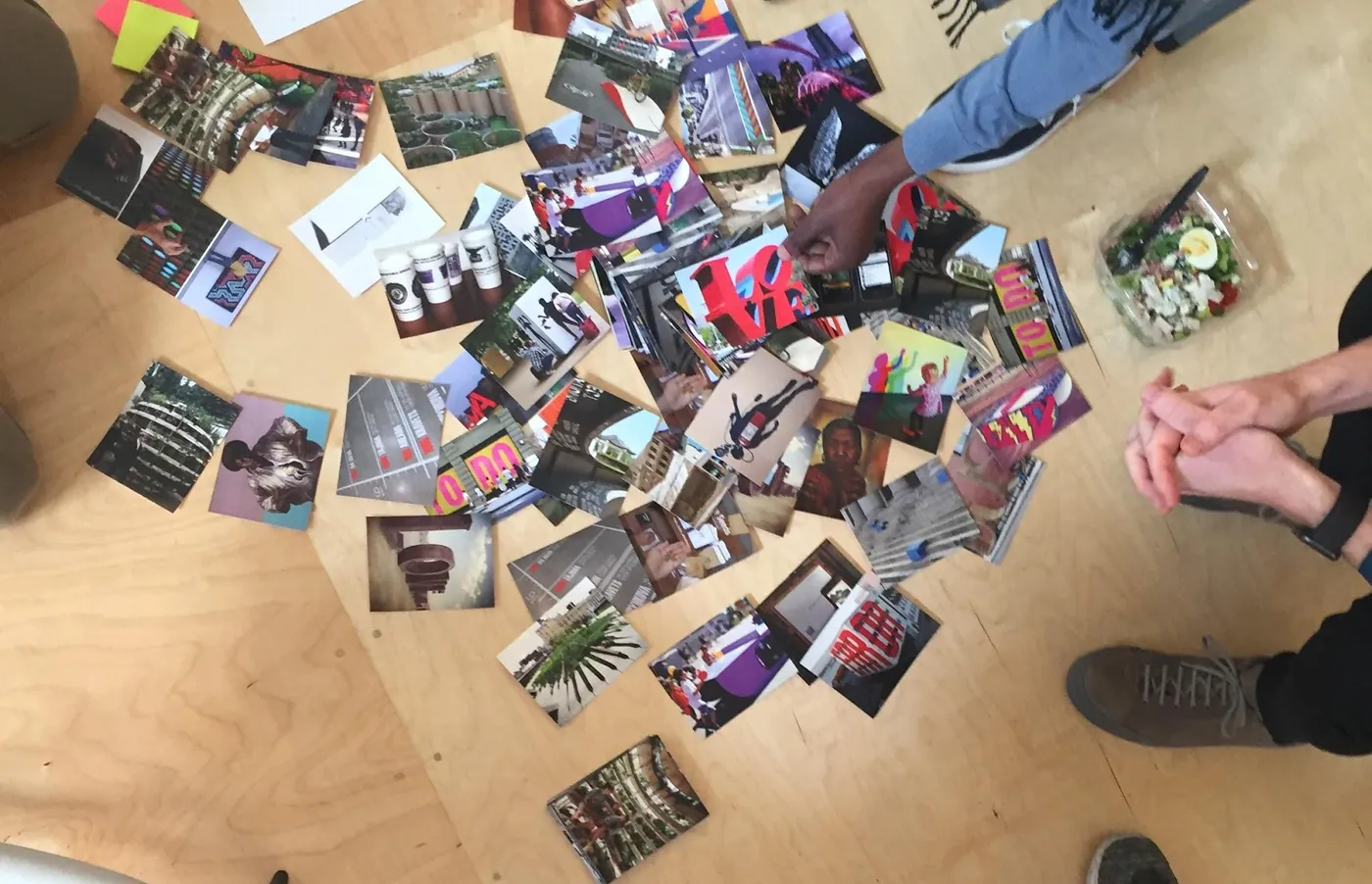
“They live here but they’re left out of their own parade.”
Unapologetically Black
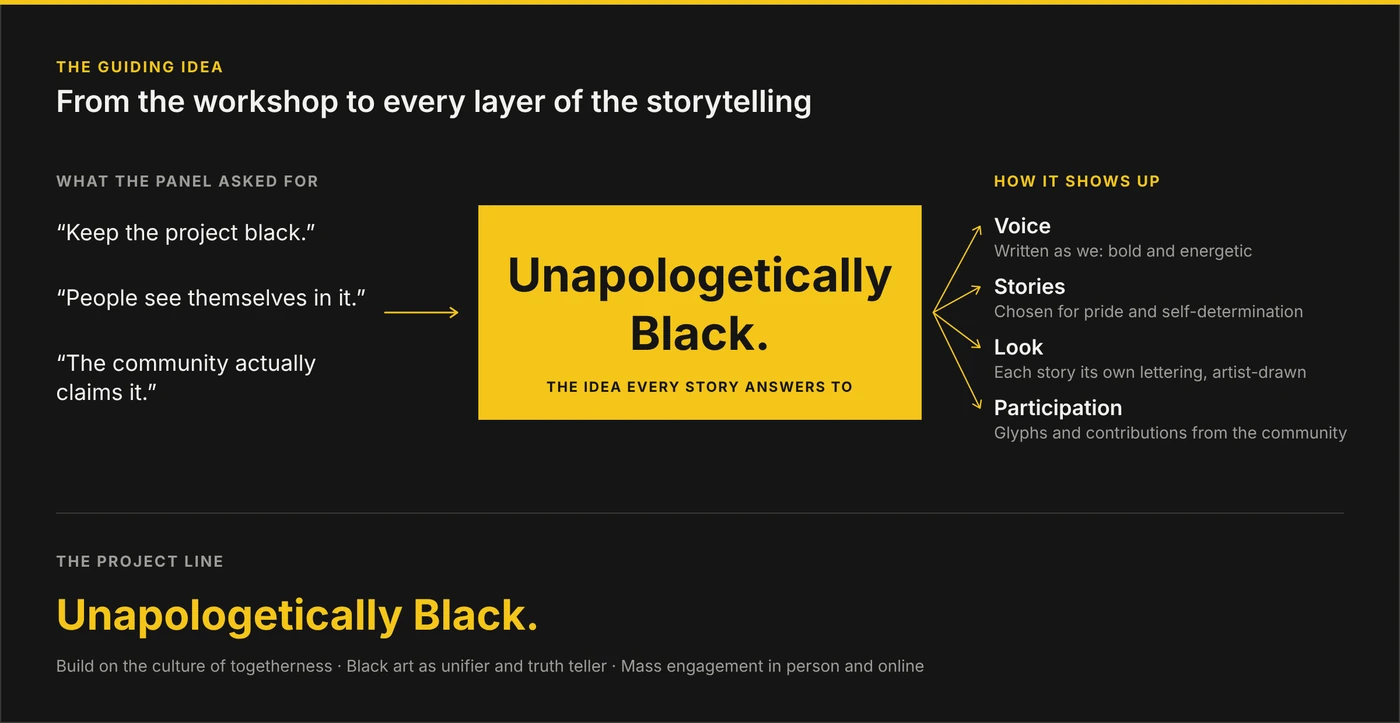
Out of the workshop came one idea to guide the whole storytelling layer. The panel asked to keep the project black, to see themselves in it, to claim it. We called it Unapologetically Black, and it became the test for every story, the voice, and the look. Through the work it became the project’s catchphrase.
One story, four ways
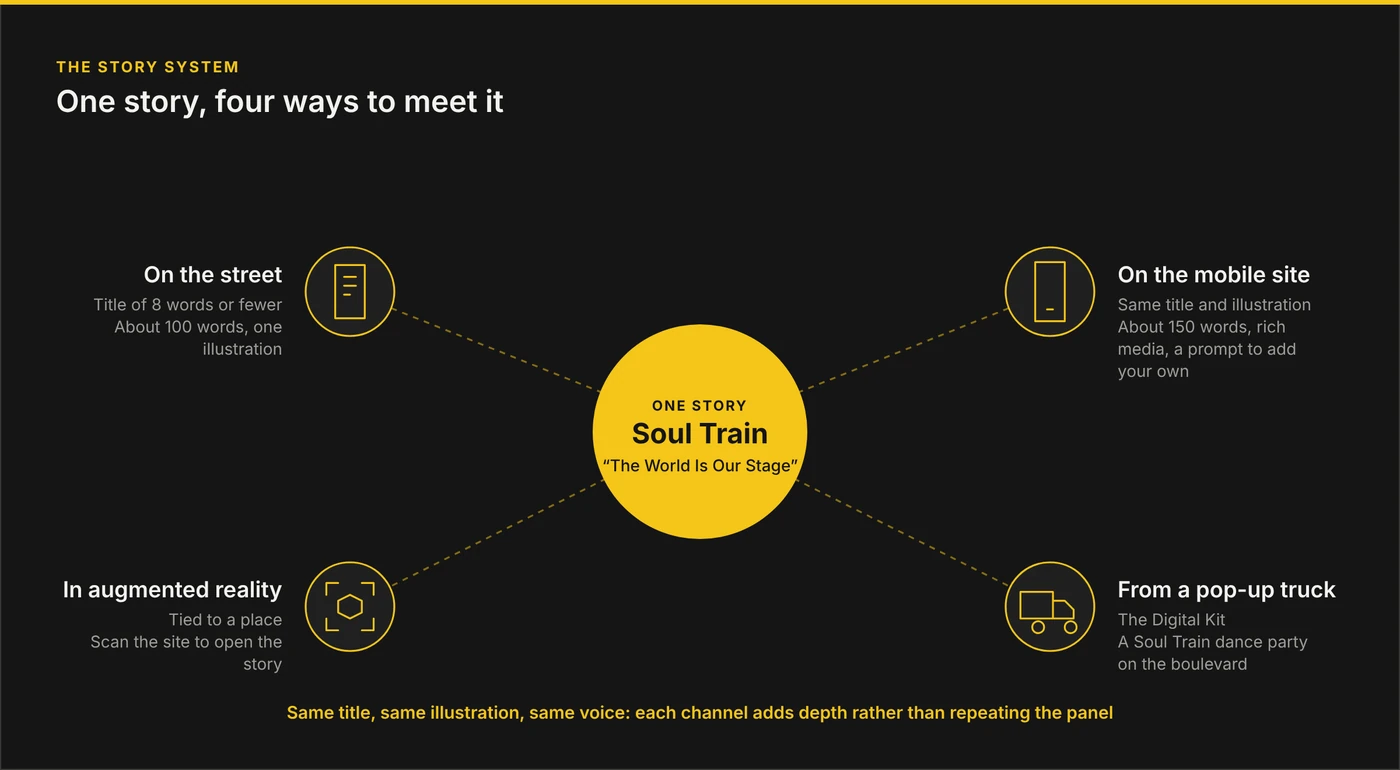
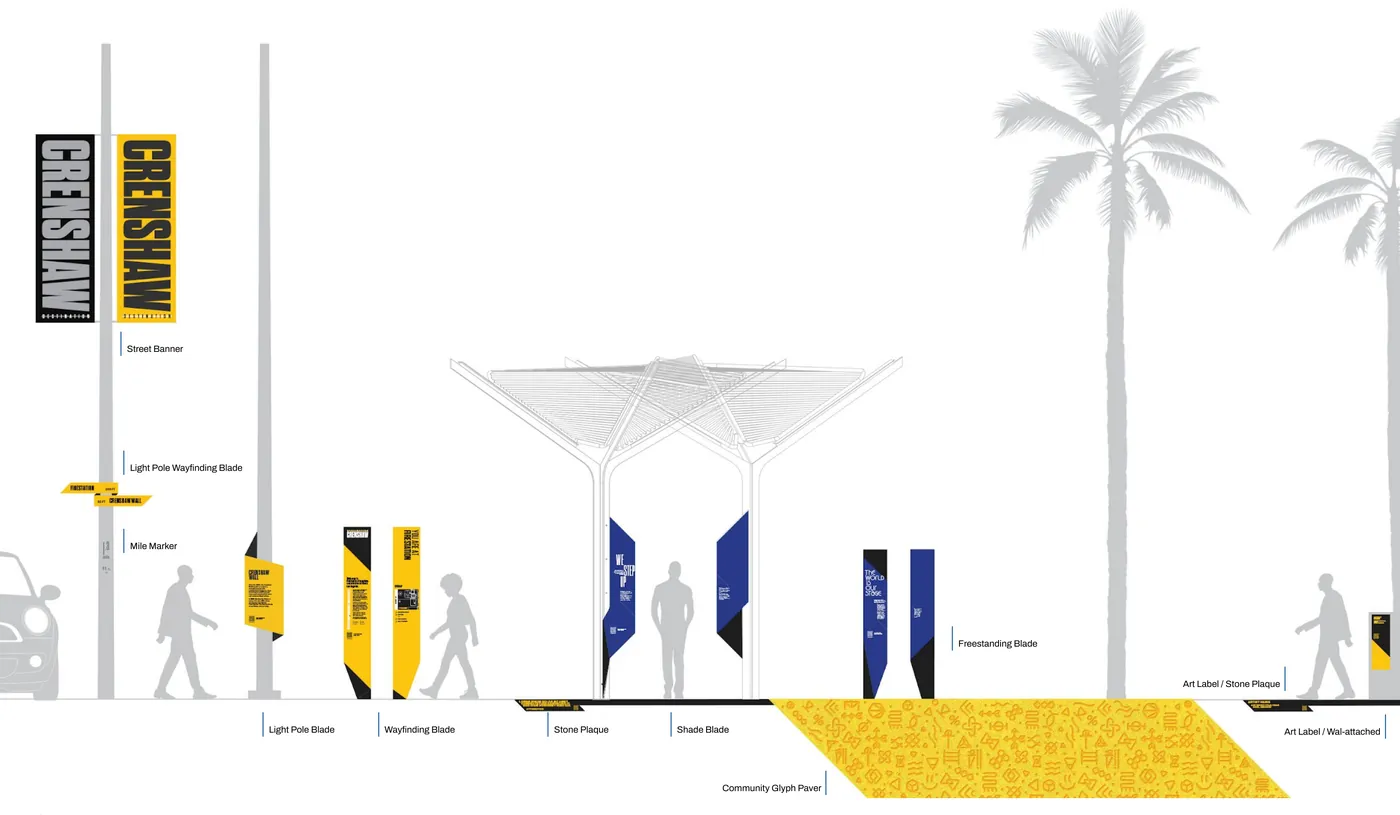
Every story speaks in the first person plural: not he did this, but we did this. Each one can be met on a street panel, on the mobile site, in augmented reality or from a pop-up truck, with the same title and illustration and more depth at every step. A kit of ten elements carries them down the mile.
Ancestors overhead
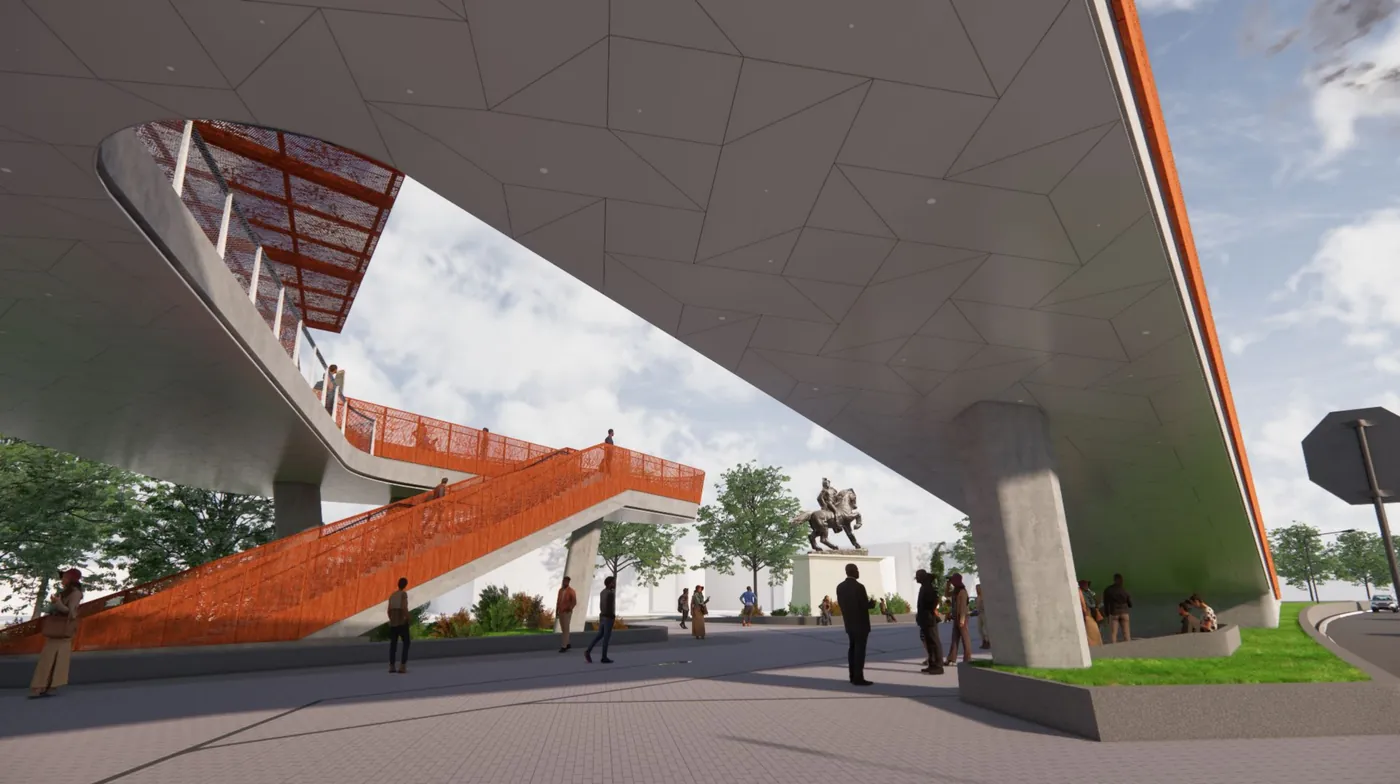
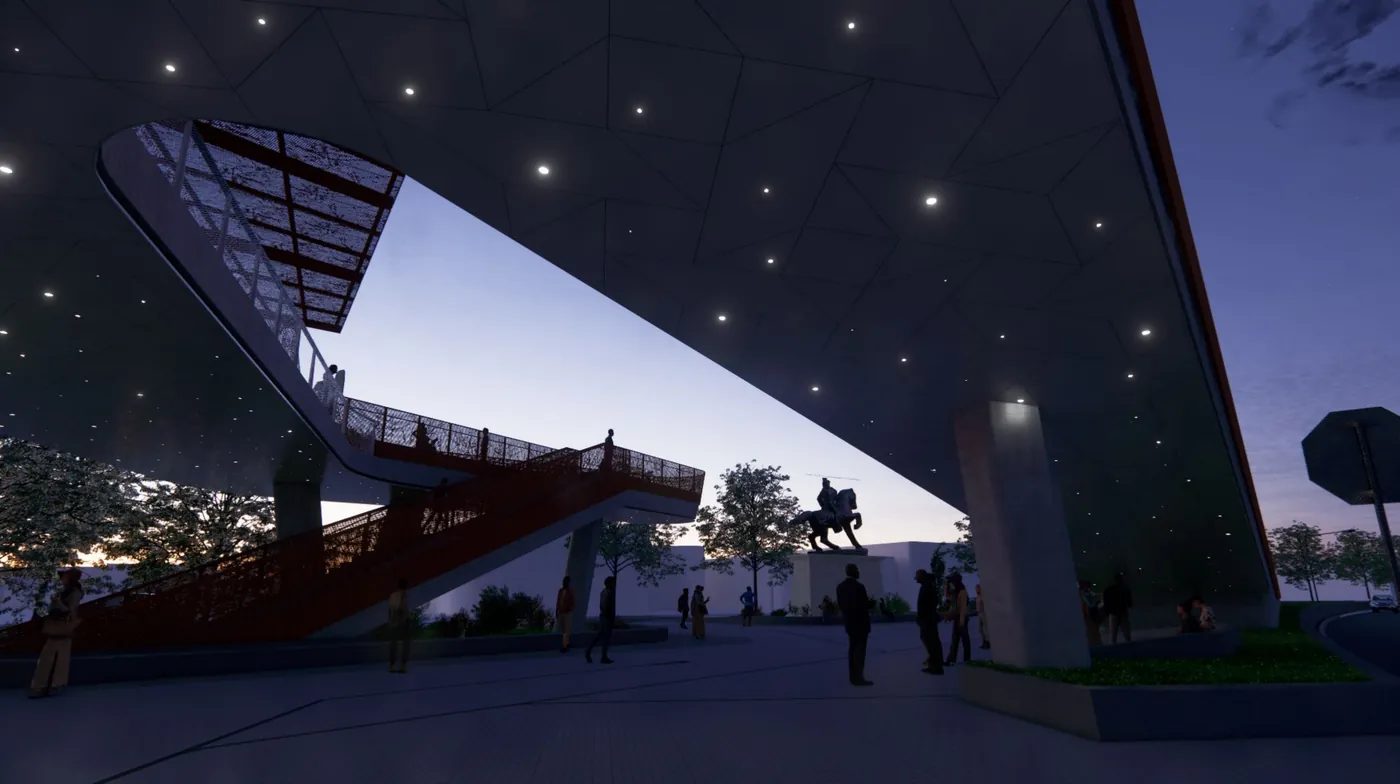
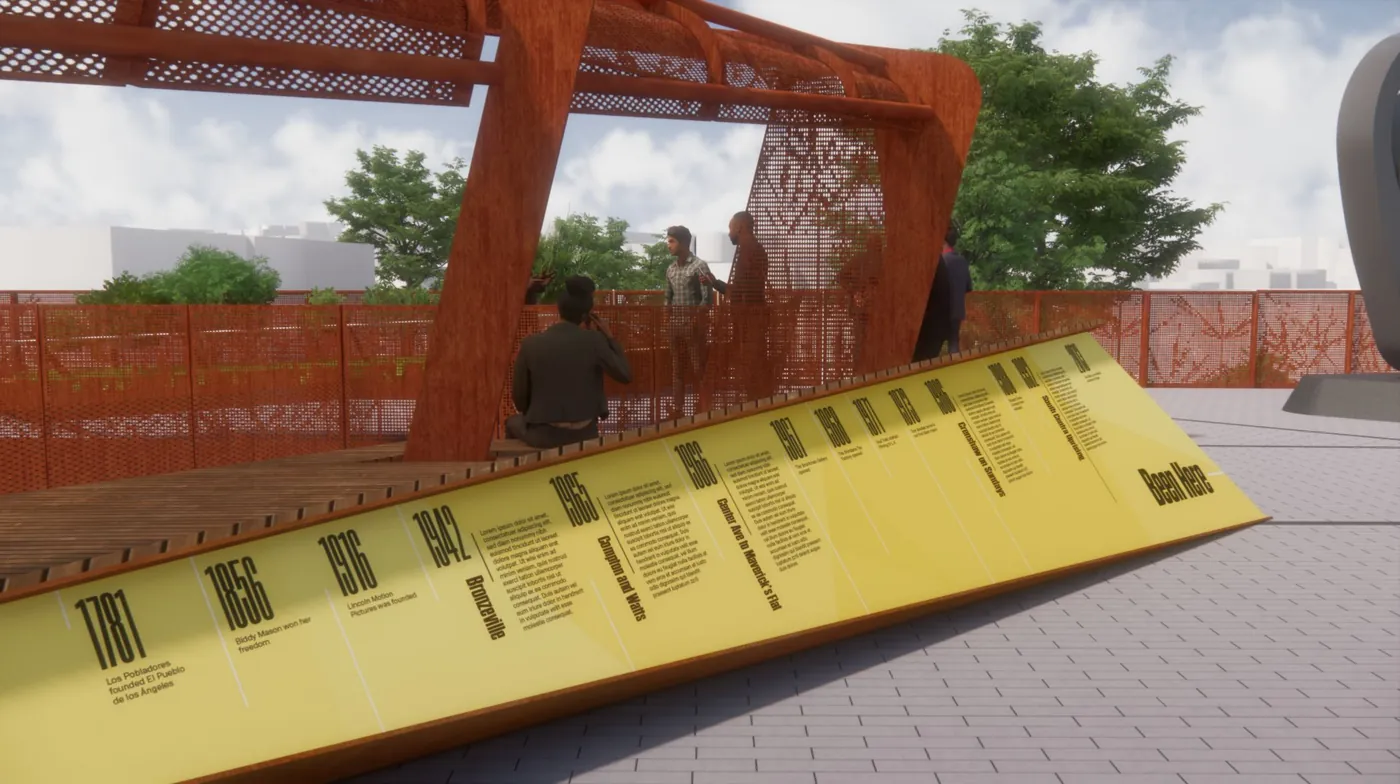
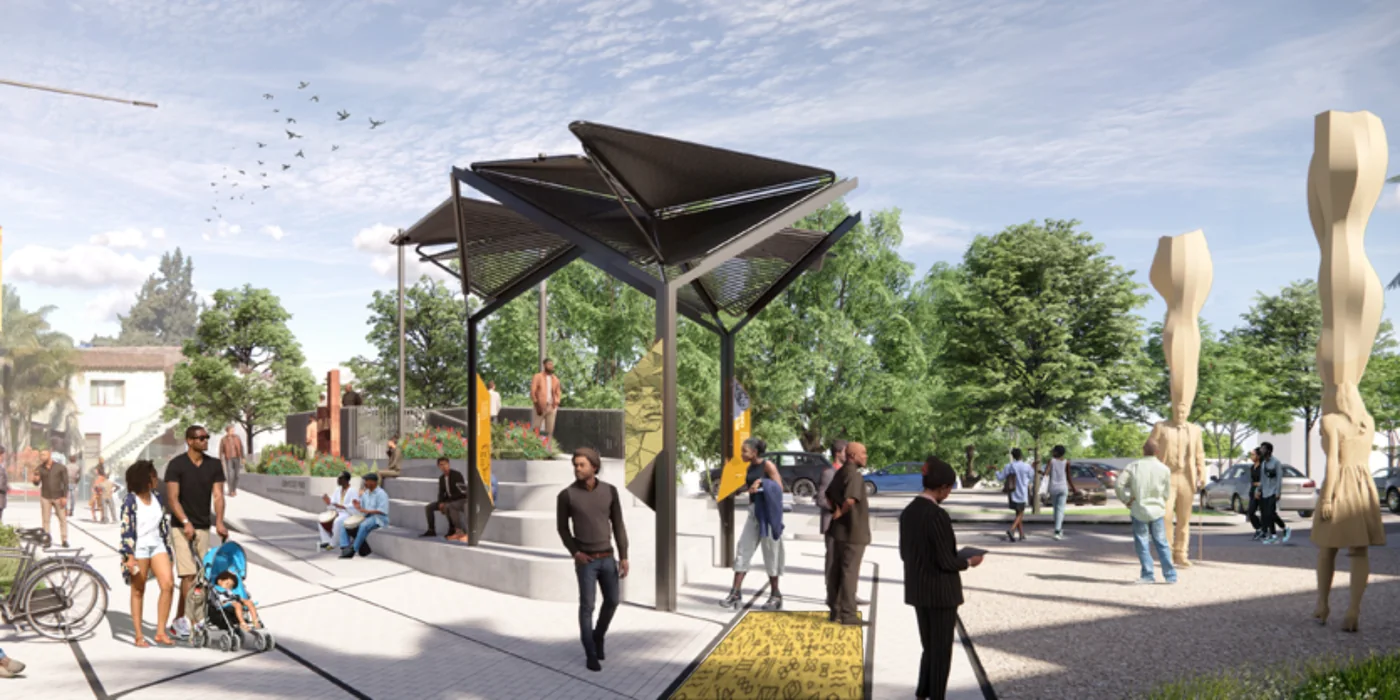
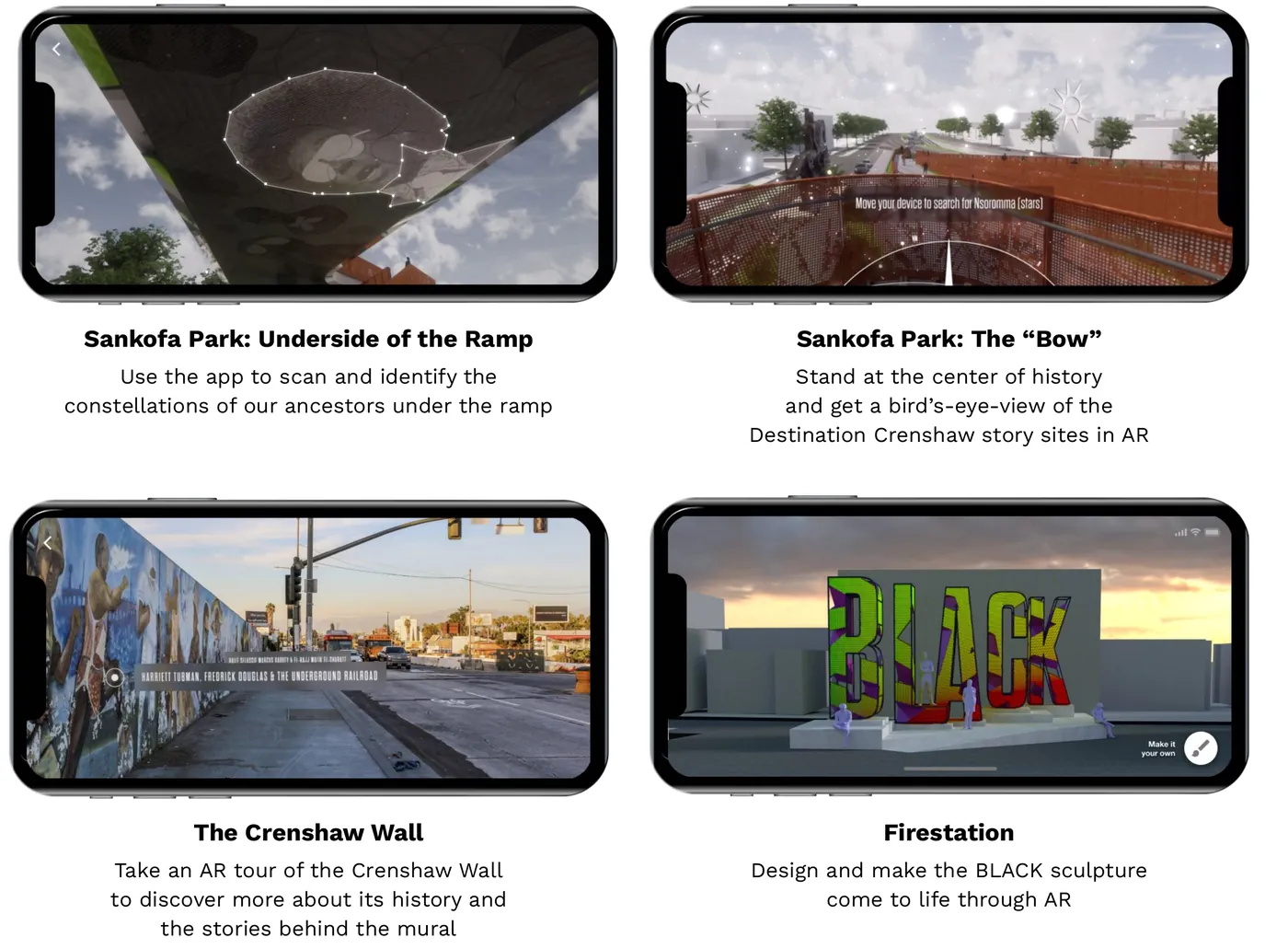
Under the ramp at Sankofa Park, portraits of the people who shaped Black Los Angeles cover the ceiling. At night, programmable LEDs turn them into constellations, and the app lets visitors find out who is looking down on them. At the top of the ramp, a 40-foot timeline set into the benches carries the park’s message: Been Here, Still Here.
BLACK, and a museum that moves
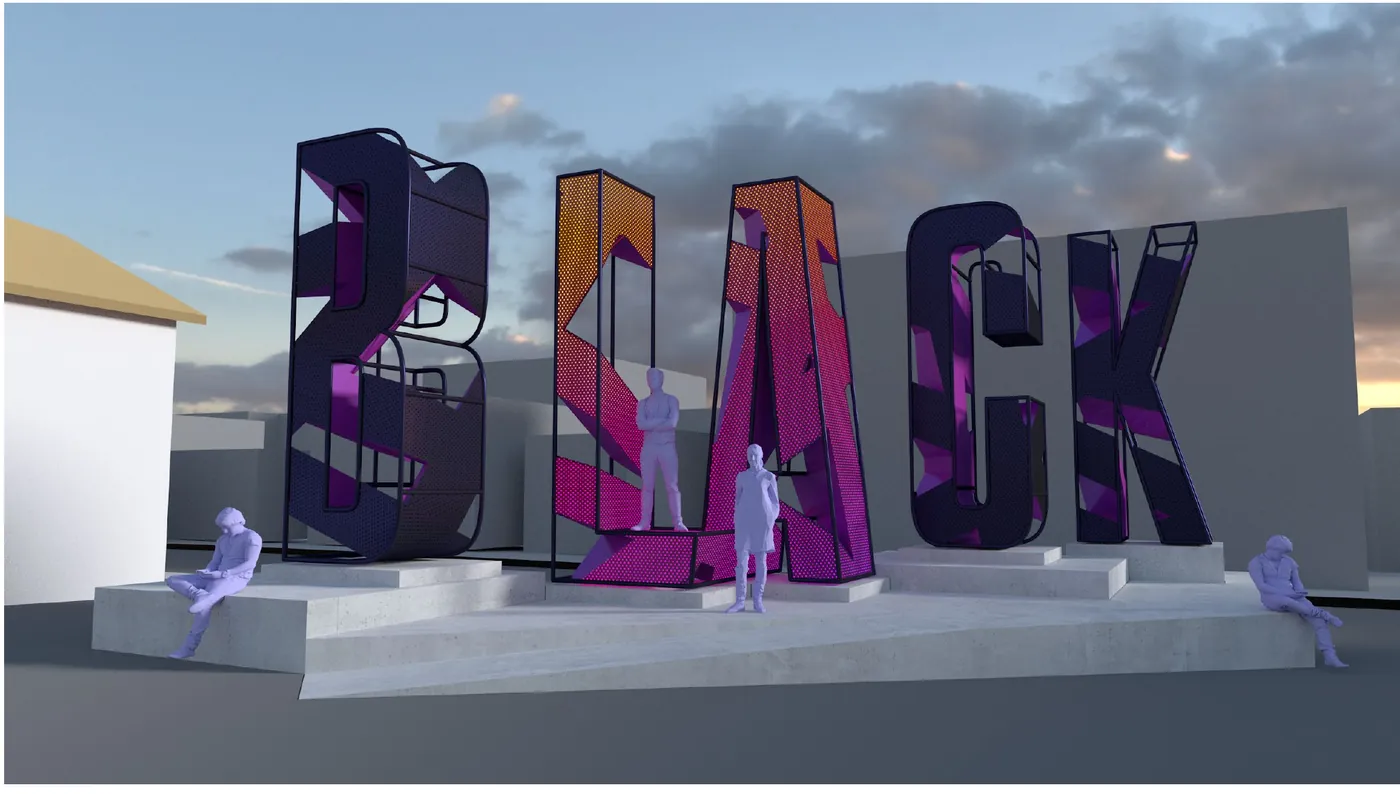
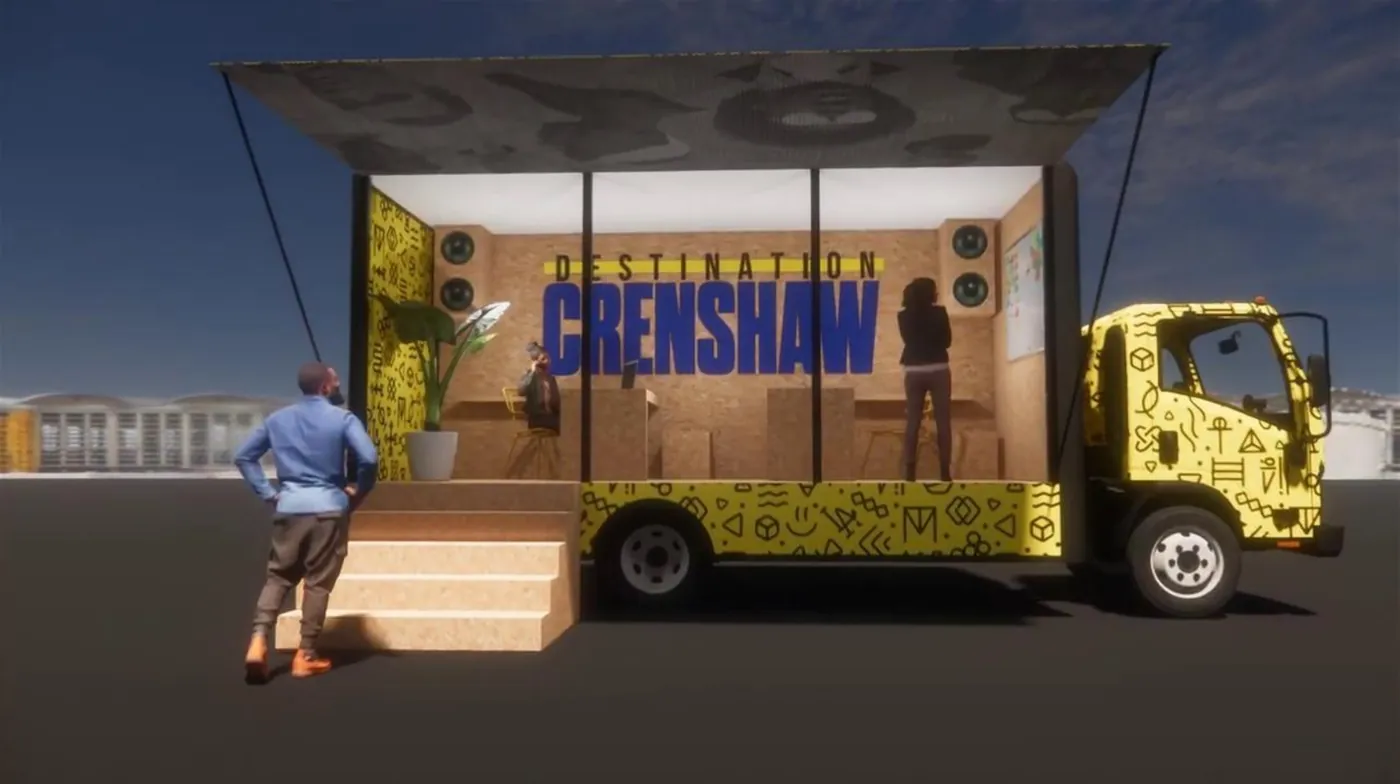
At the southern end, a sculpture with a double read anchors the Firestation campus: LA sits in the middle of BLACK, and LED arrays let the letters change with every event. Three branded trucks take the stories off the boulevard to schools, churches and events across the city.
A quilt for the mile
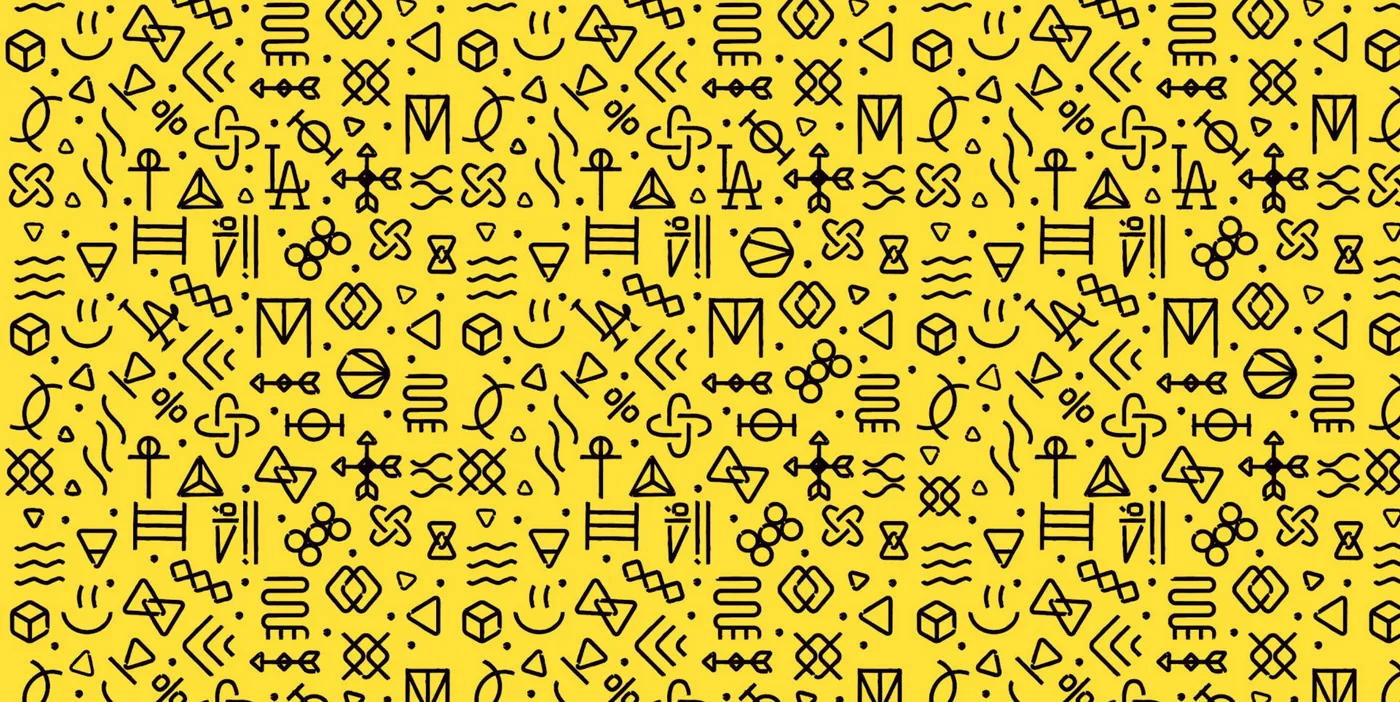
African American quilts recorded family milestones in pattern, often in code. The community glyph project carries that tradition into the street. Schools, churches and businesses contribute their own marks, which are combined into one pattern and engraved into pavers along the mile.
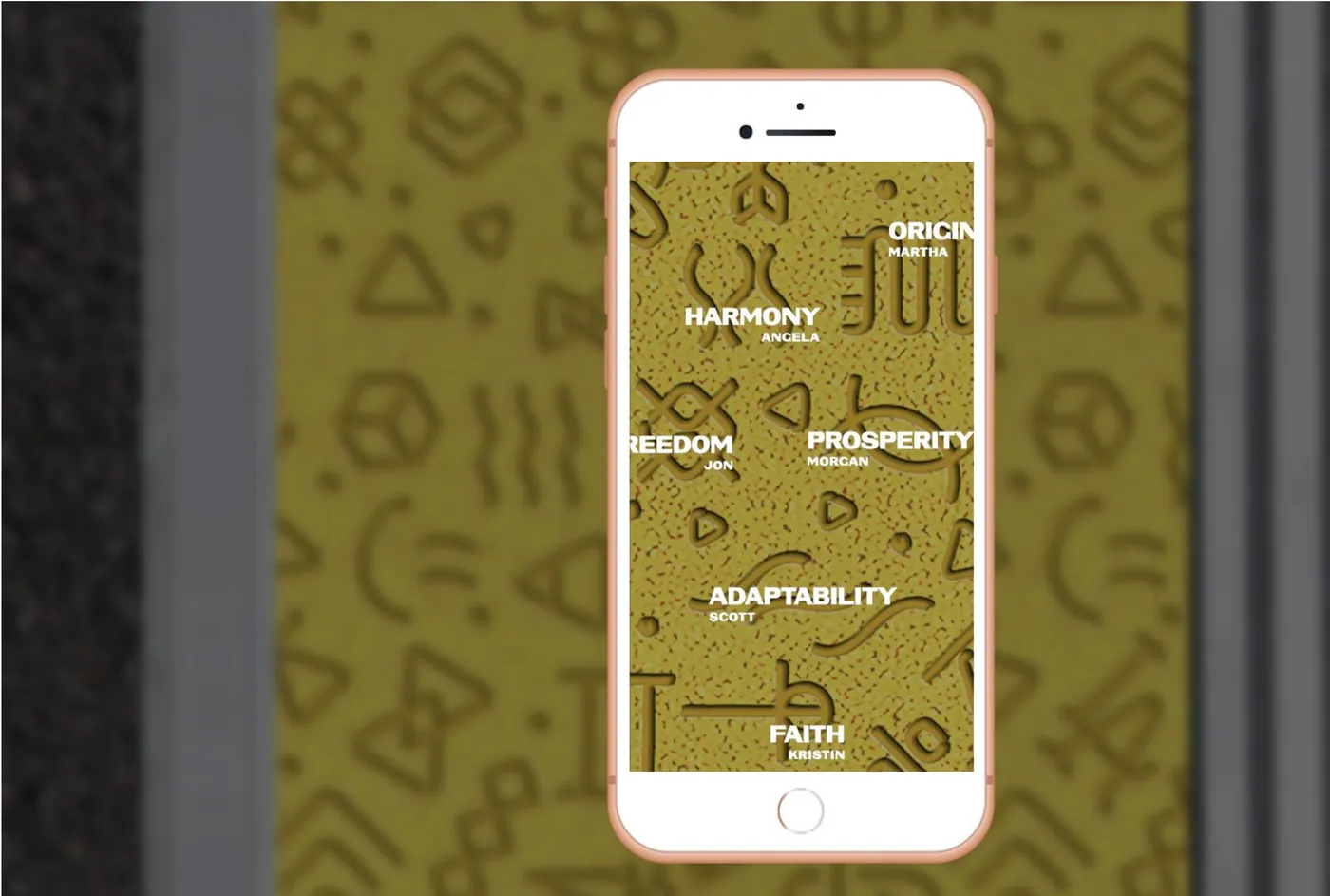
The pattern is also a way in. Visitors scan the pavers with their phones, and image recognition decodes each glyph: what it means, who made it, and where it came from. On the mobile site, anyone can draw a glyph of their own to add to the quilt.
The layer on top
A mobile site anyone can open carries the full stories and the map; an app adds augmented reality at four places on the mile. The system was built to keep changing, with a curator, a community review of the story backlog every year, and street graphics designed to be swapped as new stories arrive.
For the full story of this project read the complete case study