Destination Crenshaw
How do you tell the story of Black Los Angeles along a mile of Crenshaw Boulevard?
- Client
- Destination CrenshawLos Angeles Council District 8
- Location and Date
- Crenshaw Boulevard, Los AngelesMaster Planning through Design Development, 2018–2021
- Role
- Executive Creative DirectorCompleted at G&A
- Press
4 articles
- GettyDestination Crenshaw
- Artnet NewsSee Sculptures by Kehinde Wiley, Alison Saar, and More Commissioned for Destination Crenshaw
- Alta JournalCrenshaw at the Crossroads
- The Christian Science MonitorLos Angeles Crenshaw mural black art
- Responsibilities led
- Creative direction across all phasesTeam leadershipClient and community liaisonExperience strategy and storytellingInterpretive identity and design systemPhysical, digital and AR integration
Overview
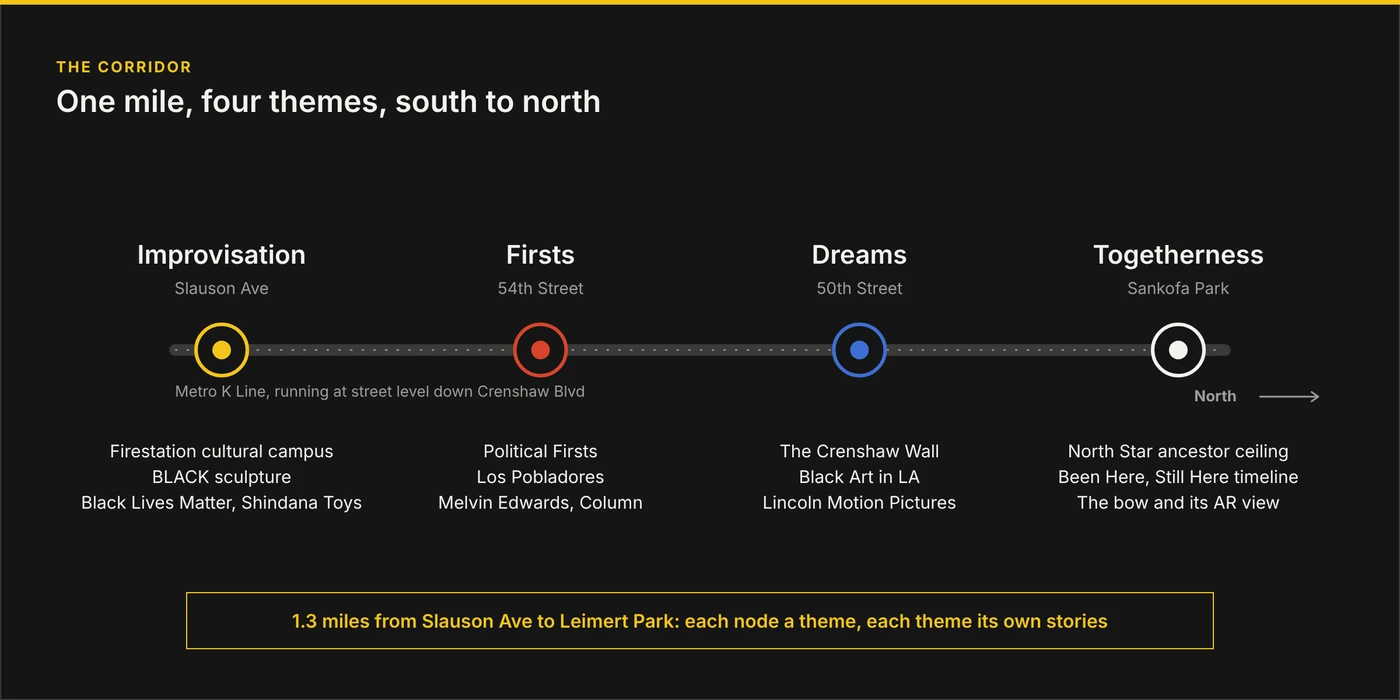
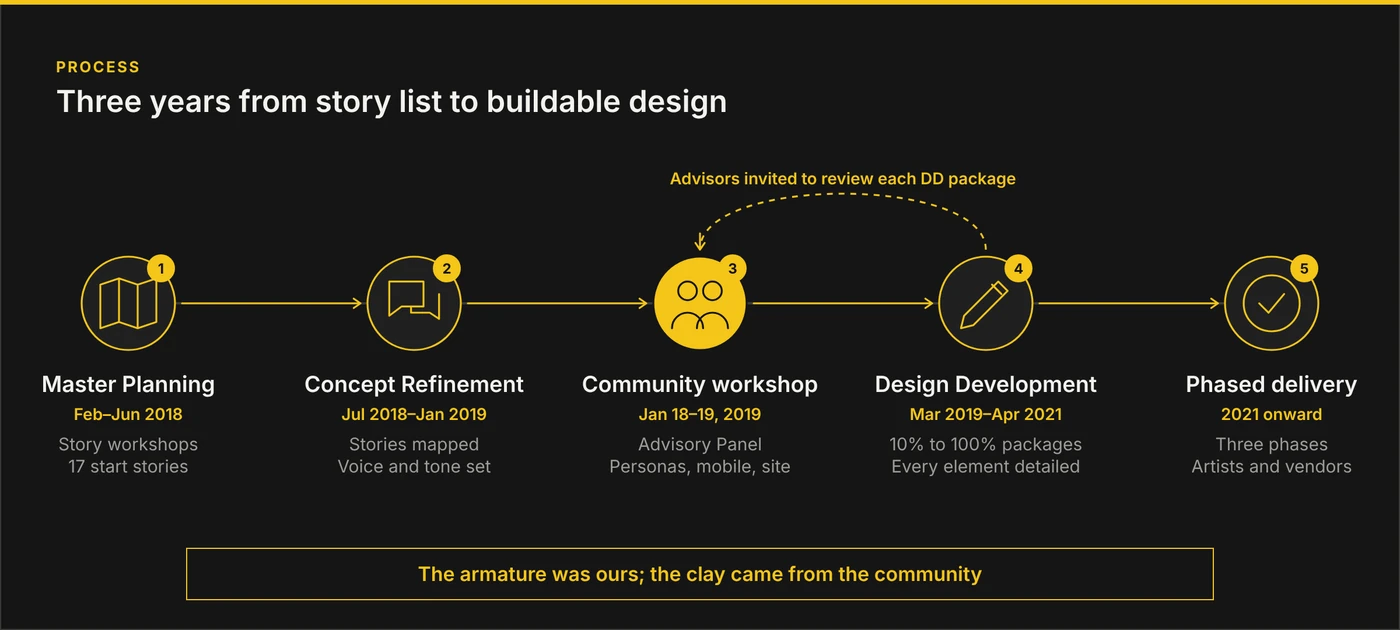
Destination Crenshaw turns 1.3 miles of Crenshaw Boulevard into an open-air museum of Black Los Angeles. The interpretive layer, meaning the stories, the voice, the graphics and the digital experiences that run the length of the corridor, was developed with the community over three years, from the first story workshops in 2018 to the final design package in 2021.
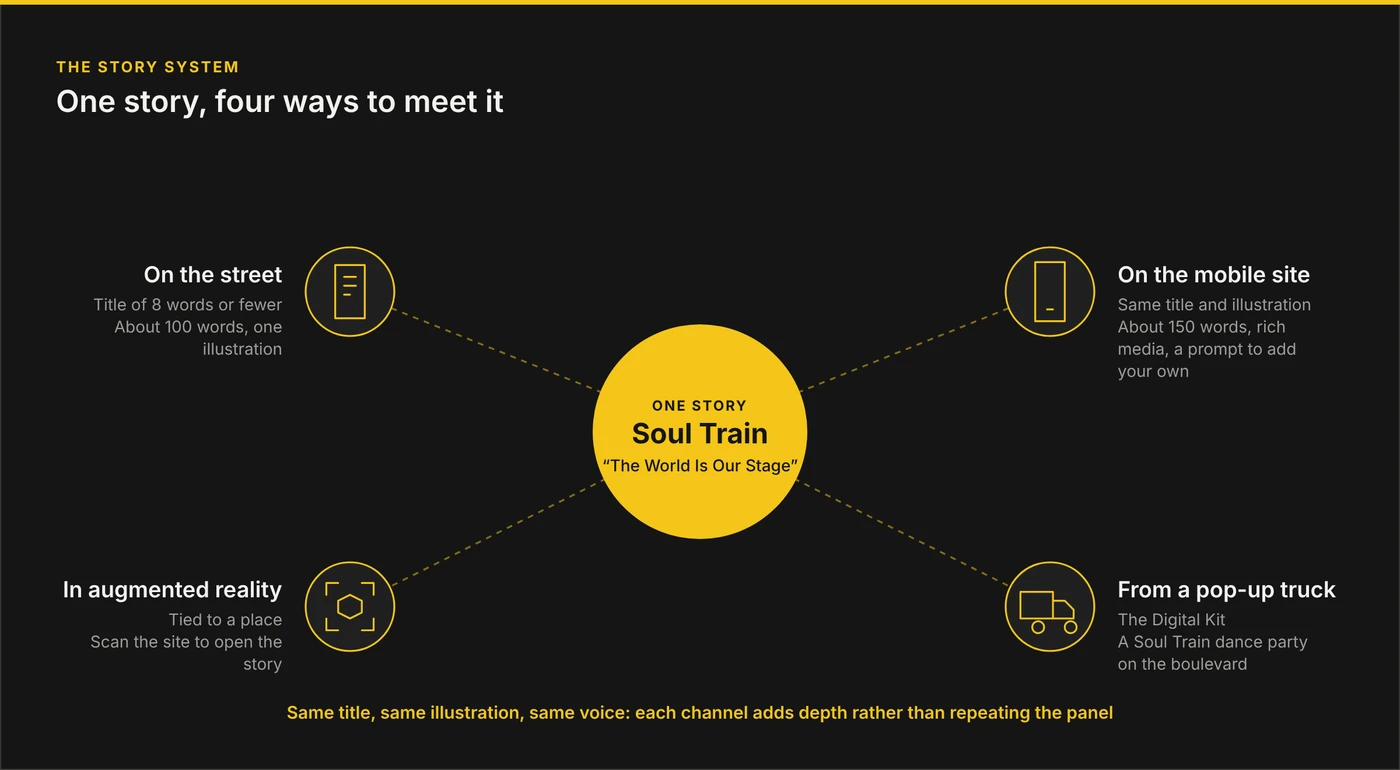
It is a storytelling system built to keep growing: panels and plaques on the street, a mobile site, augmented reality, and pop-up trucks that carry the stories beyond the boulevard.
From pass-through to destination
Metro routed the new K Line down the middle of Crenshaw at street level, and the city had labeled the corridor a pass-through. Nipsey Hussle answered with two words: Destination Crenshaw.
The project took him at his word. If trains would carry visitors through the neighborhood, the boulevard itself would tell them where they were, and whose place it is.
Spending time with the corridor
Before designing anything, we spent time with the people the corridor belongs to.
Listening first
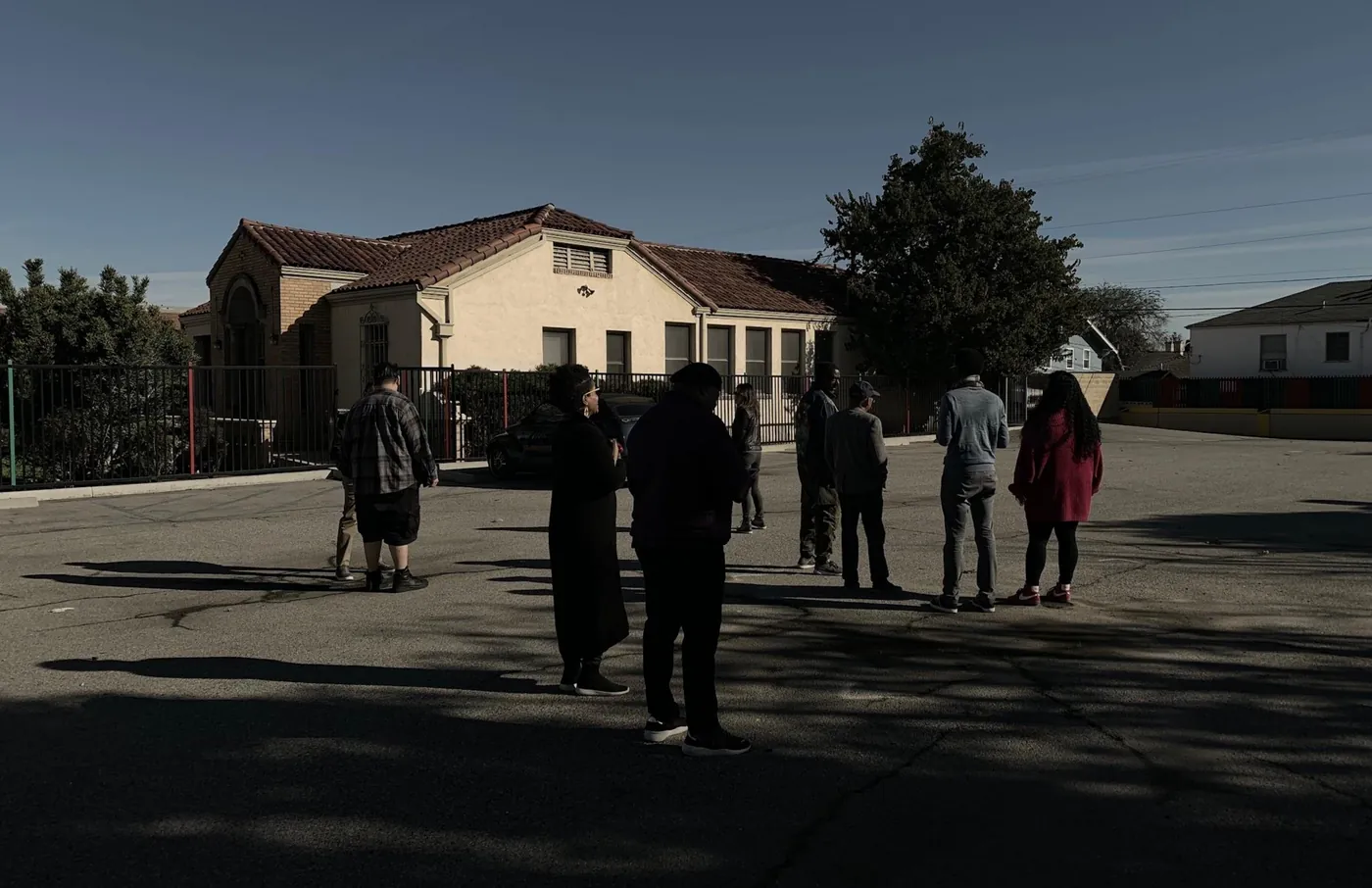
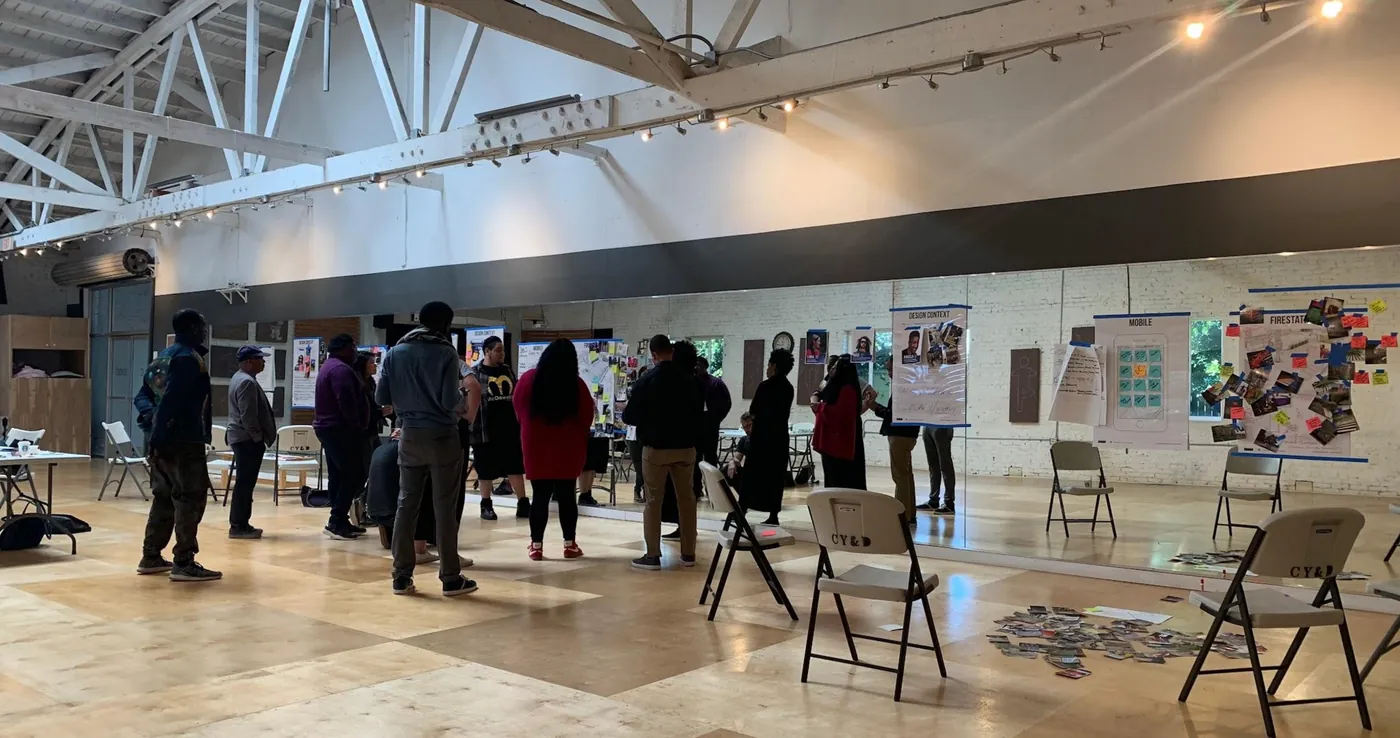
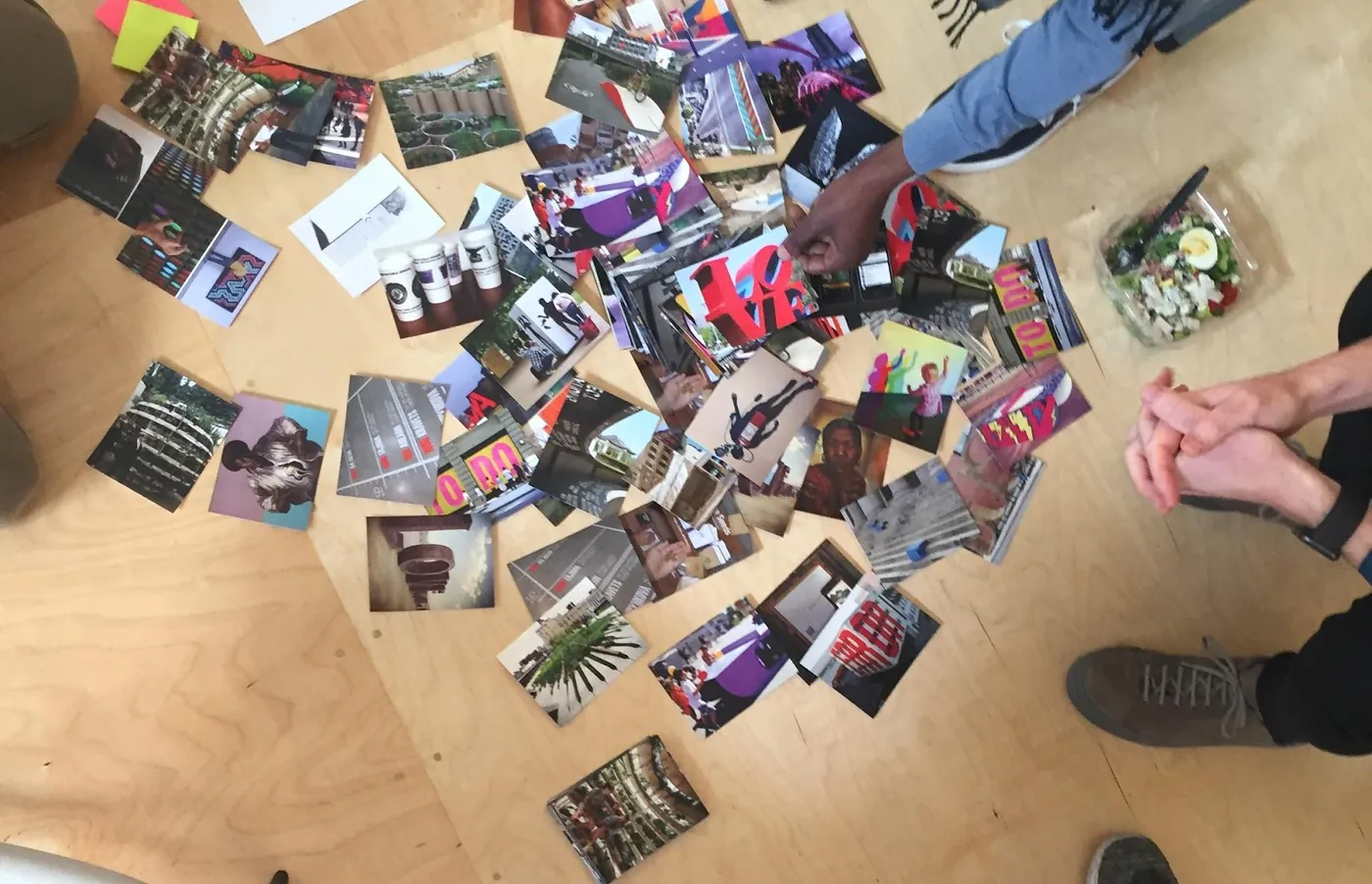
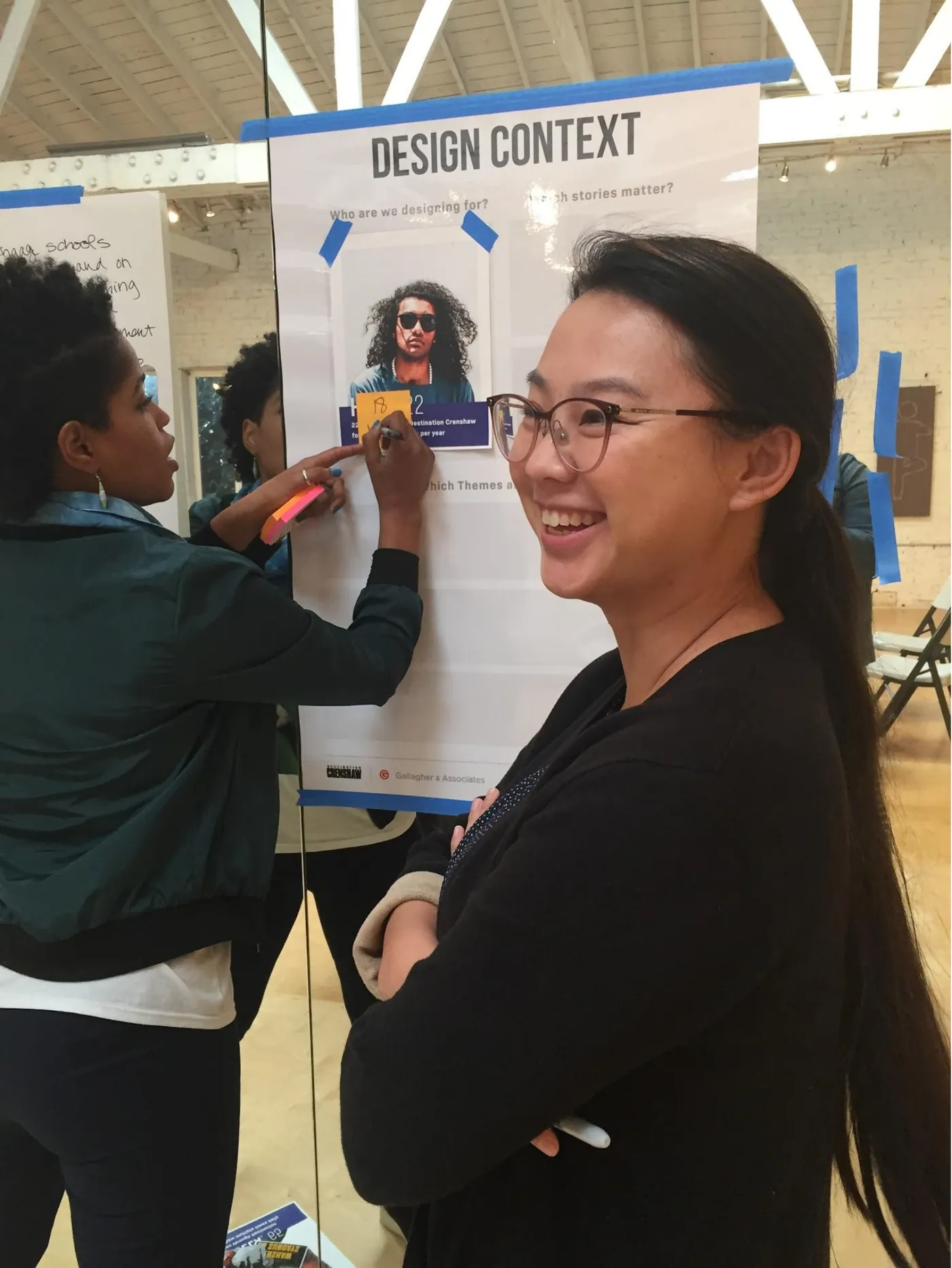
In January 2019, before design development began, the design team spent two days with the Community Advisory Panel: artists, organizers, historians and neighbors. Three breakout groups built personas, sketched what a mobile experience could be, and walked to the old Firestation to imagine its future.
The concepts going in were an armature. The workshop supplied the clay.
Three neighbors
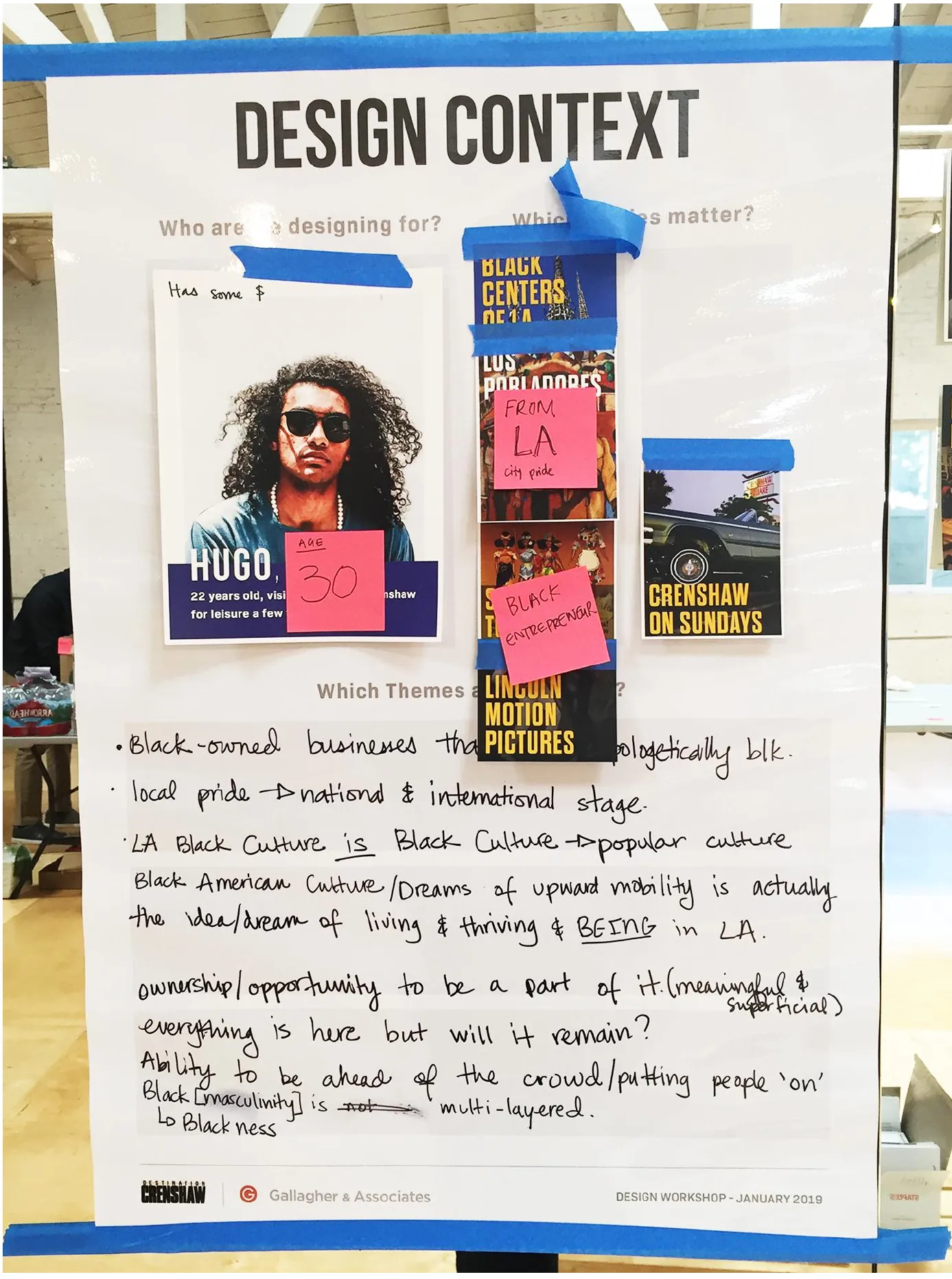
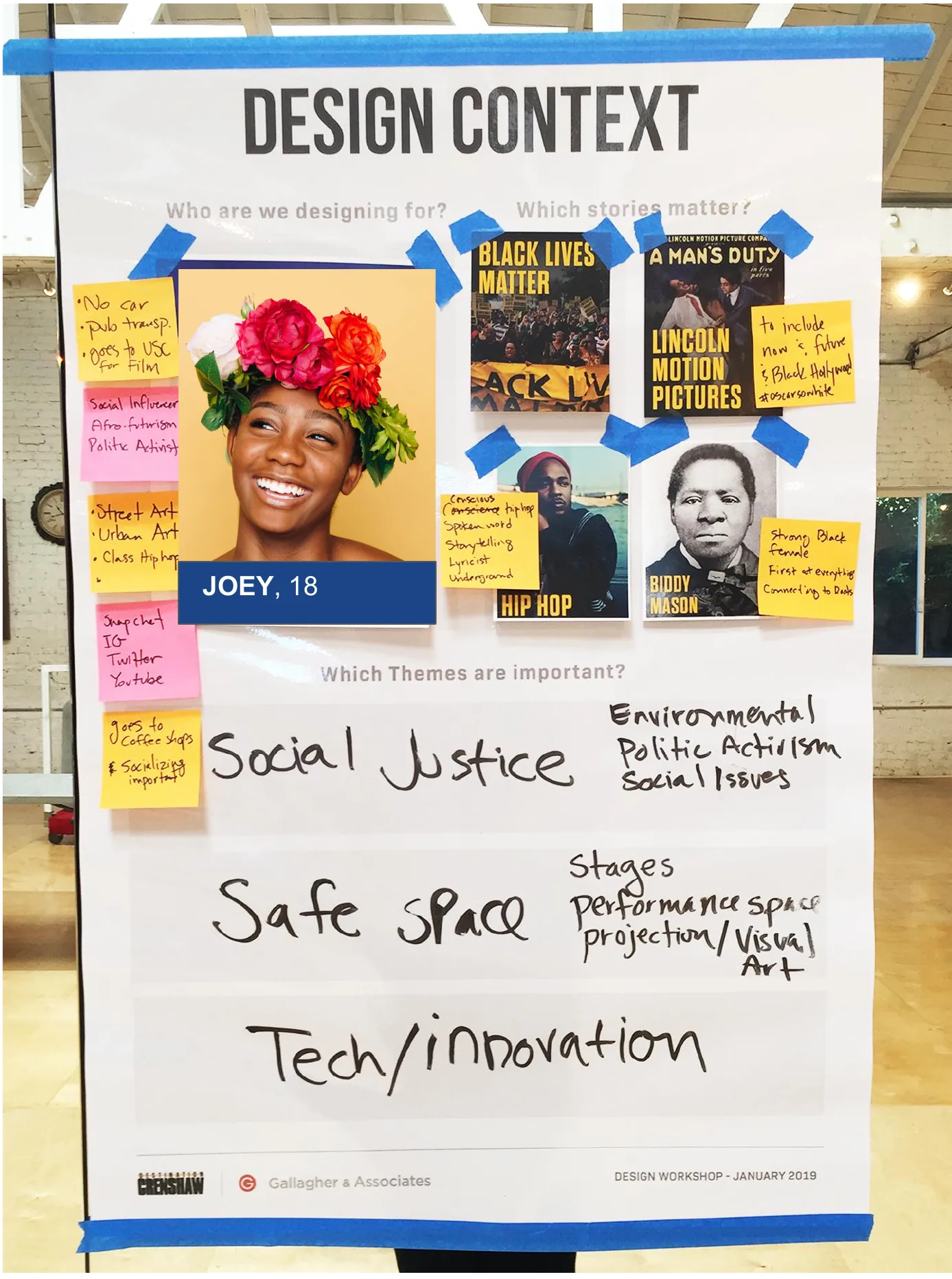
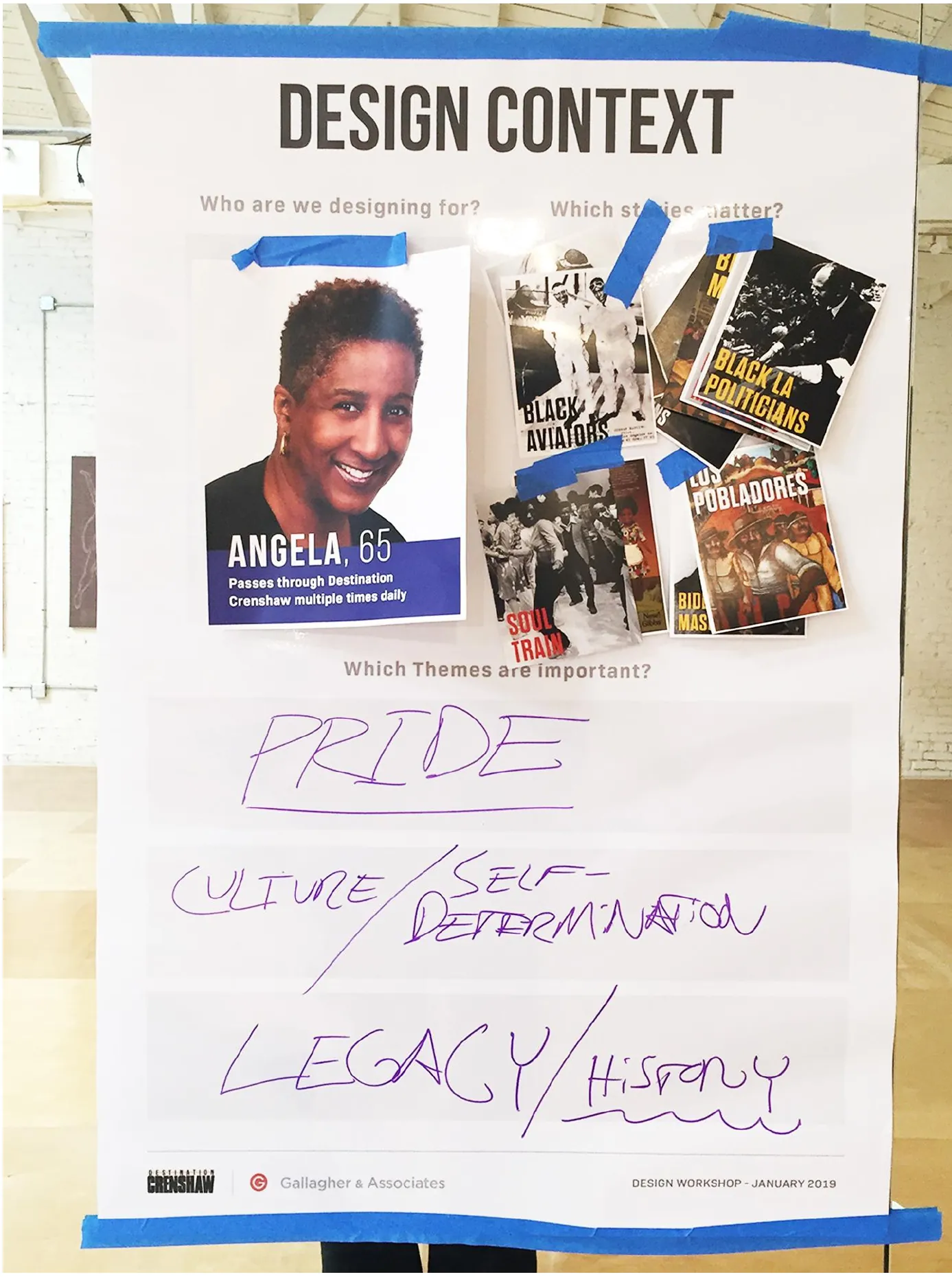
Each group designed for one person. Hugo, 30, runs an online store and is plugged into the neighborhood. Joey, 18, is a queer film student at USC who gets around by bus and posts her short films online. Angela, 65, is a civic-minded resident for whom oral tradition matters.
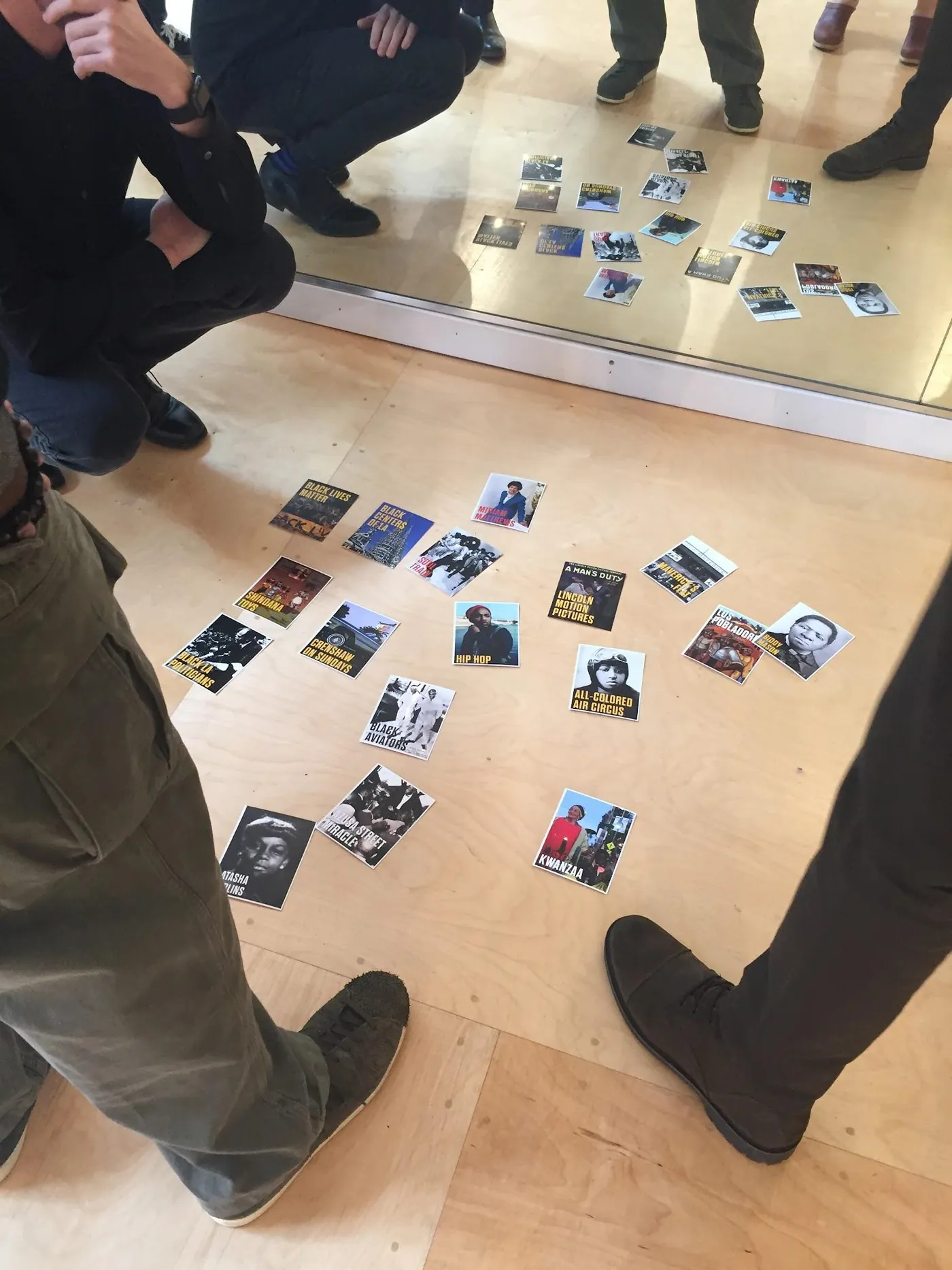
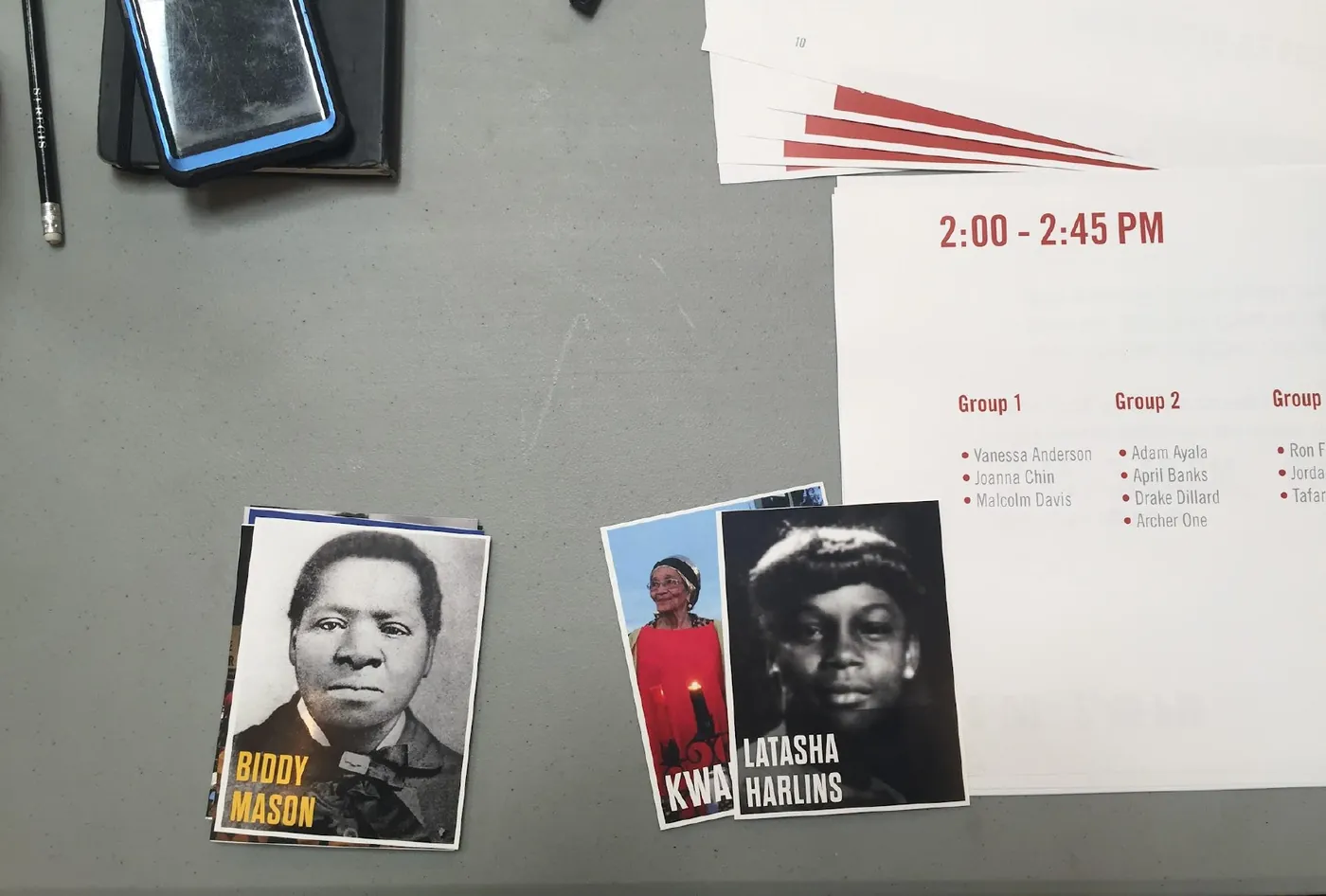
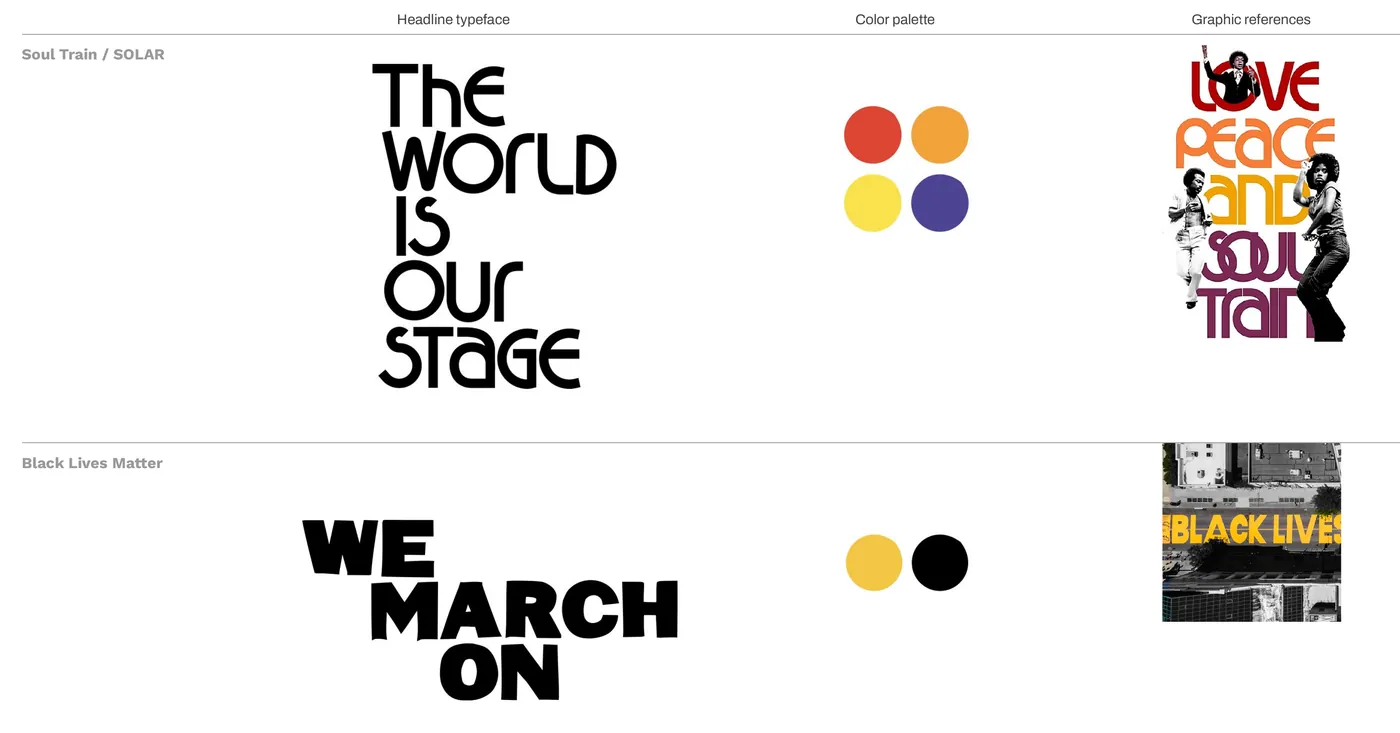
Their interests decided which stories led. Joey chose Black Lives Matter, Lincoln Motion Pictures and Biddy Mason. Angela chose Soul Train, Shindana Toys and Crenshaw on Sundays. Hugo chose Los Pobladores and the Black entrepreneurs behind Shindana and Lincoln.
Seventeen stories, four themes
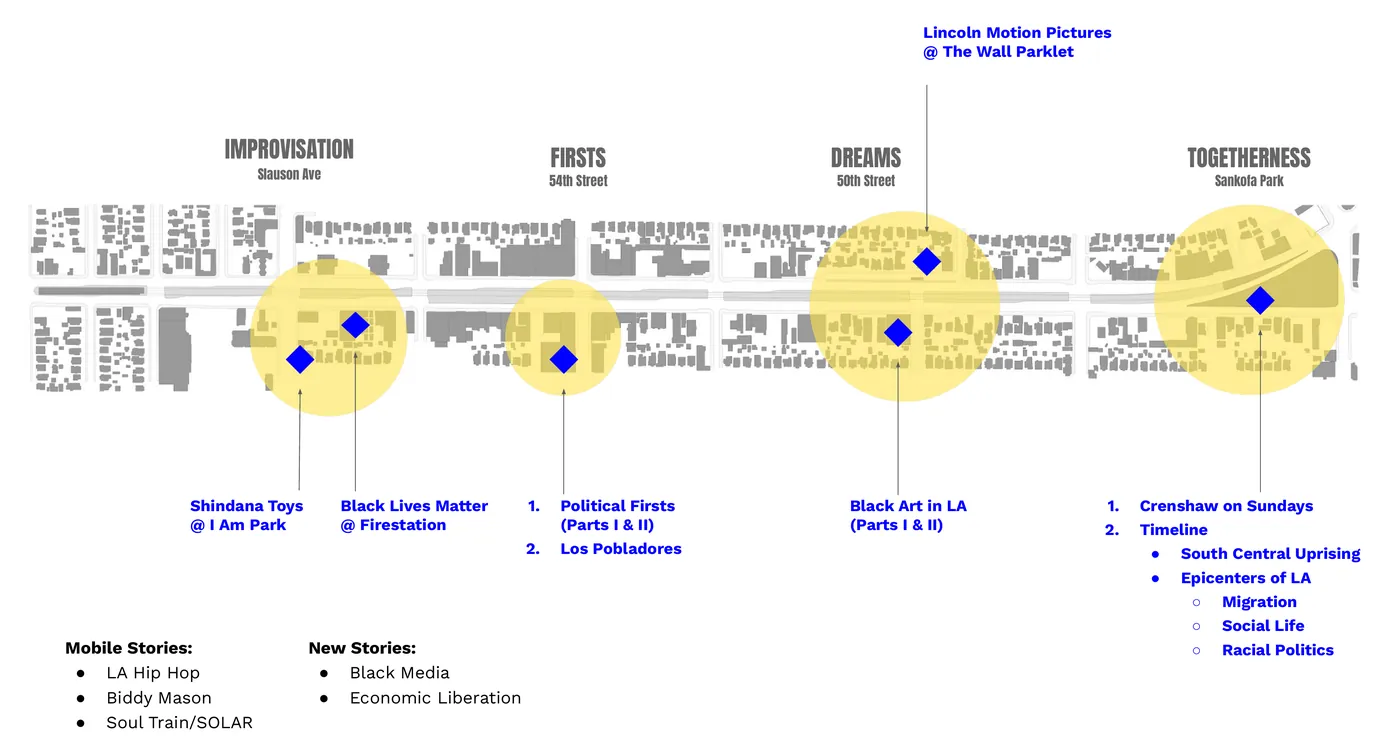
From the many stories shared in the 2018 workshops, seventeen were chosen to open the mile. Four themes set their order from south to north: Improvisation, Firsts, Dreams and Togetherness.
Every story was held to six rules. Provoke nostalgia or curiosity. Highlight the LA connection. Connect past, present and future. Find the unexpected in the familiar. Put point of view before information. Speak in the collective voice.
Why it mattered to the people here
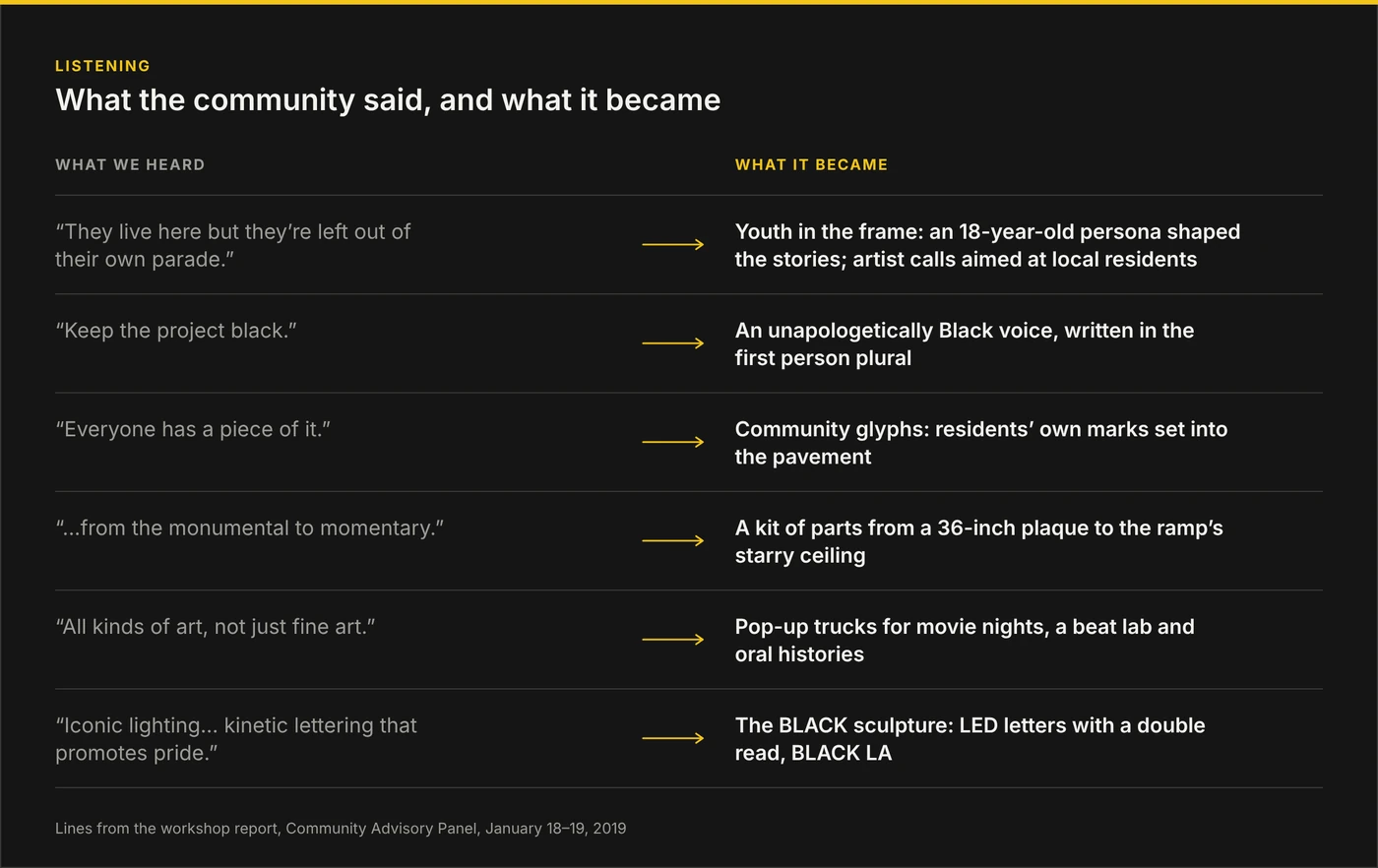
The panel’s words gave the project its reason to matter to the people who live here.
“They live here but they’re left out of their own parade.”
Written as we
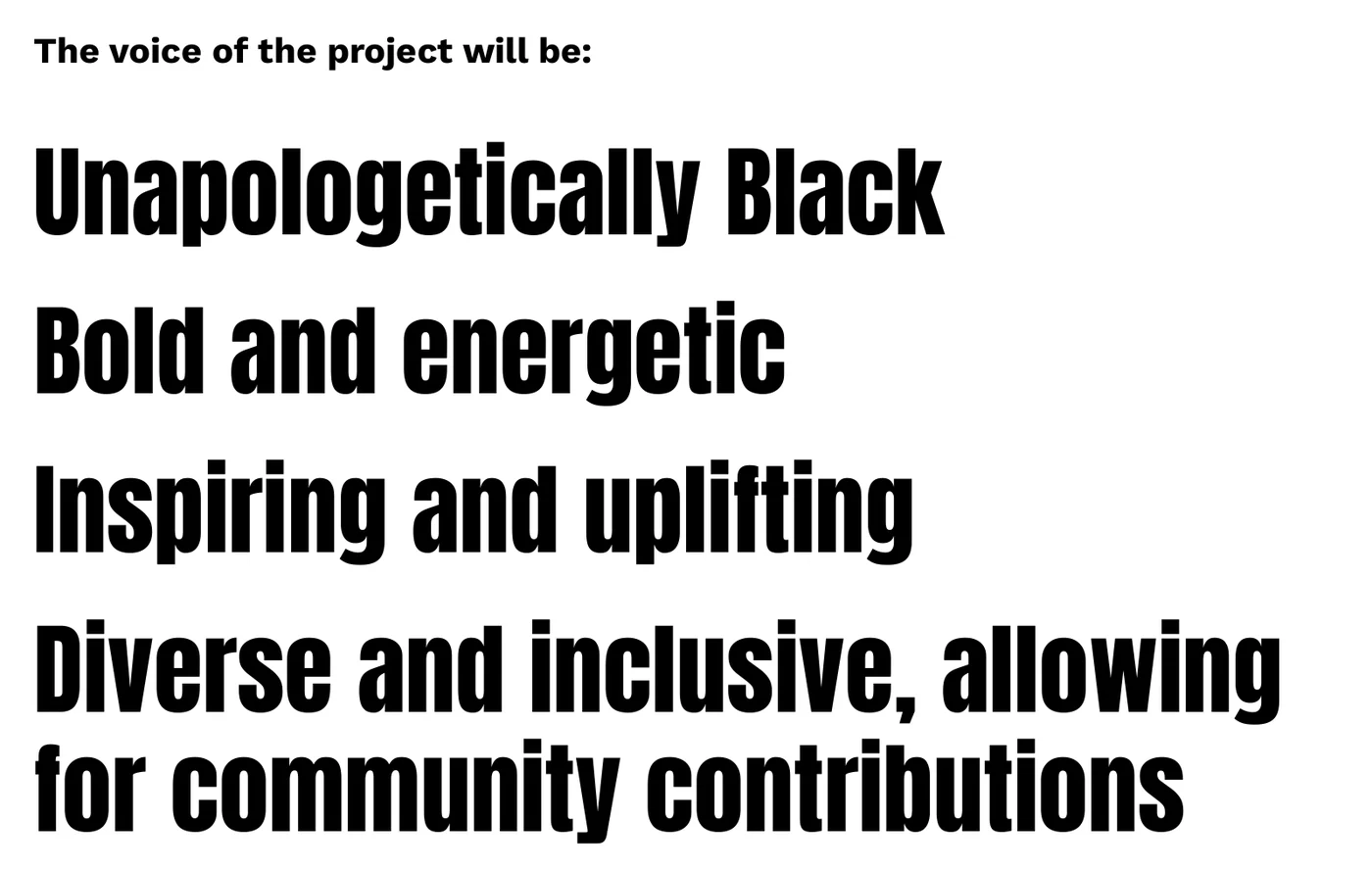
The stories speak in the first person plural. Not he did this, but we did this: the community owns its past and answers for its future.
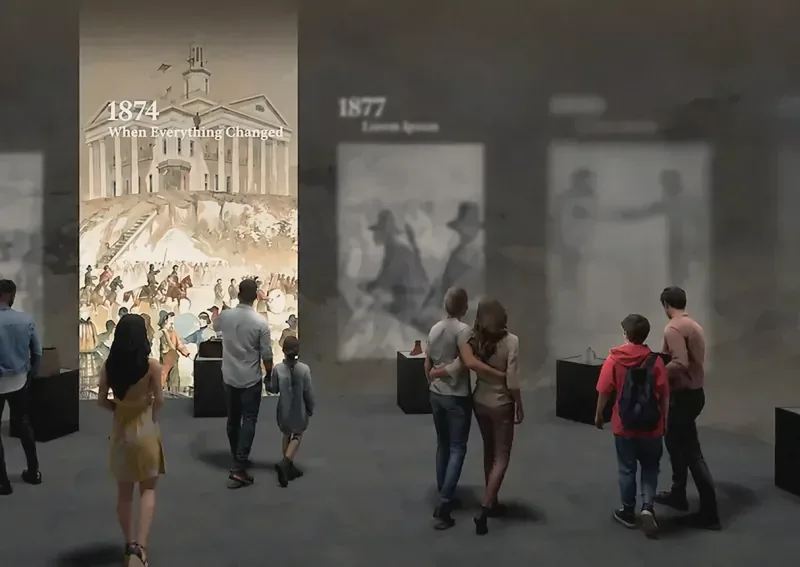
Titles stay under eight words, active and in the present tense, to connect then and now. Panels run about a hundred words and never try to tell the whole story. The mobile site carries the longer version, unfolding piece by piece with photos and film.
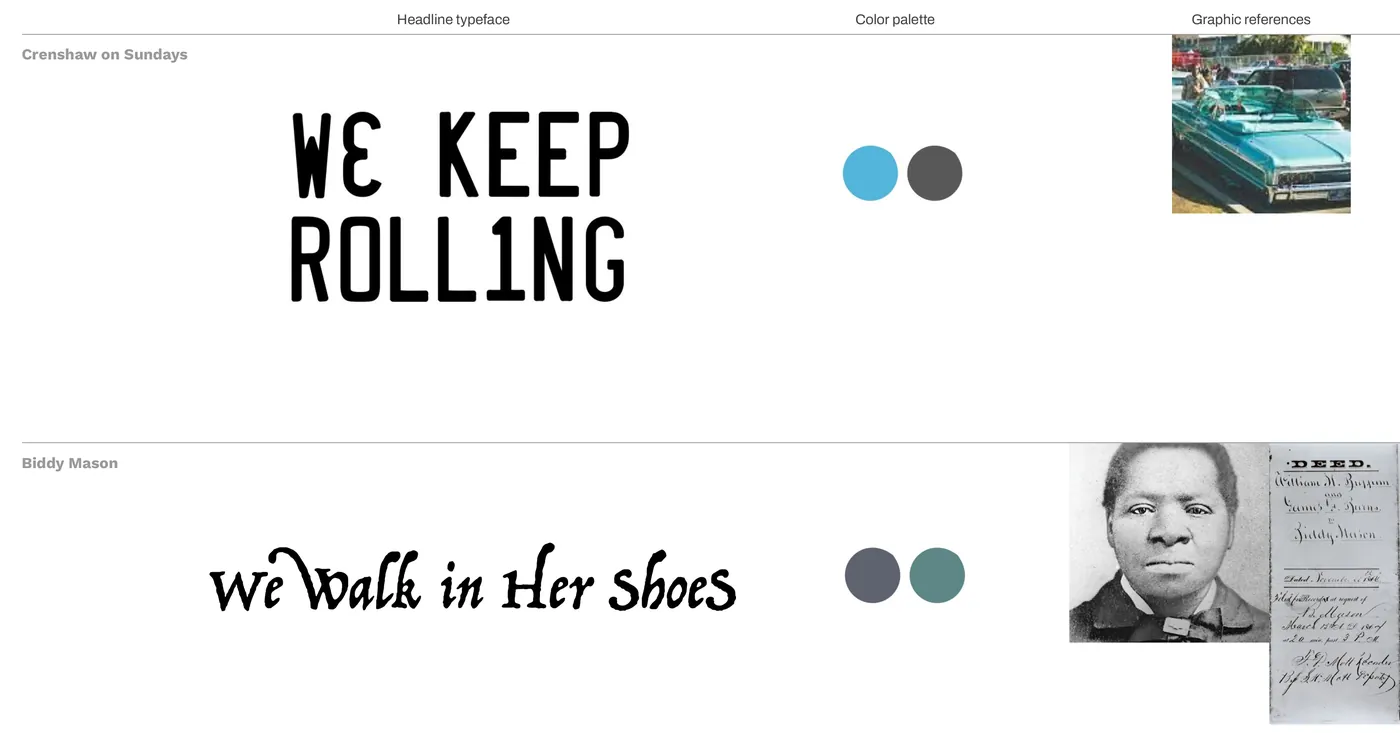
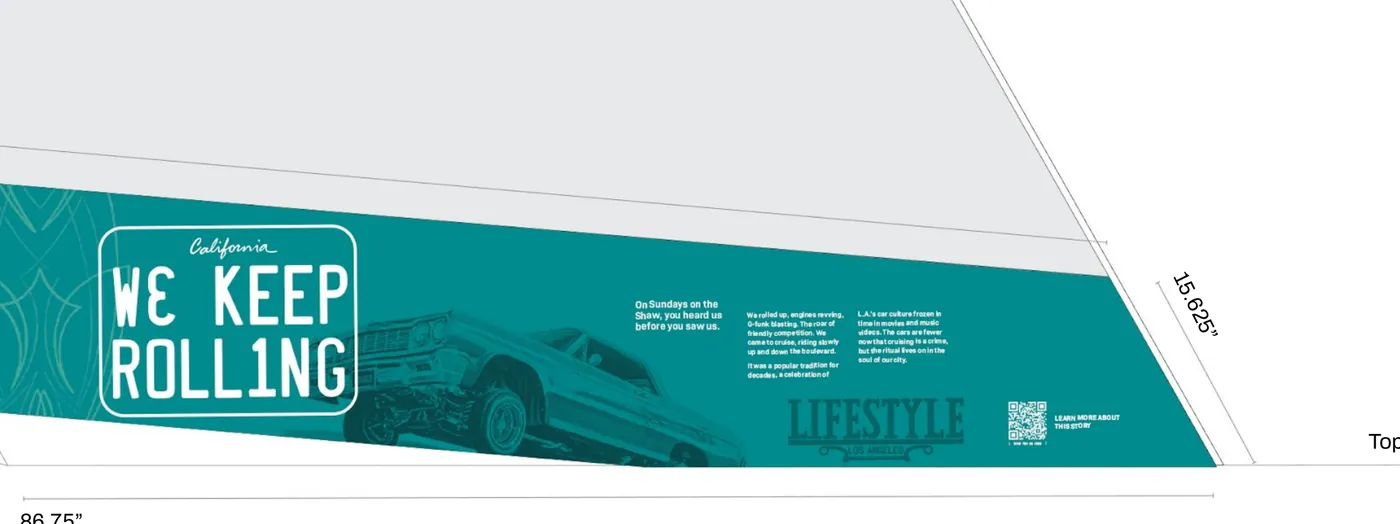
We Keep Rolling
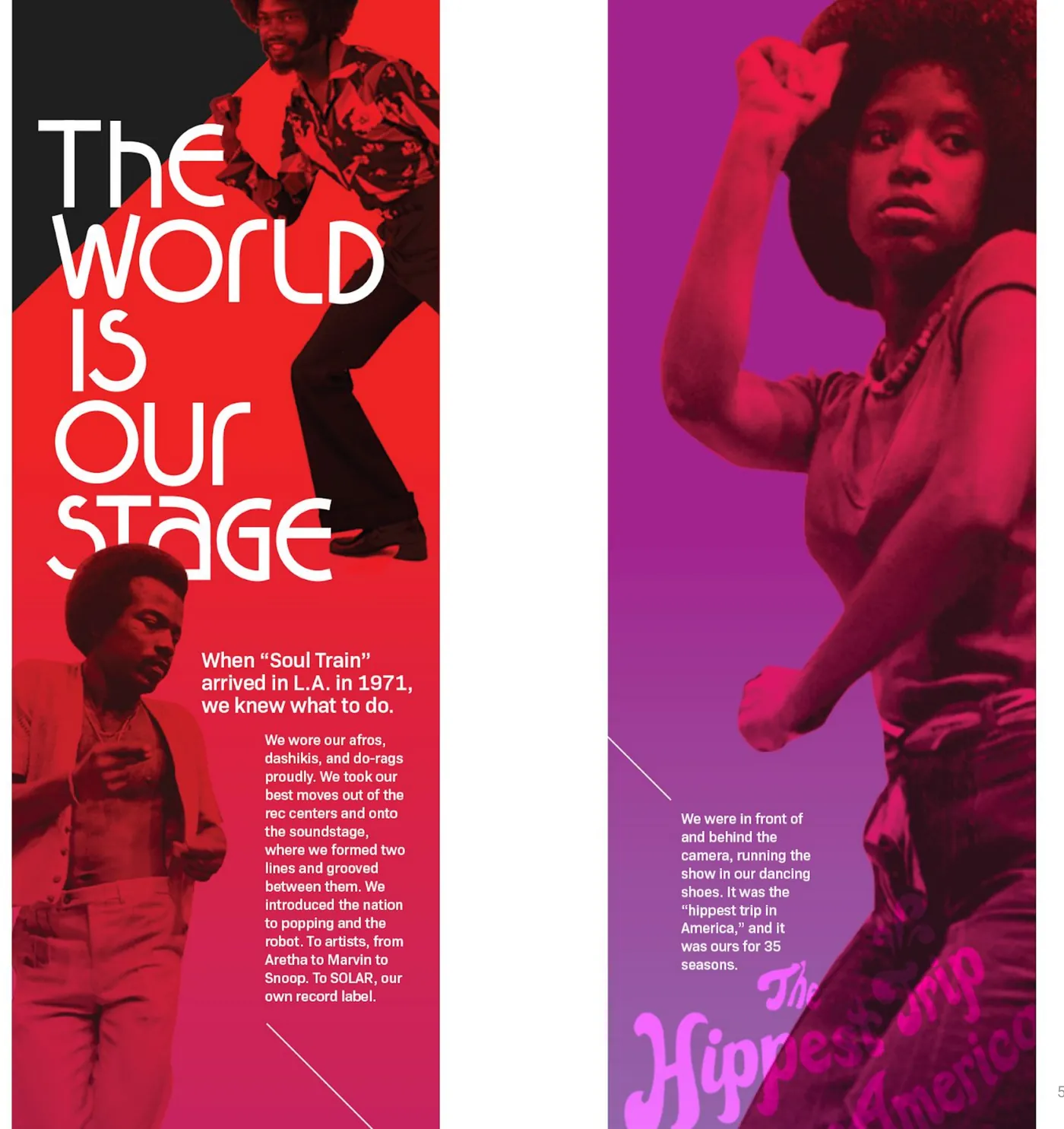
On Sundays on the Shaw, you heard us before you saw us. We rolled up, engines revving, G-funk blasting. The roar of friendly competition. We came to cruise, riding slowly up and down the boulevard. Low-riders bounced. Vintage cars hummed. Rims gleamed. We showed up to show off.
It was a popular tradition for decades, a celebration of L.A.’s car culture frozen in time in movies and music videos. The cars are fewer now that cruising is a crime, but the ritual lives on in the soul of our city.
One idea to guide every story
One idea had to be strong enough to guide every story, panel and screen.
Unapologetically Black
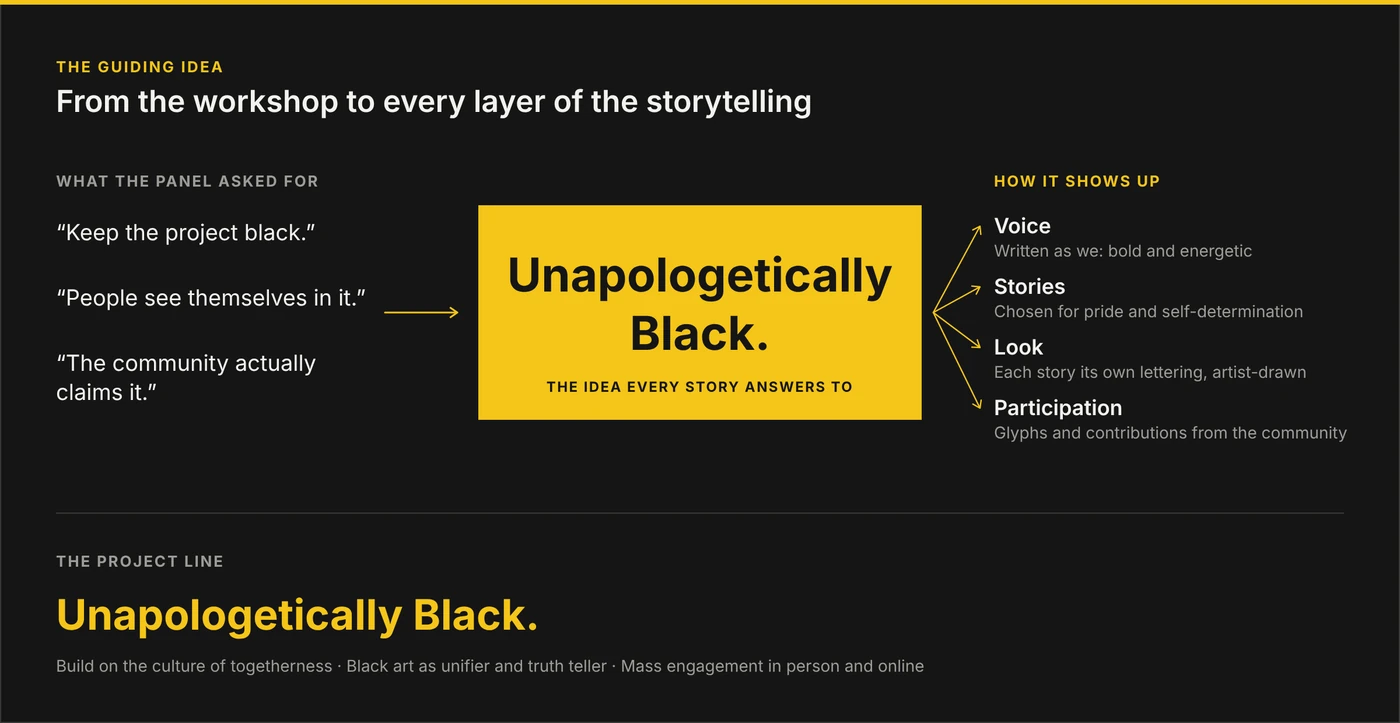
Out of the workshop came one idea to guide the whole storytelling layer. The panel had said it plainly: keep the project black, let people see themselves in it, let the community claim it. The team gave that a name: Unapologetically Black.
It became the test for every story, the first word on the voice, and the brief for the look. Through the work it became the project’s catchphrase.
The project at large had its own unifying ideas: the African star grass and rhizome patterns behind “Grow Where You’re Planted,” and at Sankofa Park, the North Star under the ramp. For the stories, the voice and the digital layer, Unapologetically Black came first.
Eclectic cohesion
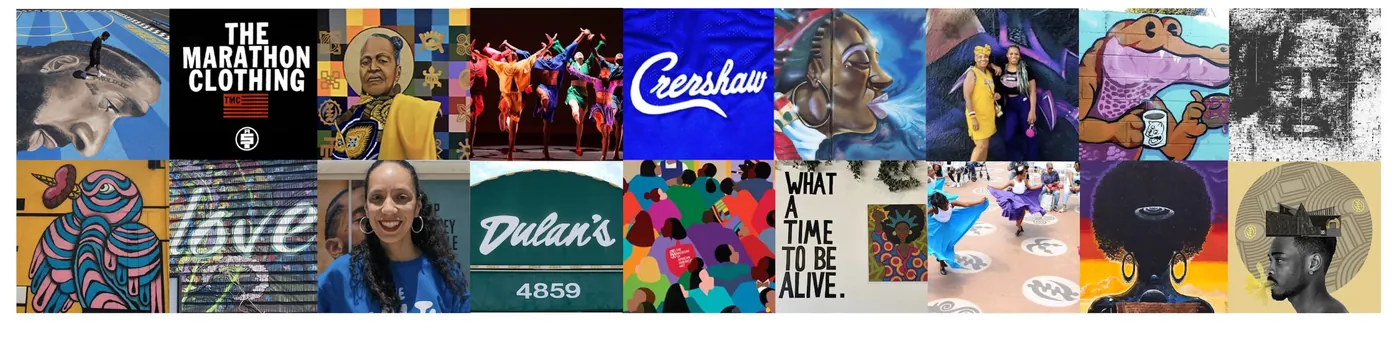
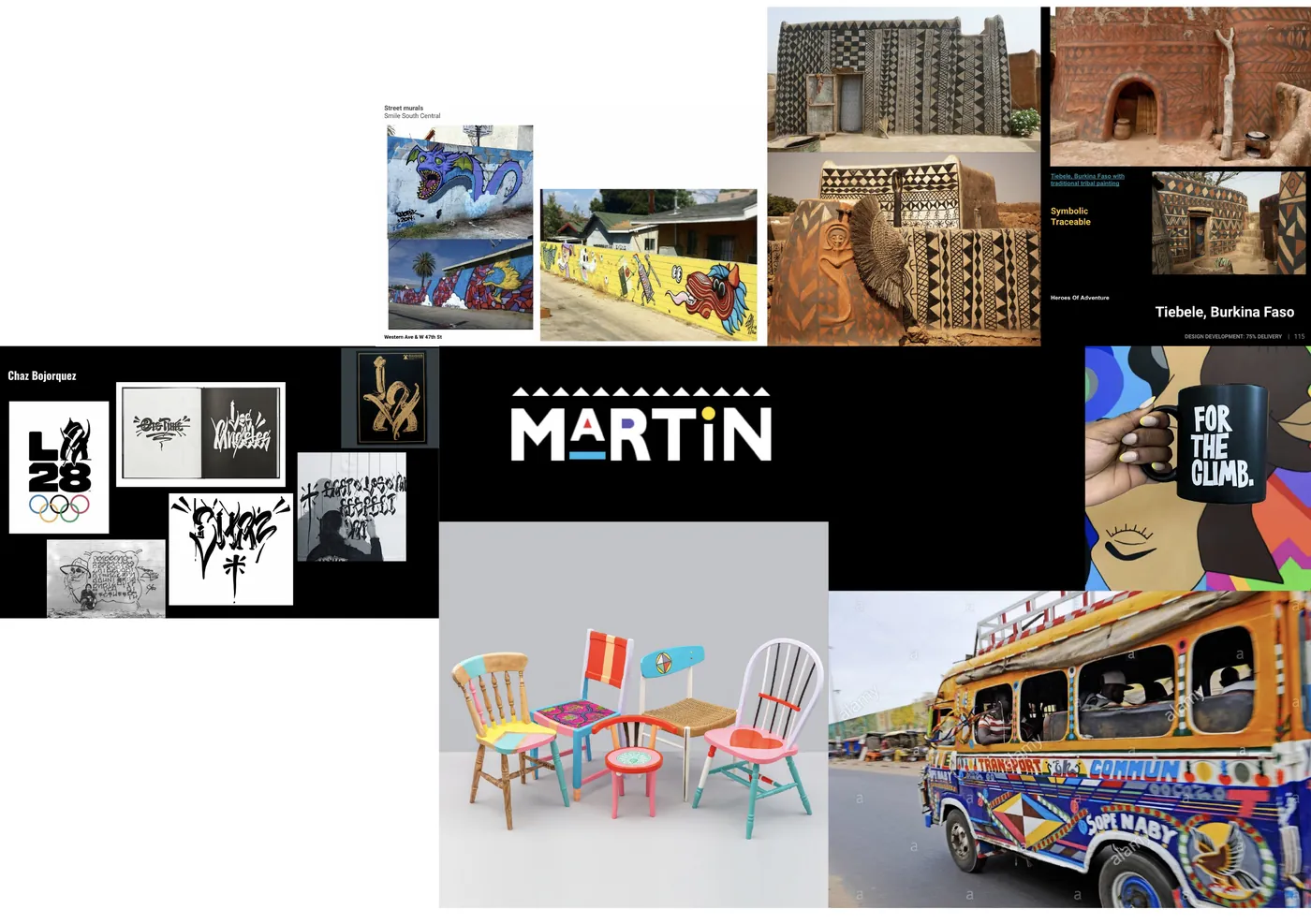
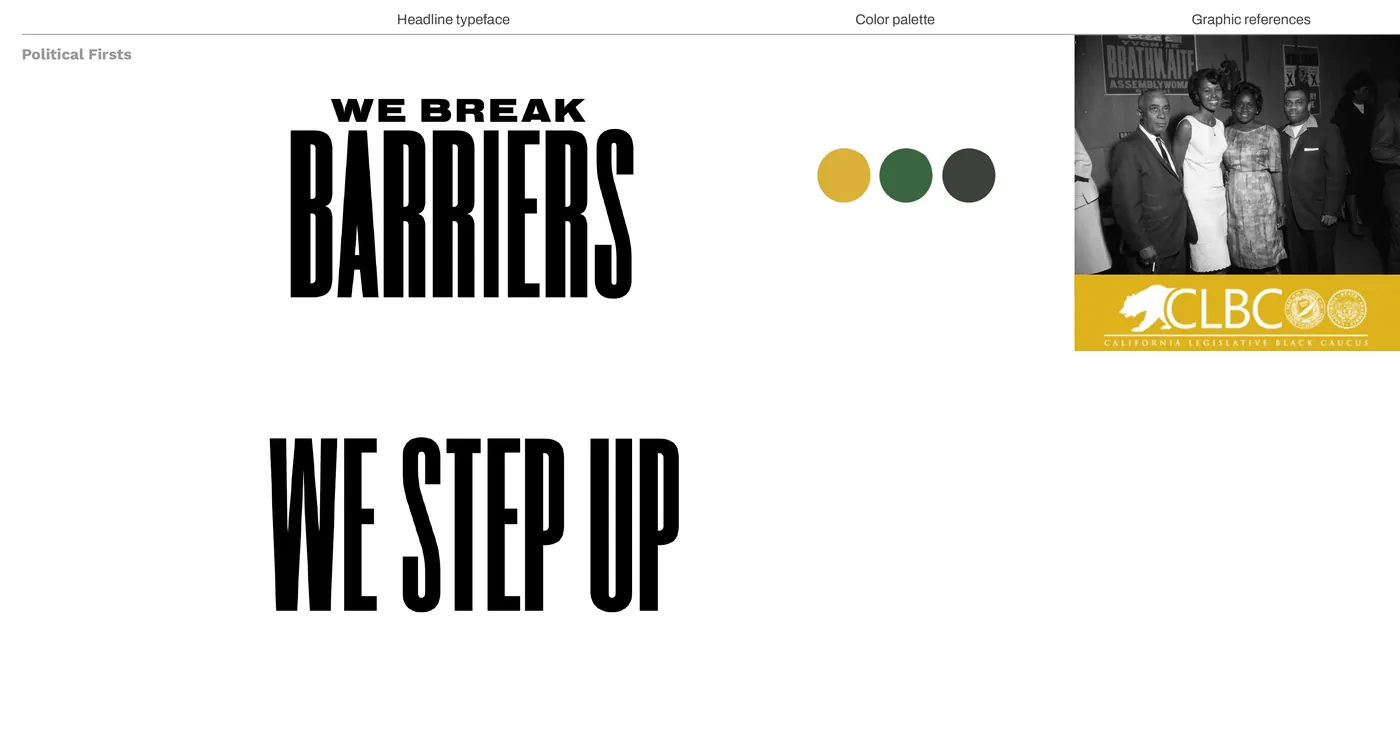
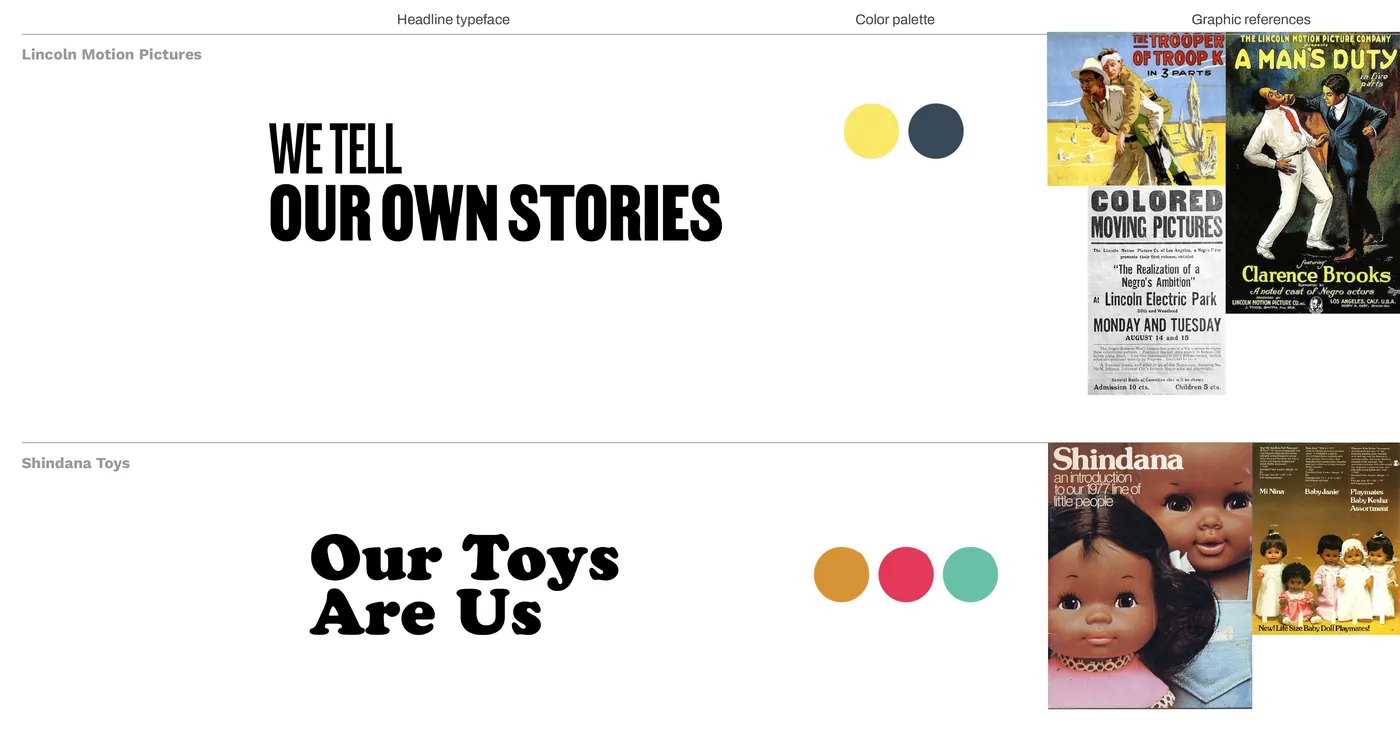
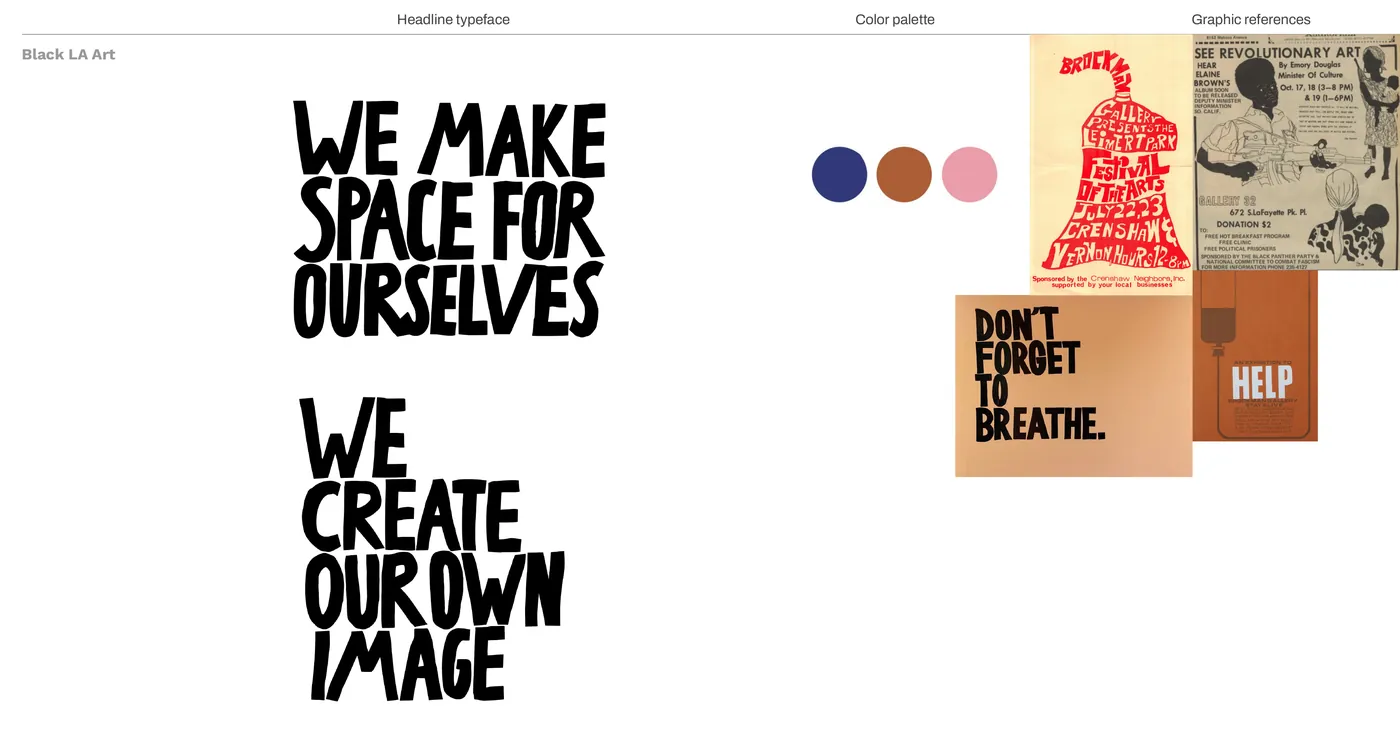
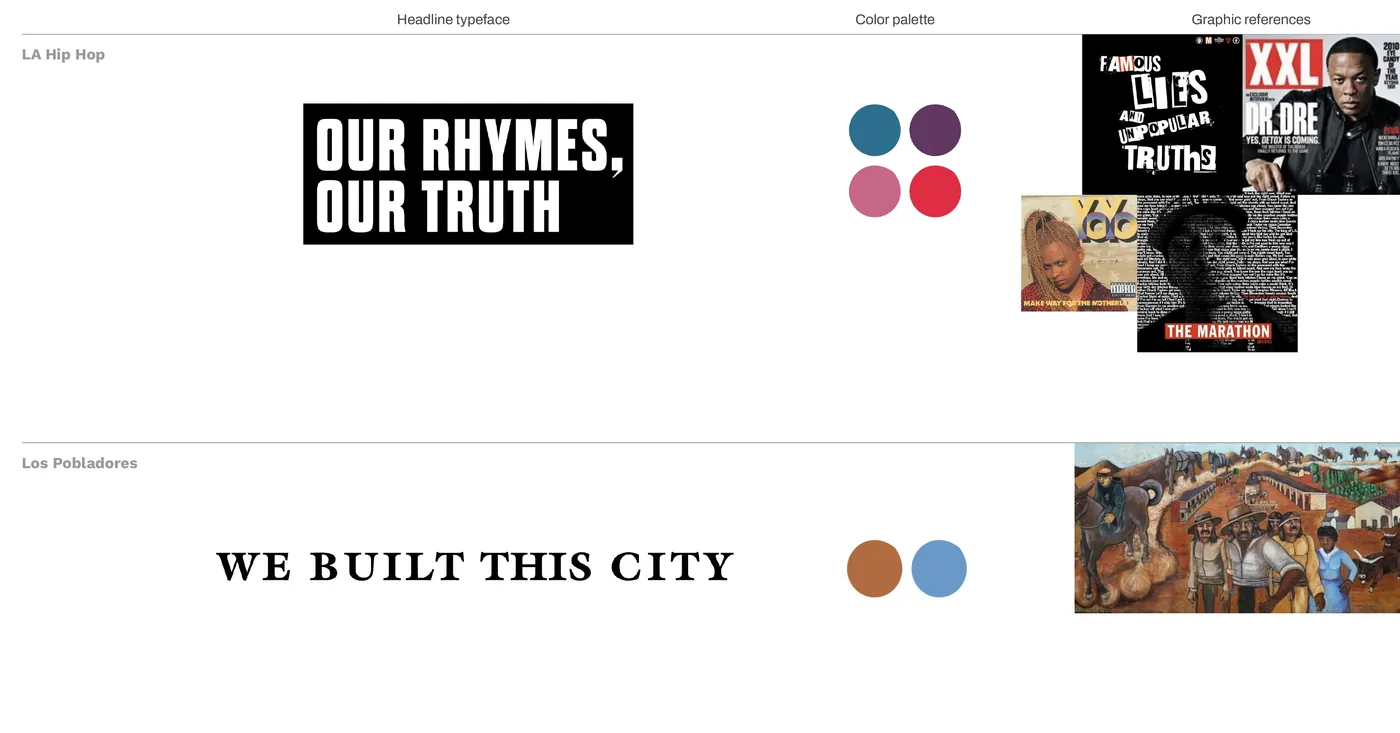
Working with community advisor Adam Ayala, the identity drew on the boulevard’s own visual culture: hand-painted signs, murals, album covers, storefronts and cars.
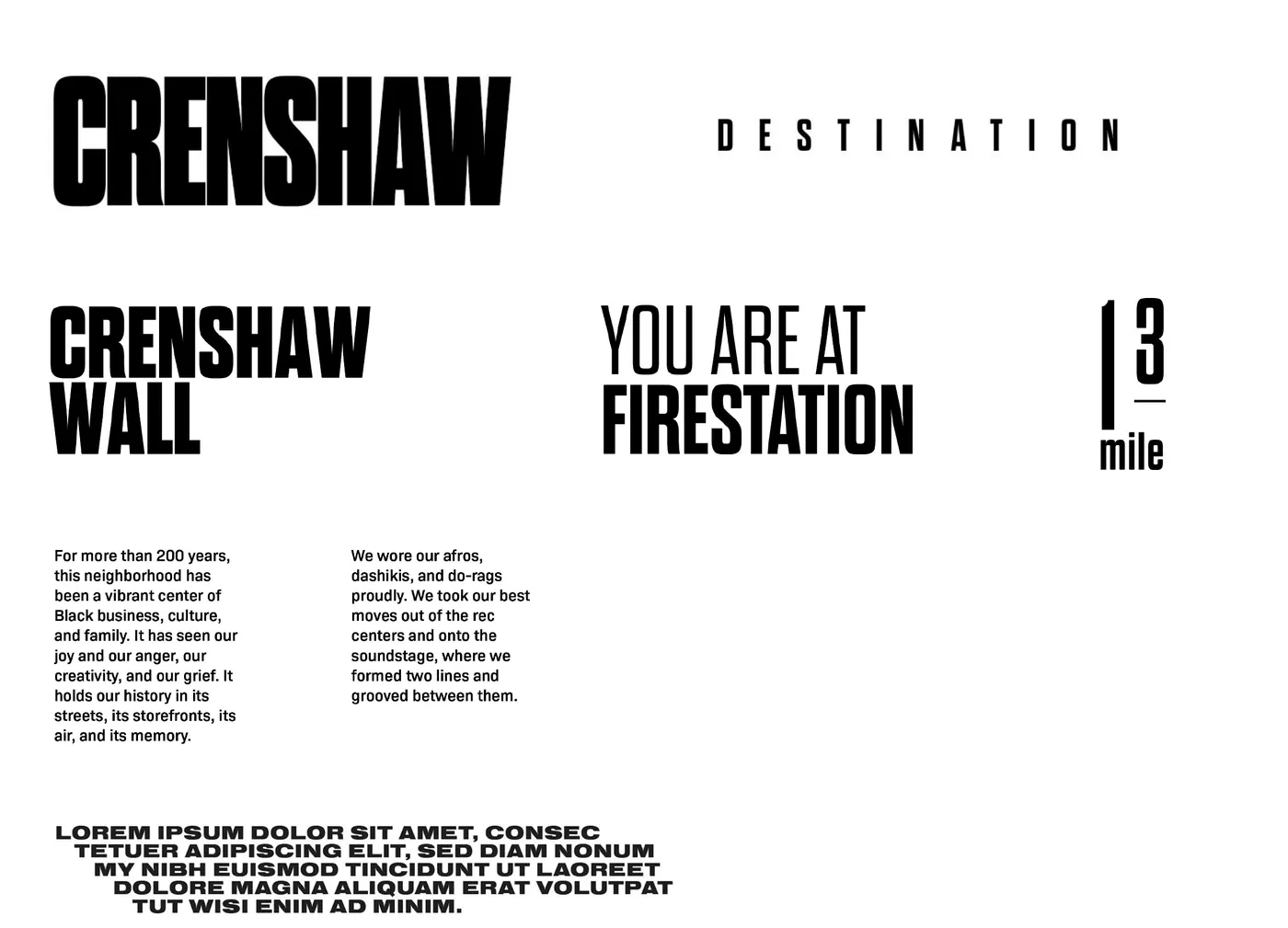
There is no single rigid brand. Each story gets its own headline lettering and a three-color palette, held together by one typographic system: Dharma Gothic for wayfinding, Bio Sans for reading. Artist-drawn illustration replaces archival photos, so stories that span decades read as current, in many artists’ hands.
Designed for how people move down the mile
From a sidewalk plaque to a starry ceiling, each moment was designed for how people actually move down the mile.
A kit of parts
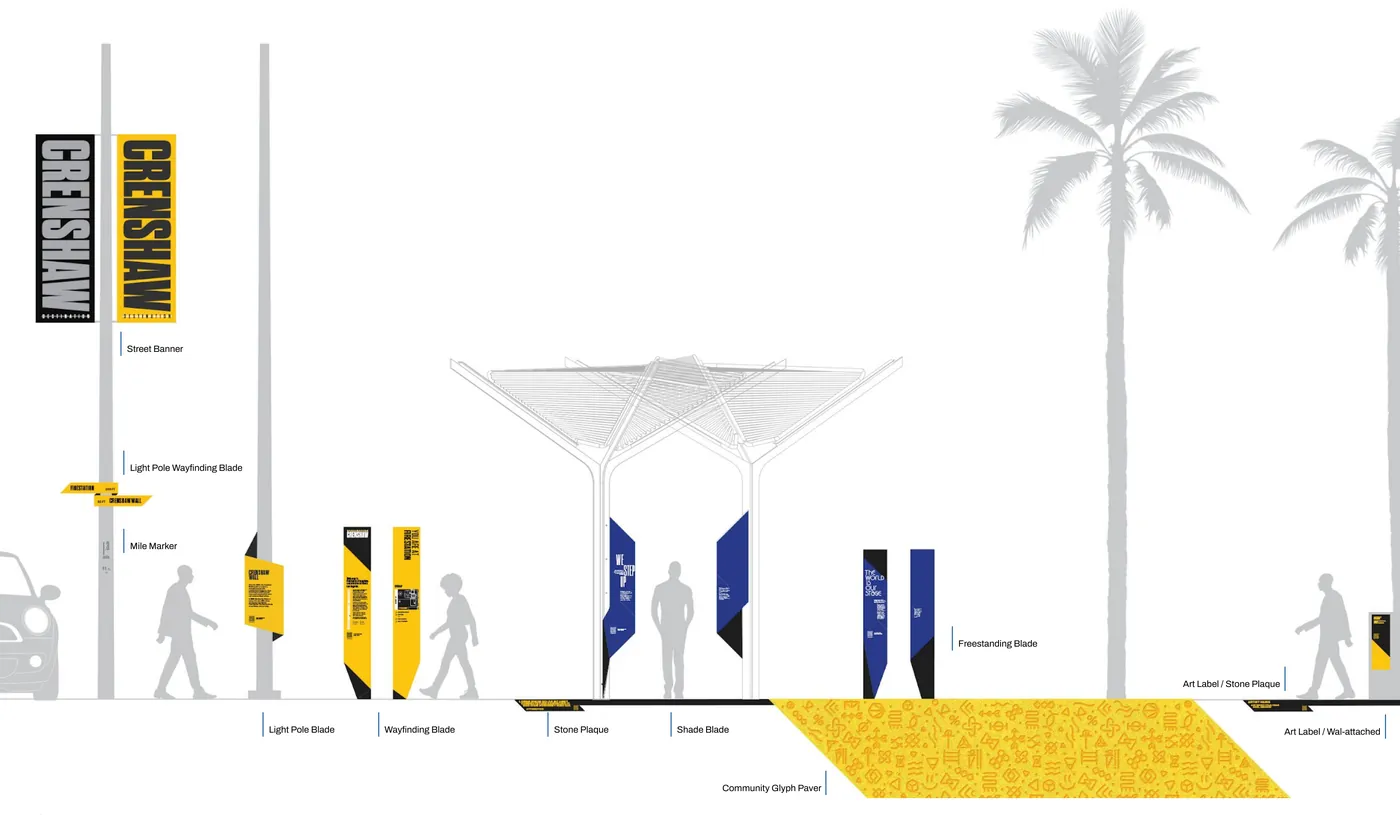
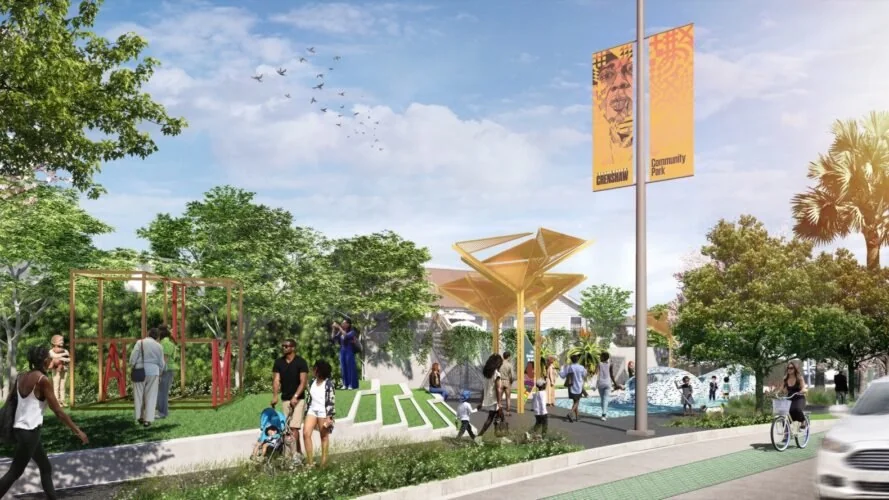
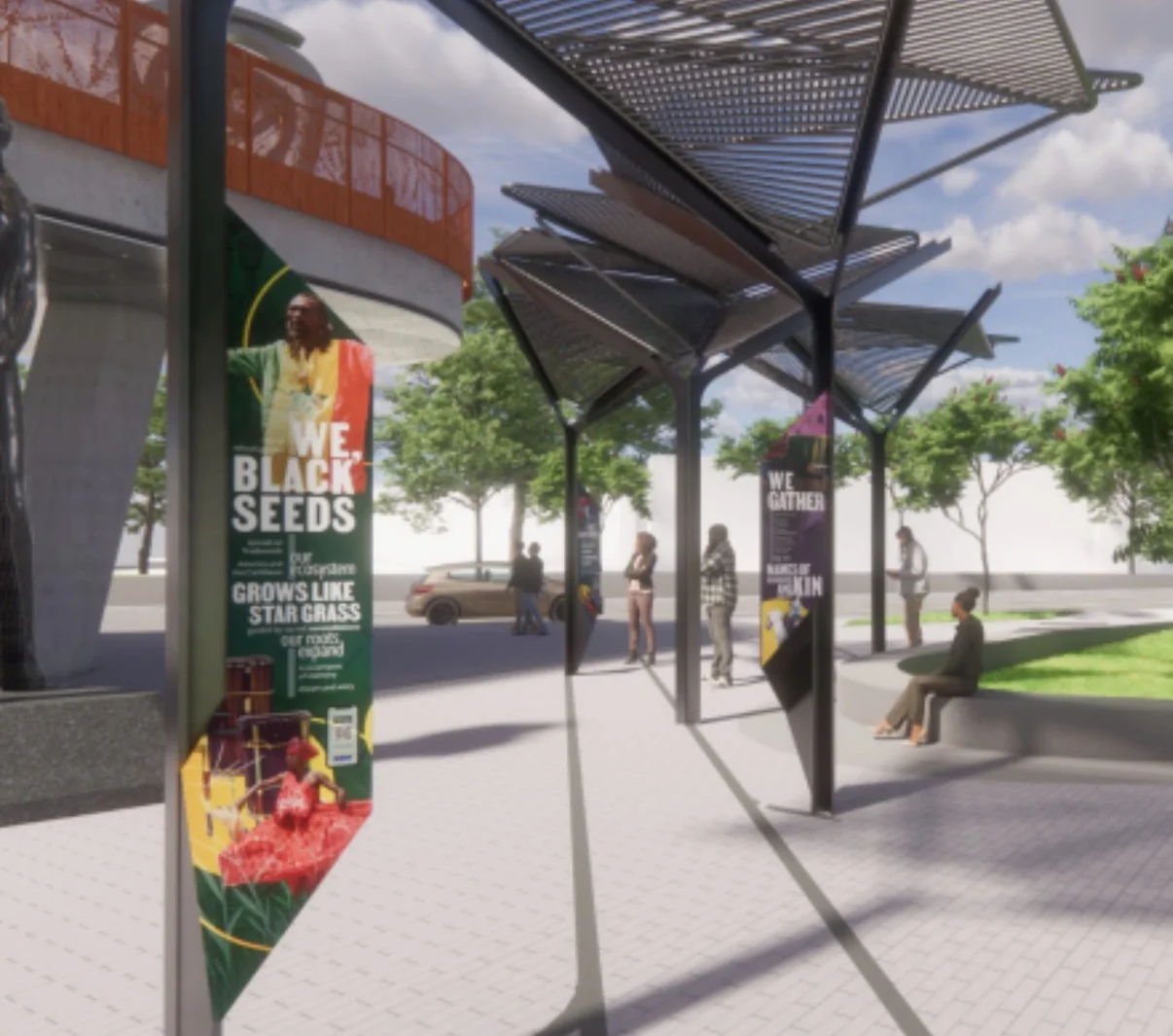
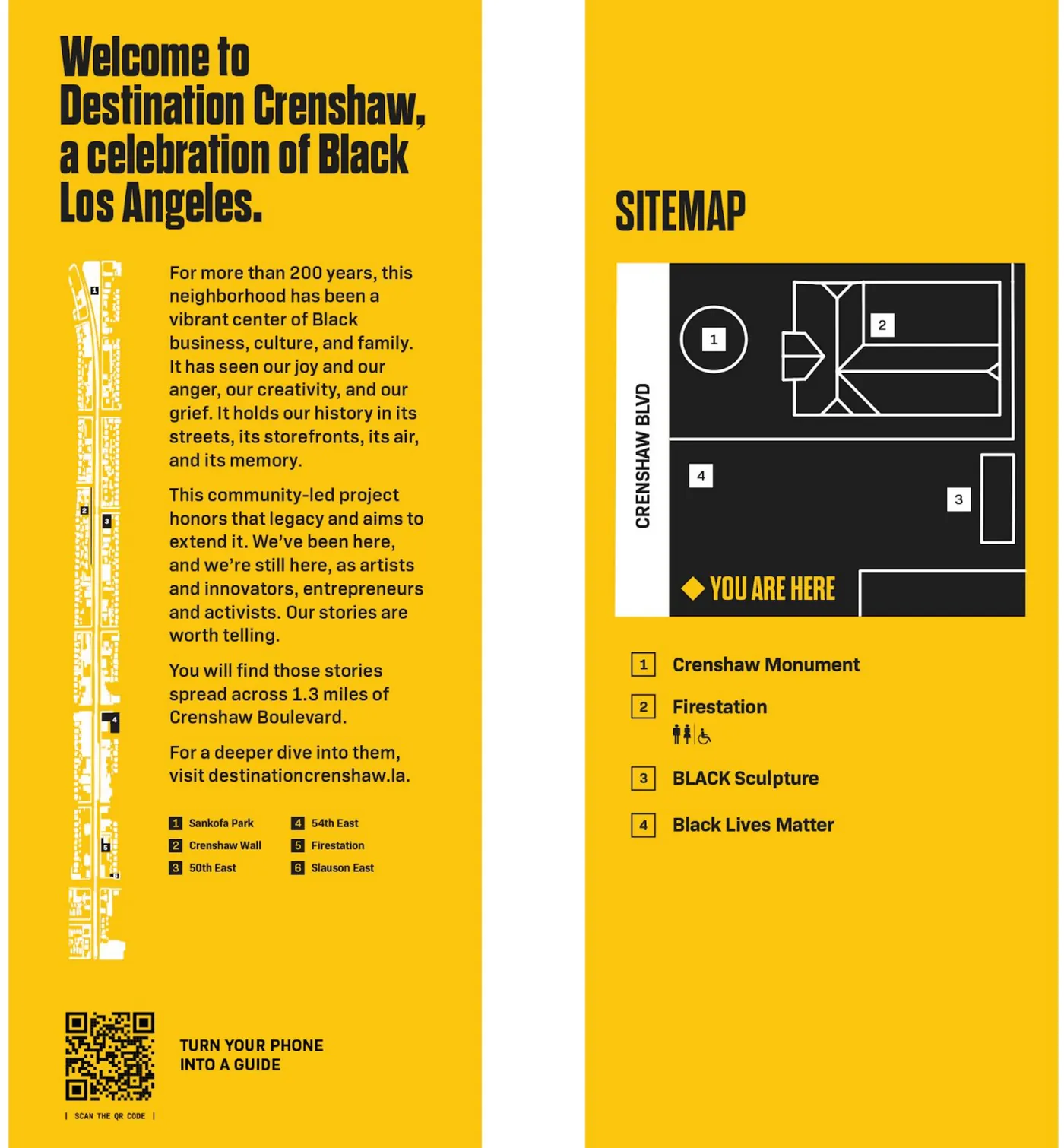
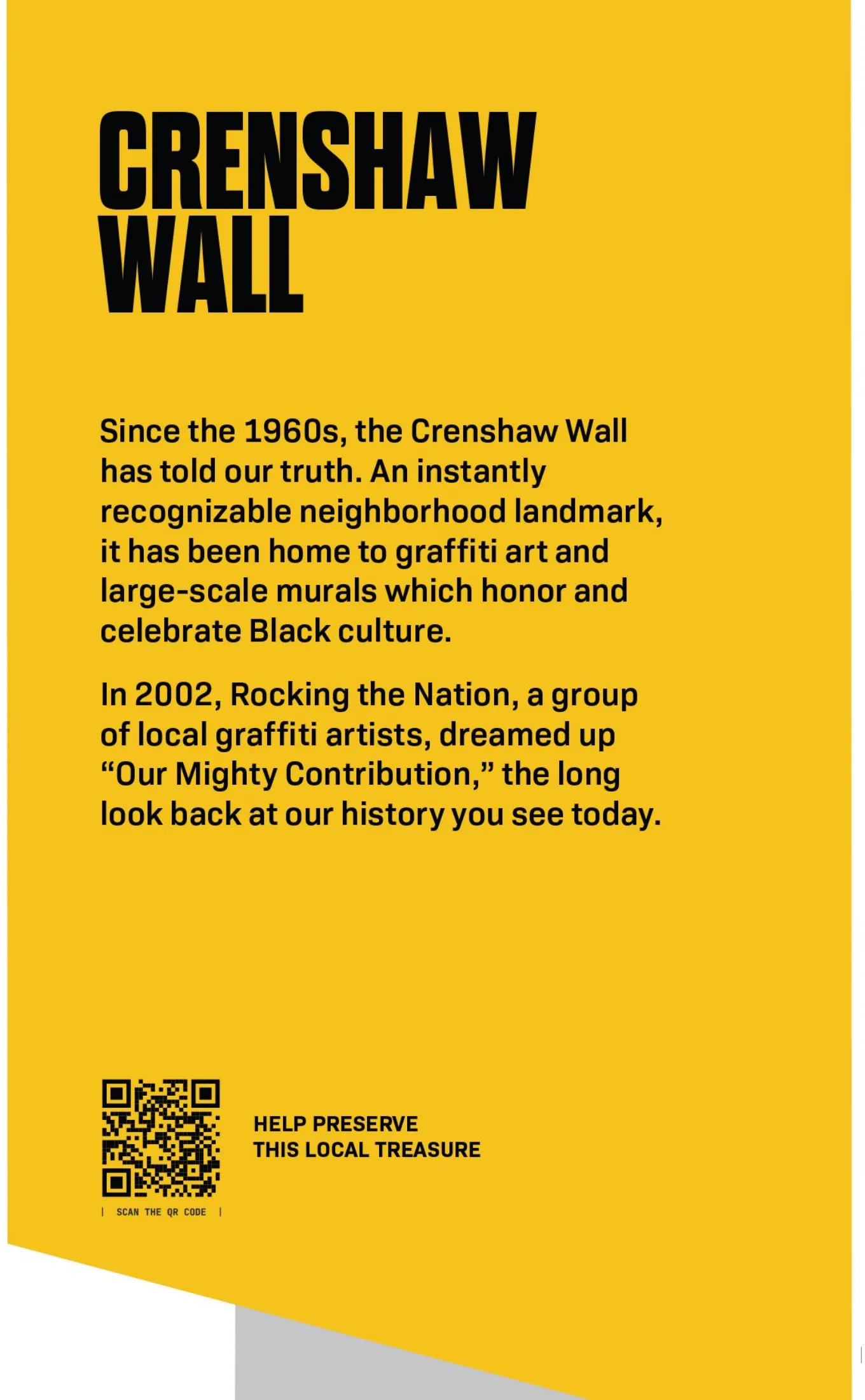
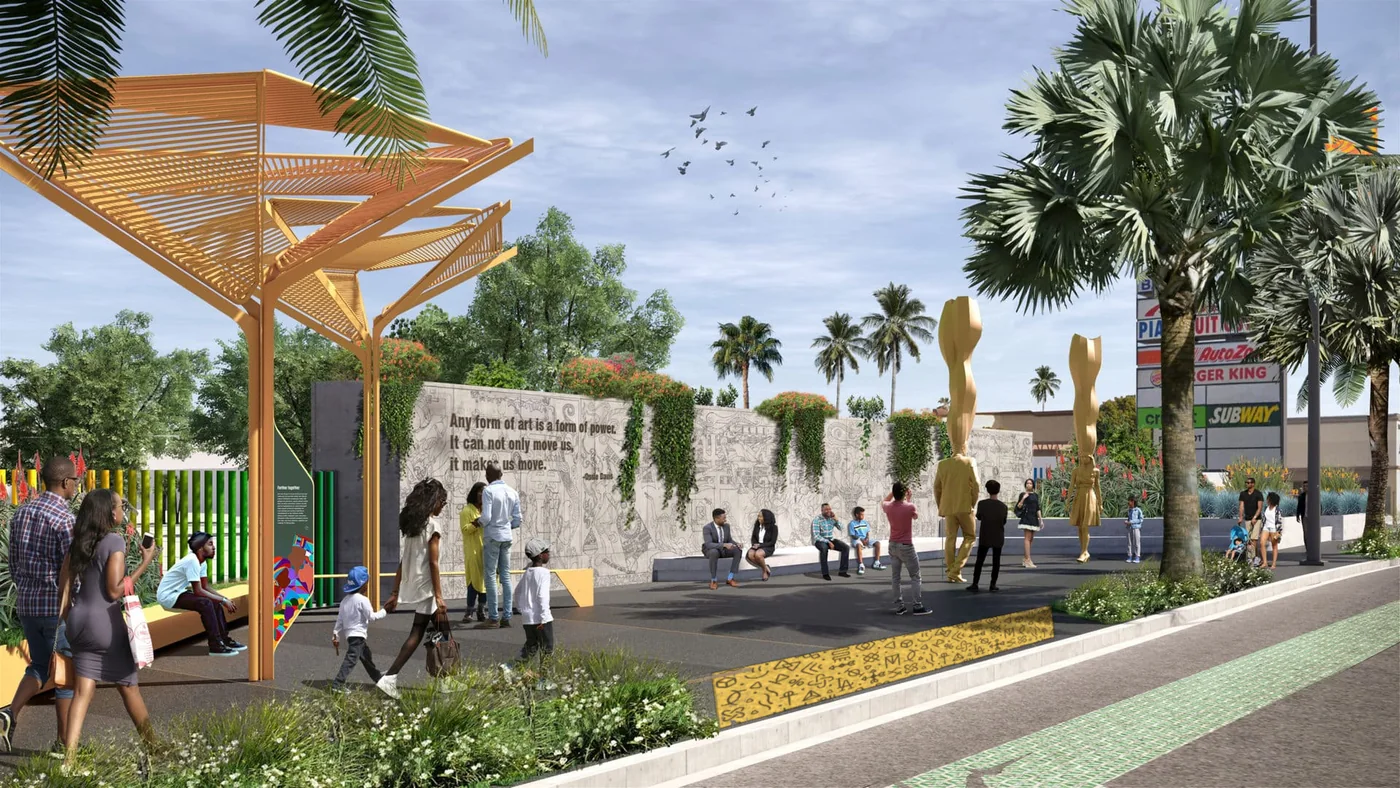
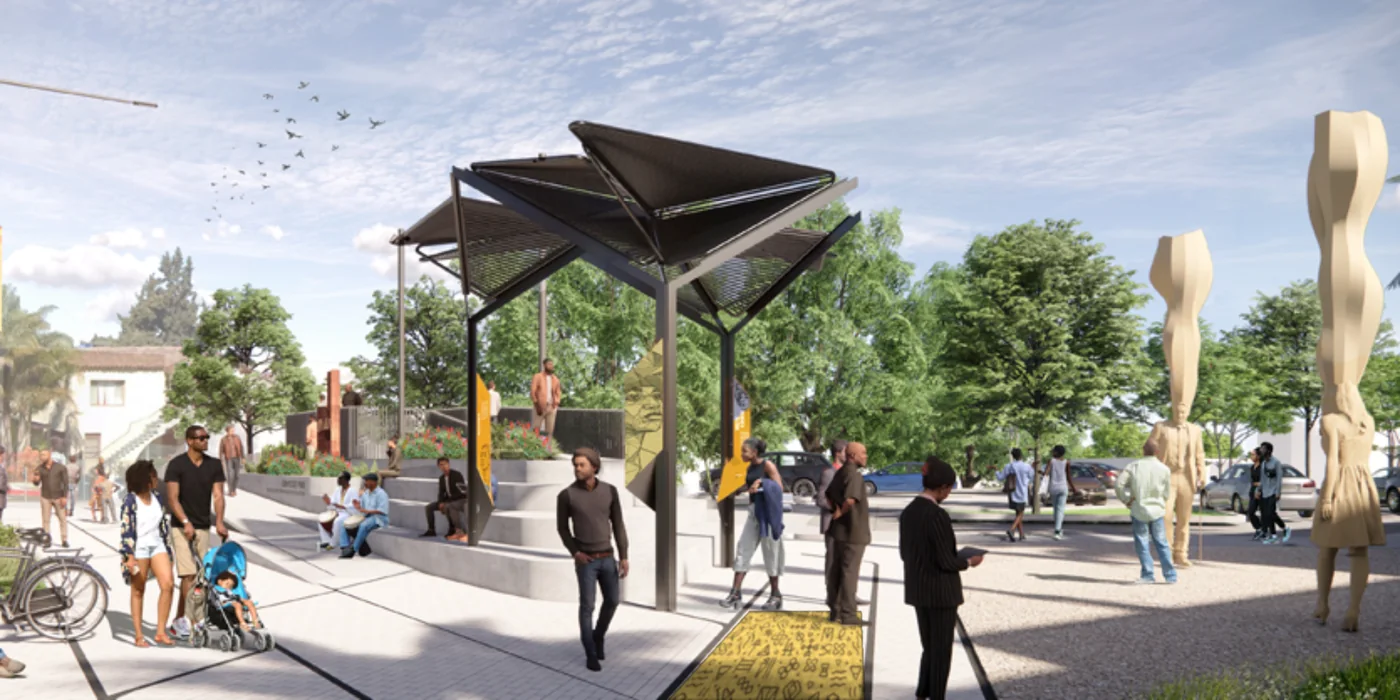
Ten elements carry the stories down the mile, from a 36-inch brass plaque in the sidewalk to blades on the light poles and freestanding story panels. Each is sized to the body, with reading lines at 42 and 67 inches.
Aluminum blades take their base colors from weathering steel and their accents from automotive paint, a nod to the boulevard’s car culture. Story graphics are removable, so the stories can change while the structures stay.
Who’s your North Star?
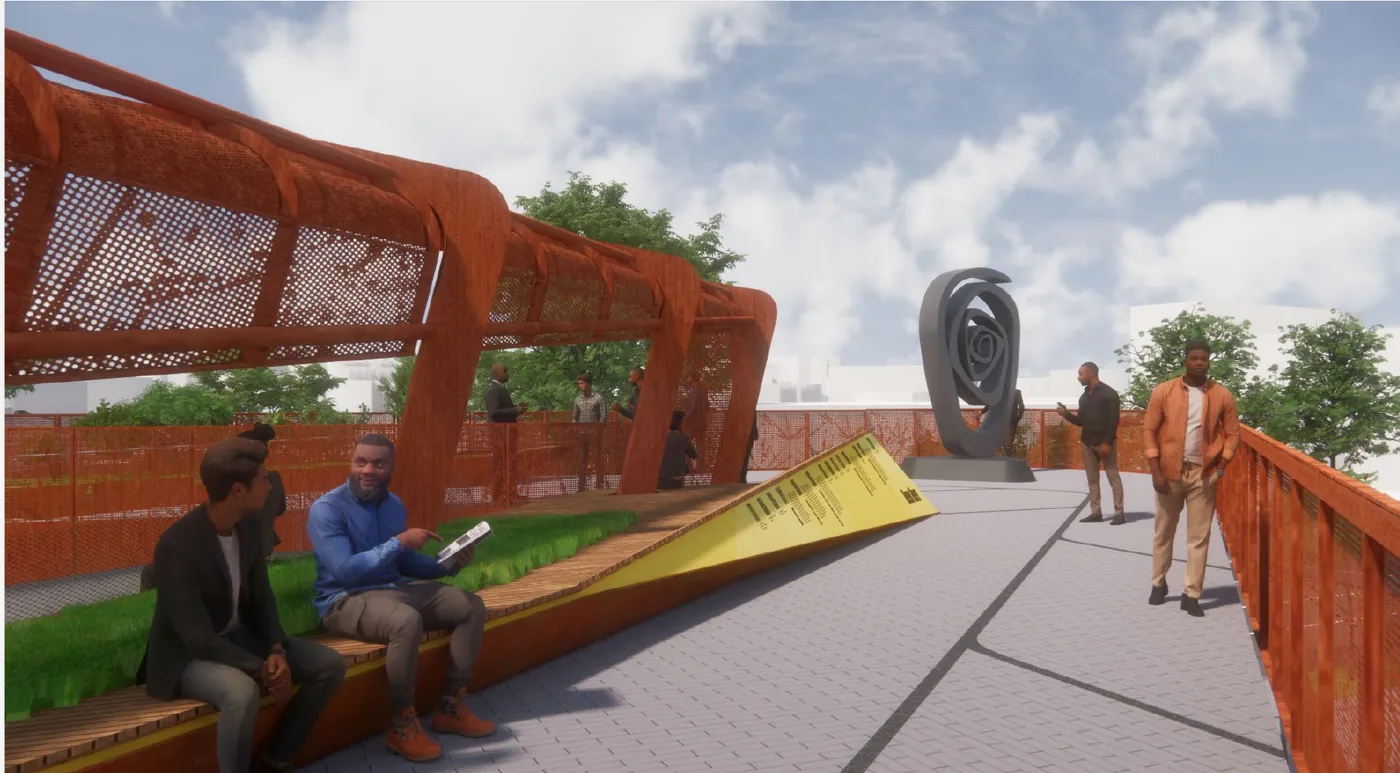
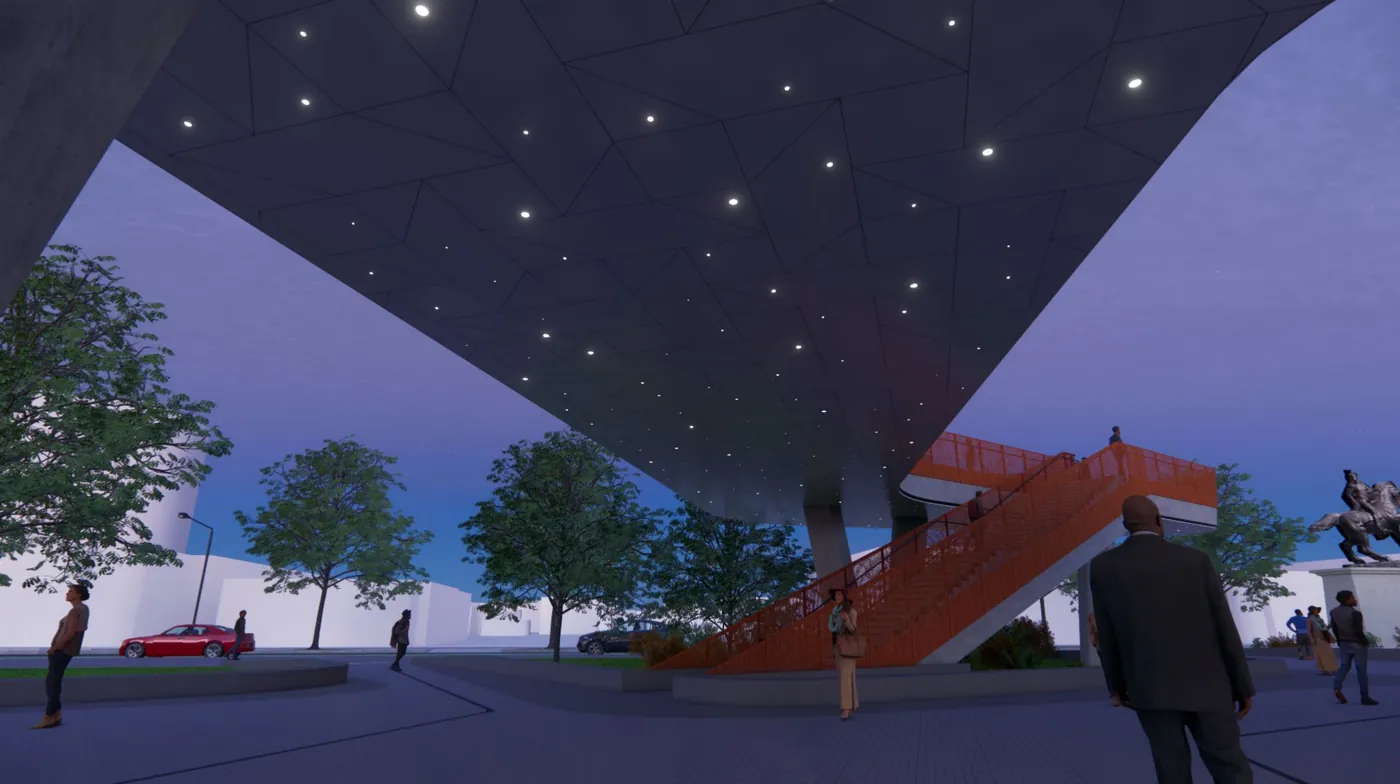
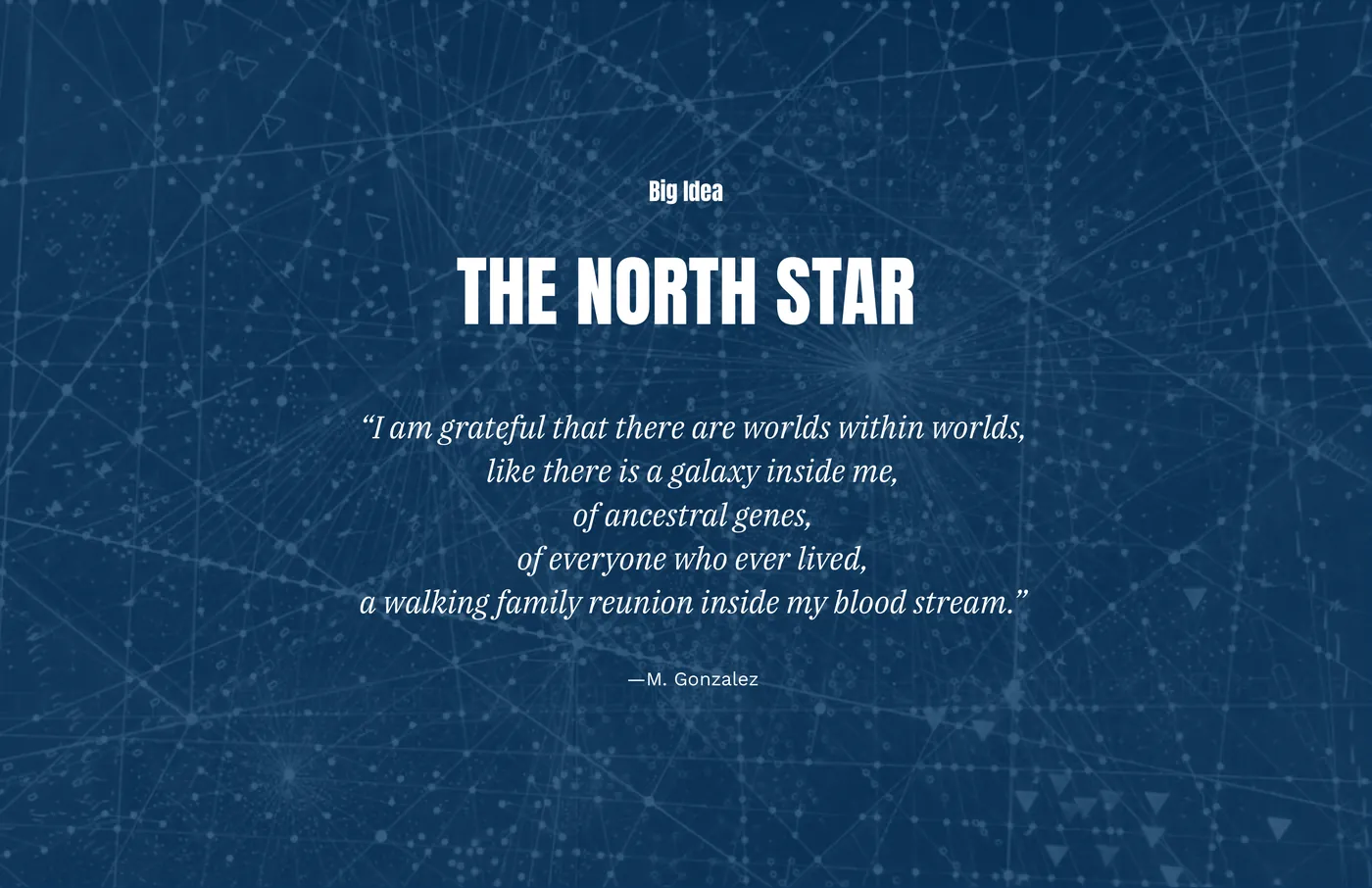
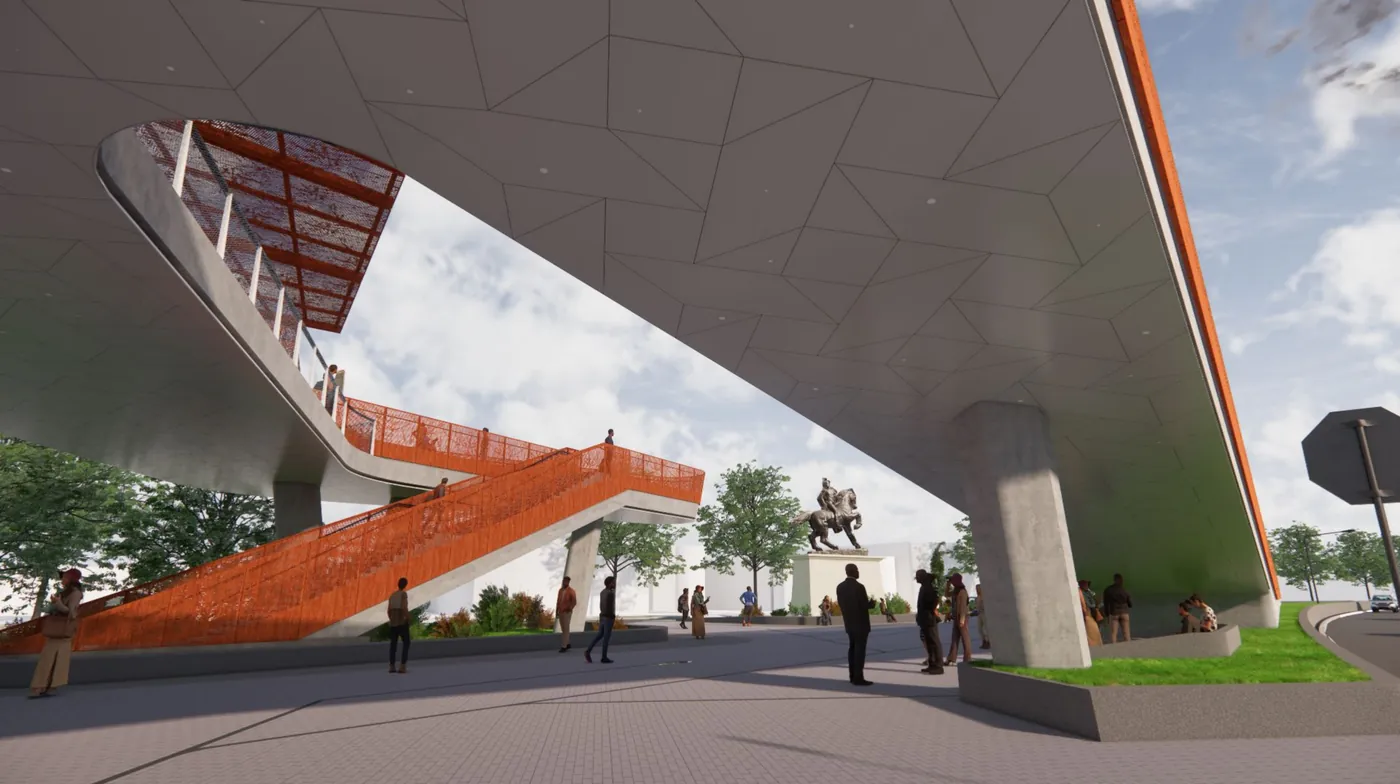
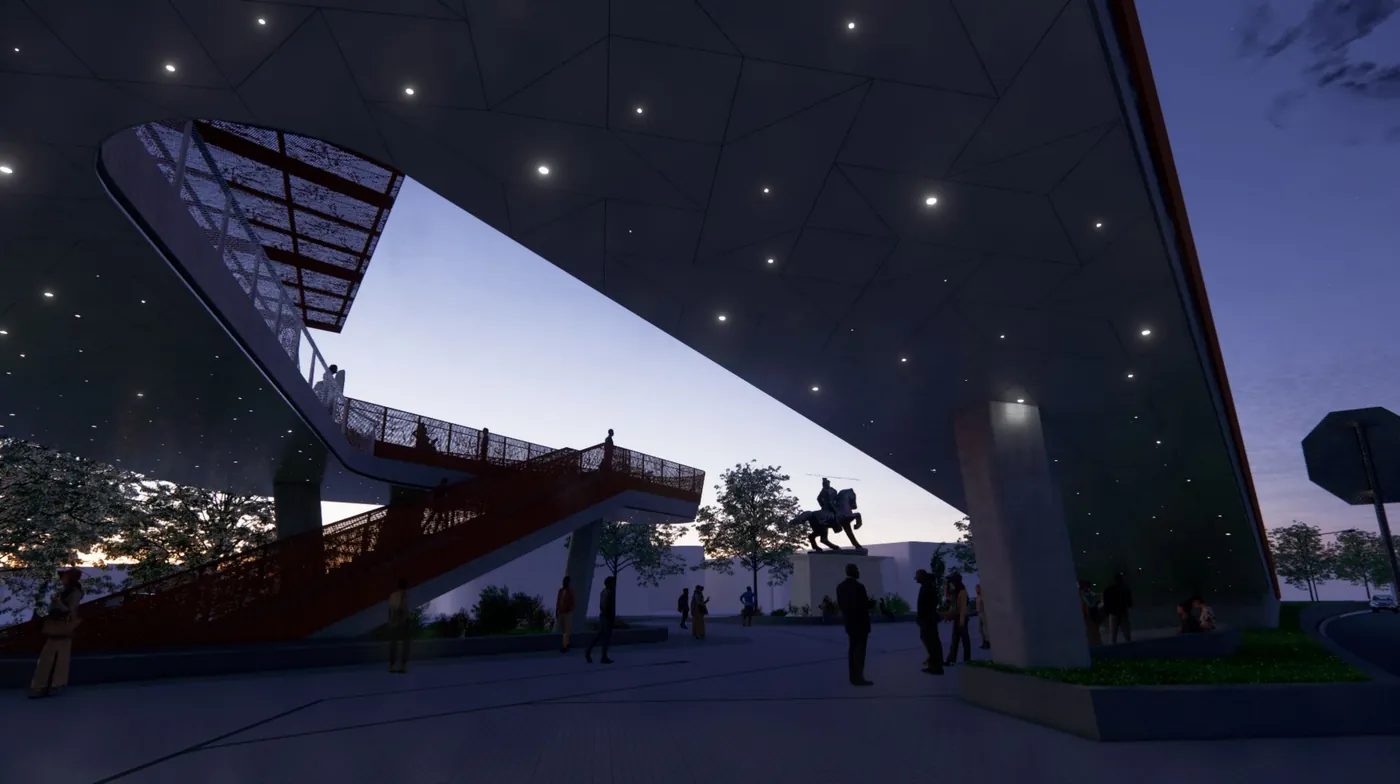
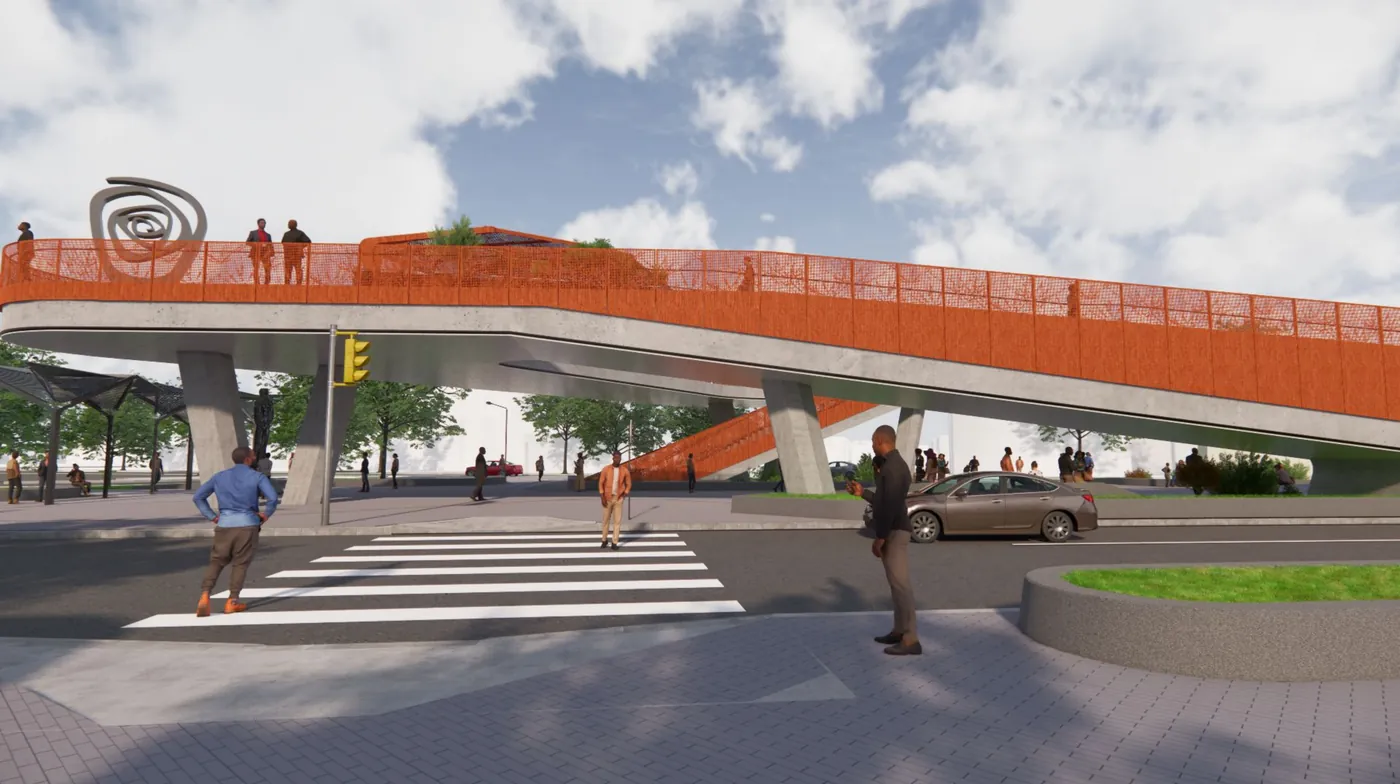
Under the ramp at Sankofa Park, at the northern end of the mile, one guiding thought shaped the installation: the North Star.
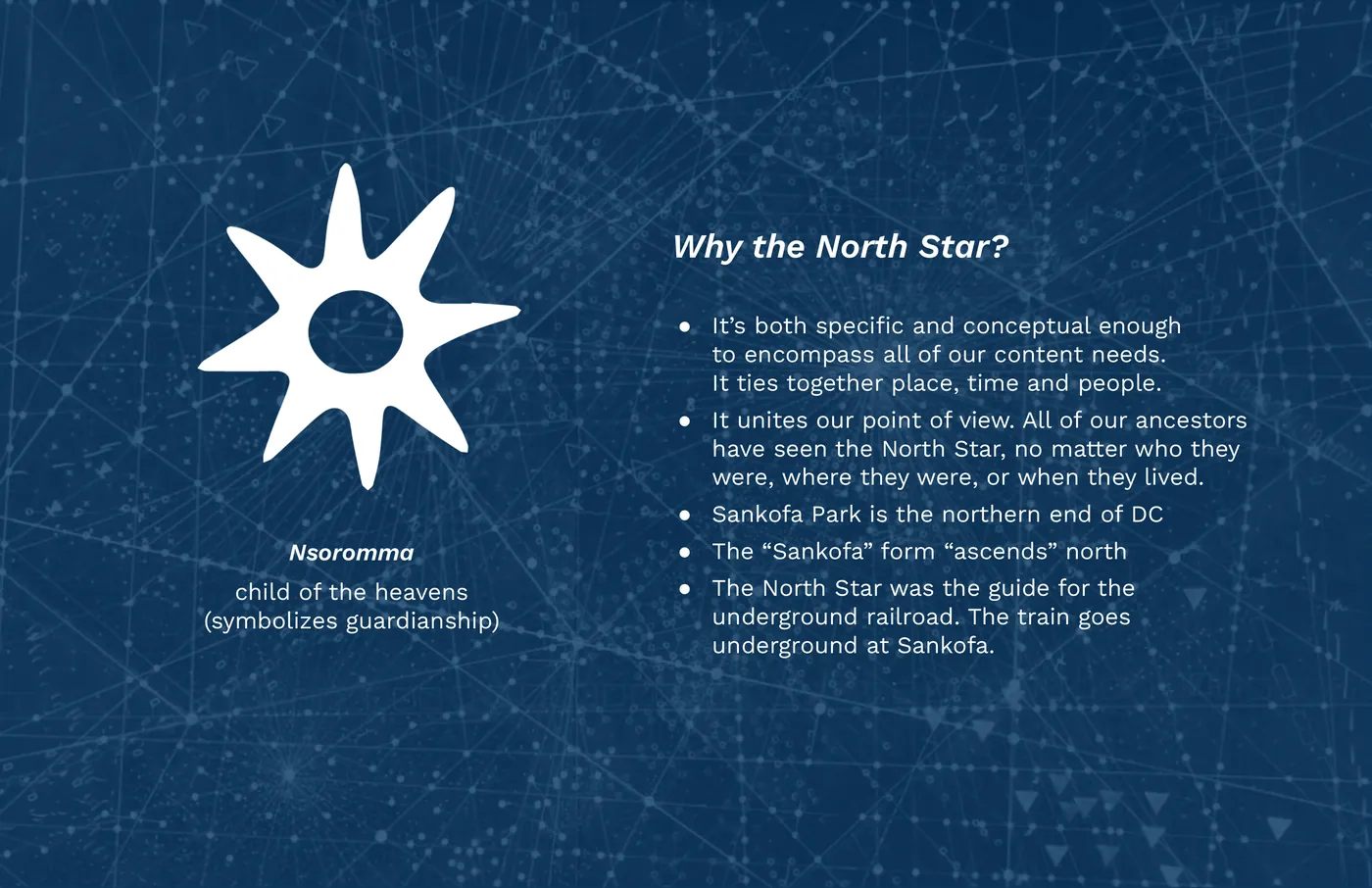
Every ancestor saw it, whoever, wherever and whenever they lived. It guided the Underground Railroad, and at Sankofa the ramp rises north just where the train goes underground. Its mark is Nsoromma, the Adinkra star: child of the heavens.
“...a walking family reunion inside my blood stream.”
Ancestors overhead
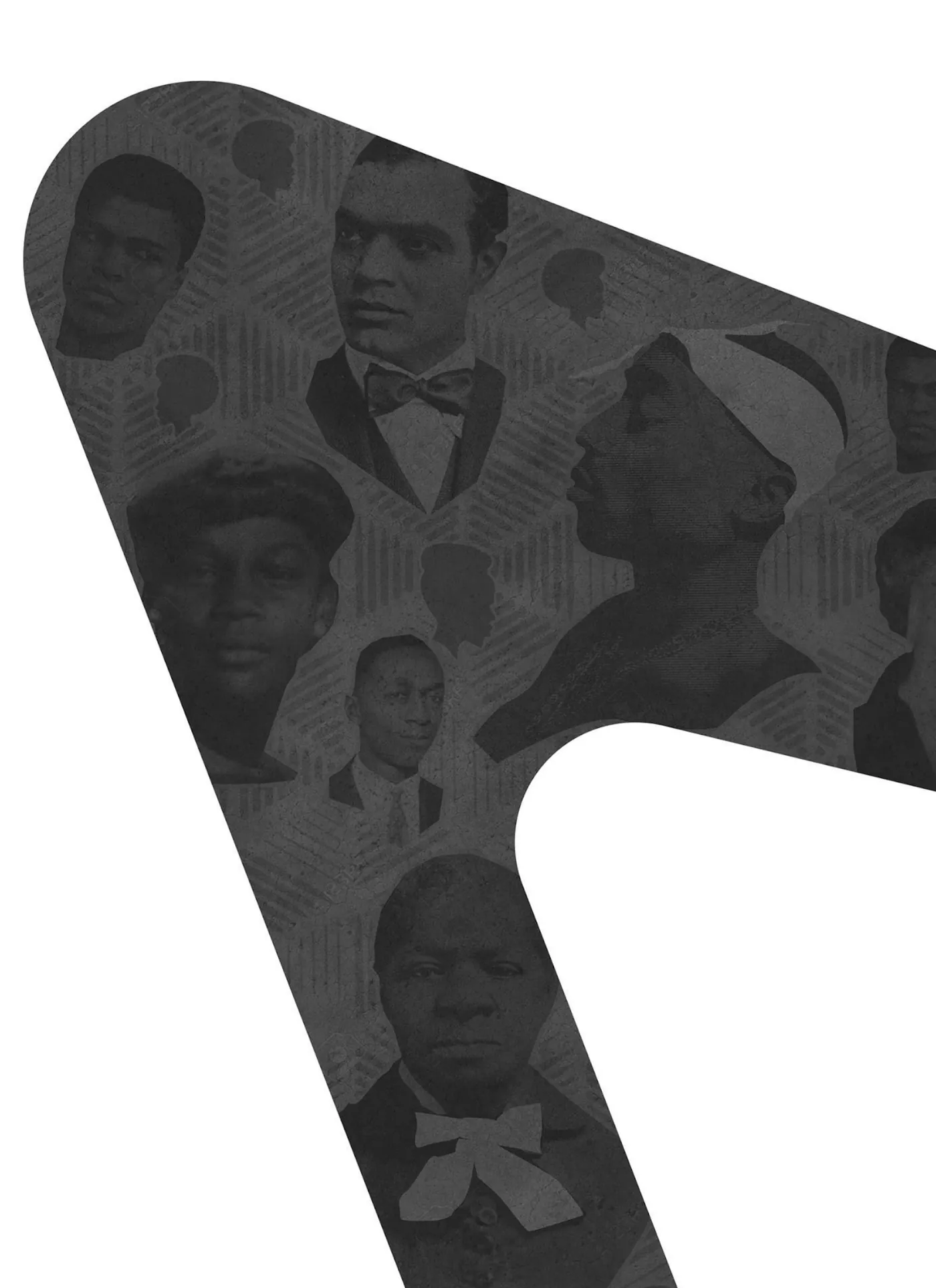
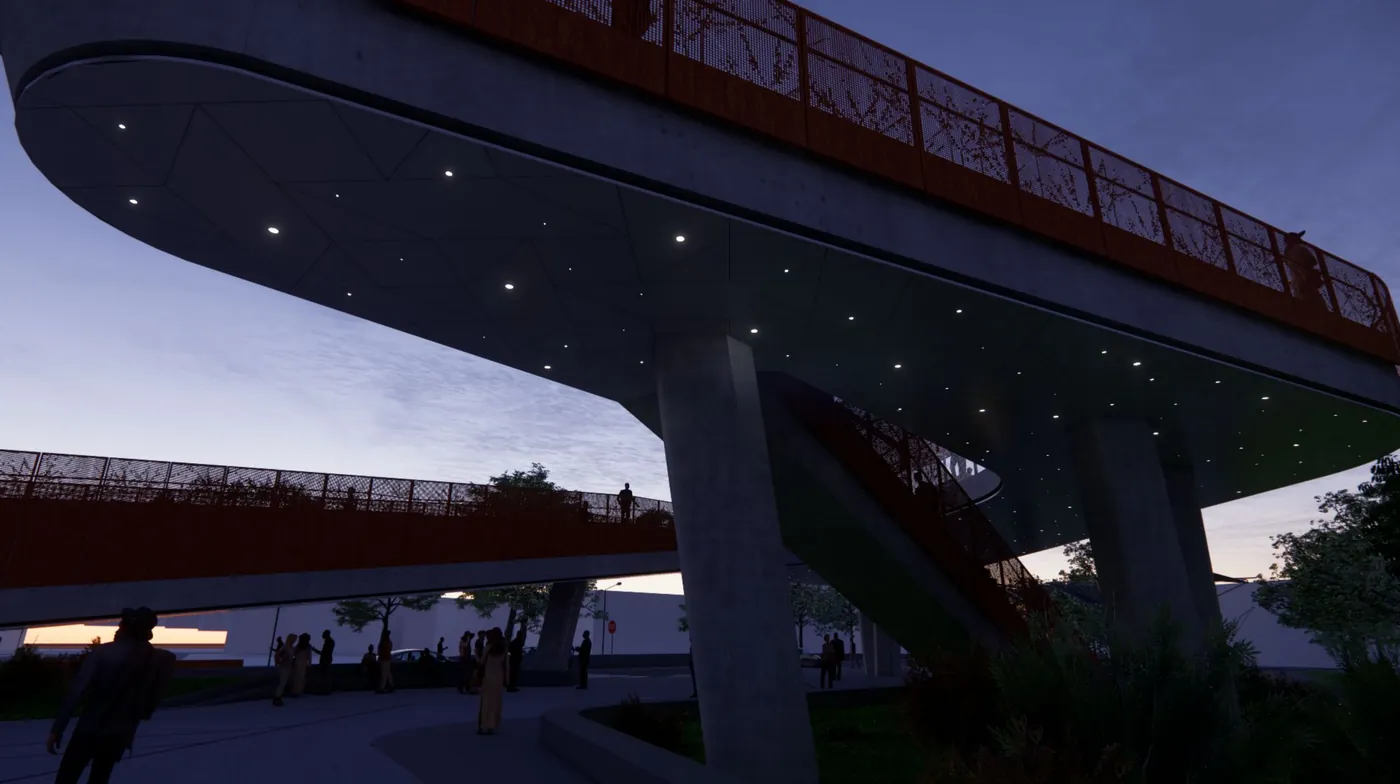
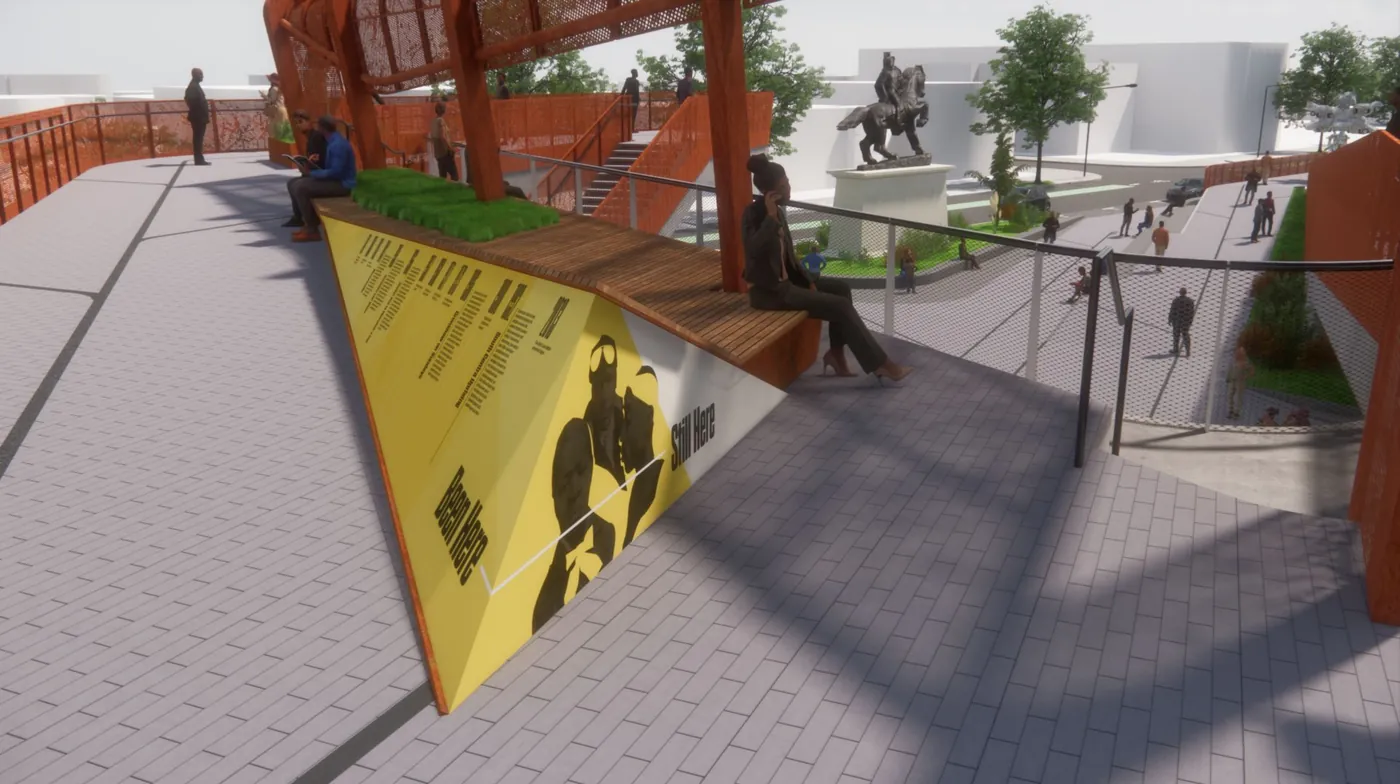
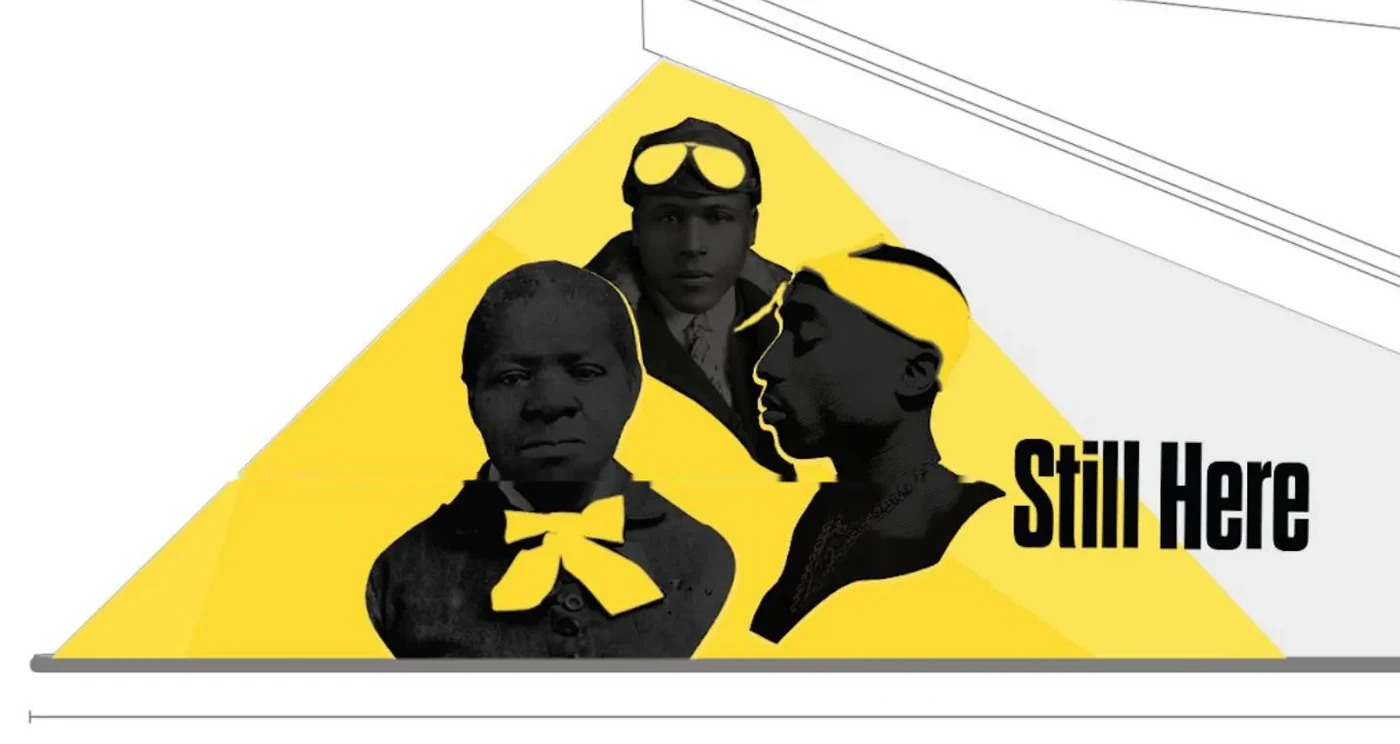
On the underside of the ramp, a local artist’s portraits honor the people who shaped Black Los Angeles: artists and activists, politicians and musicians, from Biddy Mason and Paul Revere Williams to Nipsey Hussle. The community would refine the list.
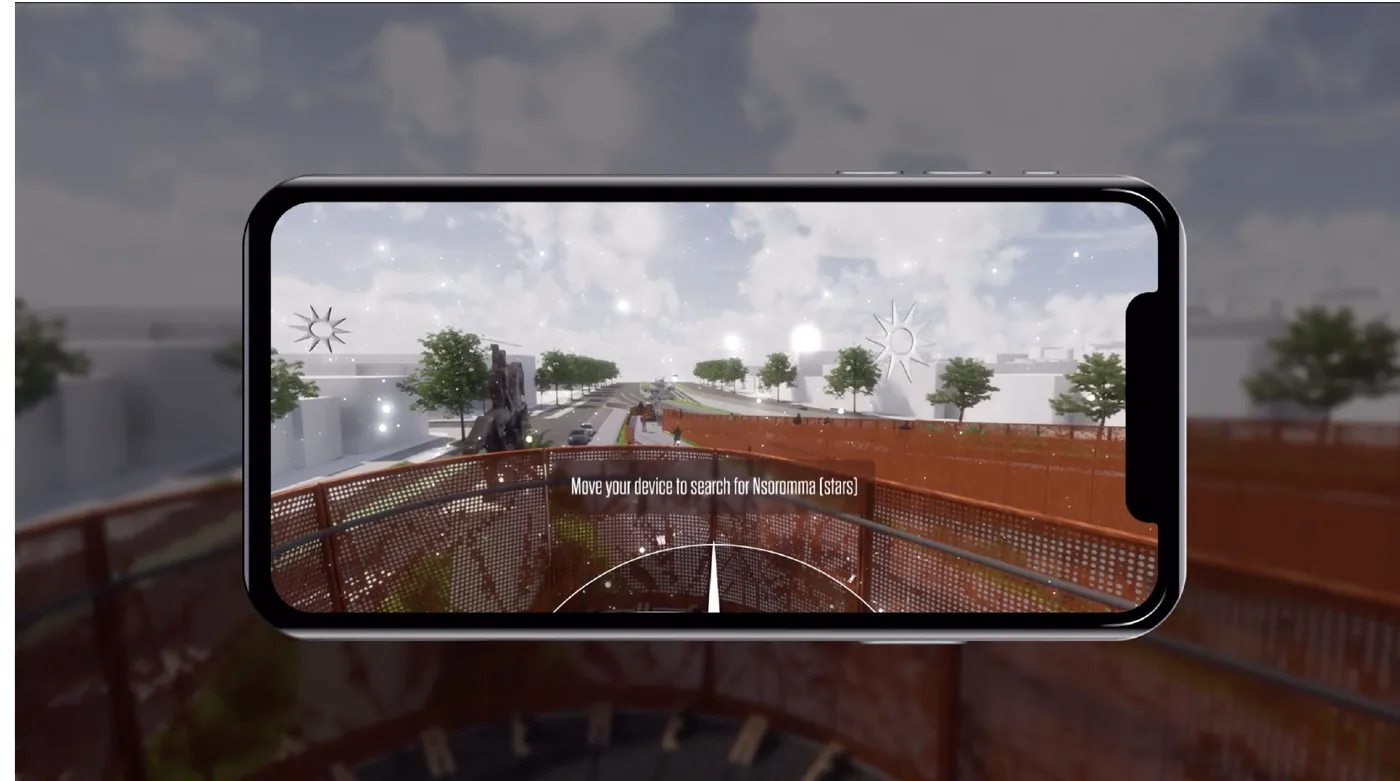
At night they become stars. Between 350 and 400 programmable LED nodes, pixel-mapped to the panels, form constellations that can respond to crowds, events and contributions from the mobile site. In the app, visitors scan the ceiling to find out who is looking down on them.
Been here, still here
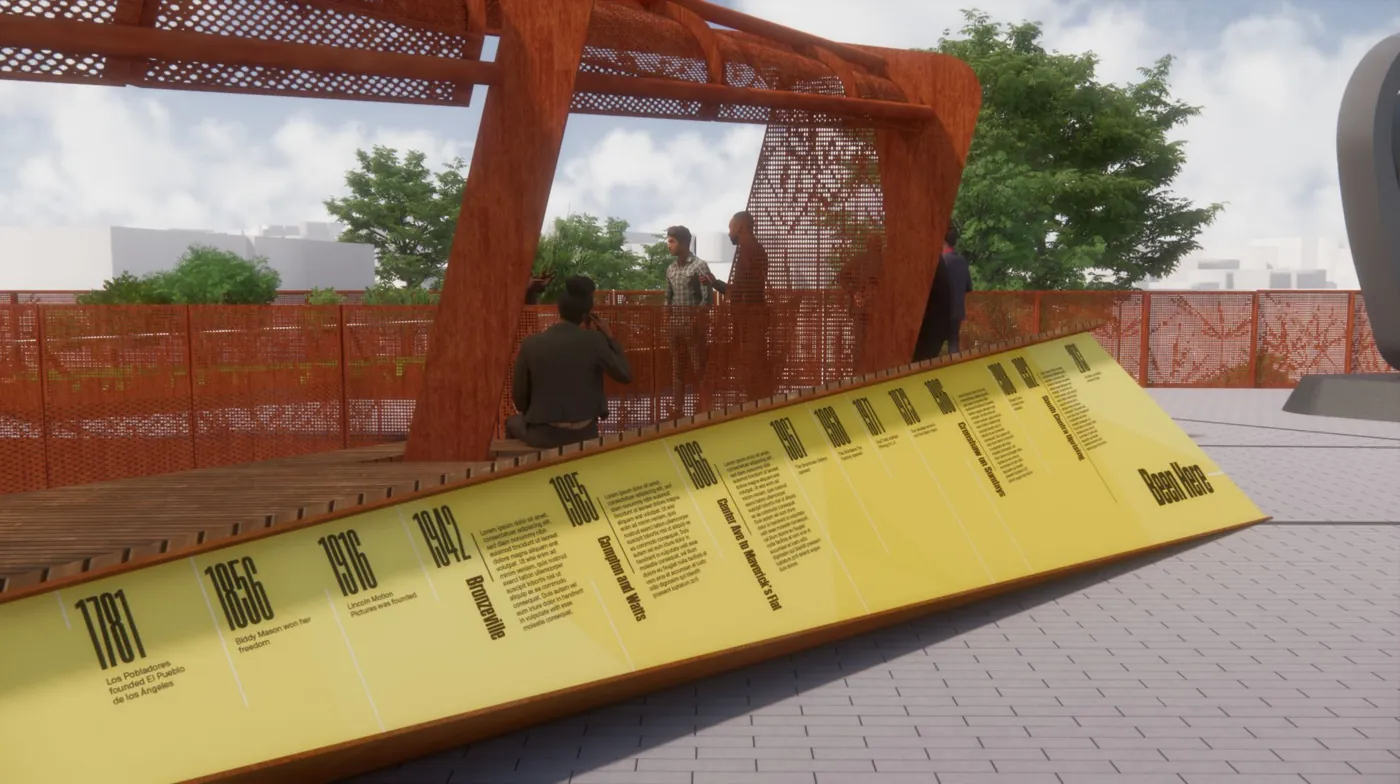
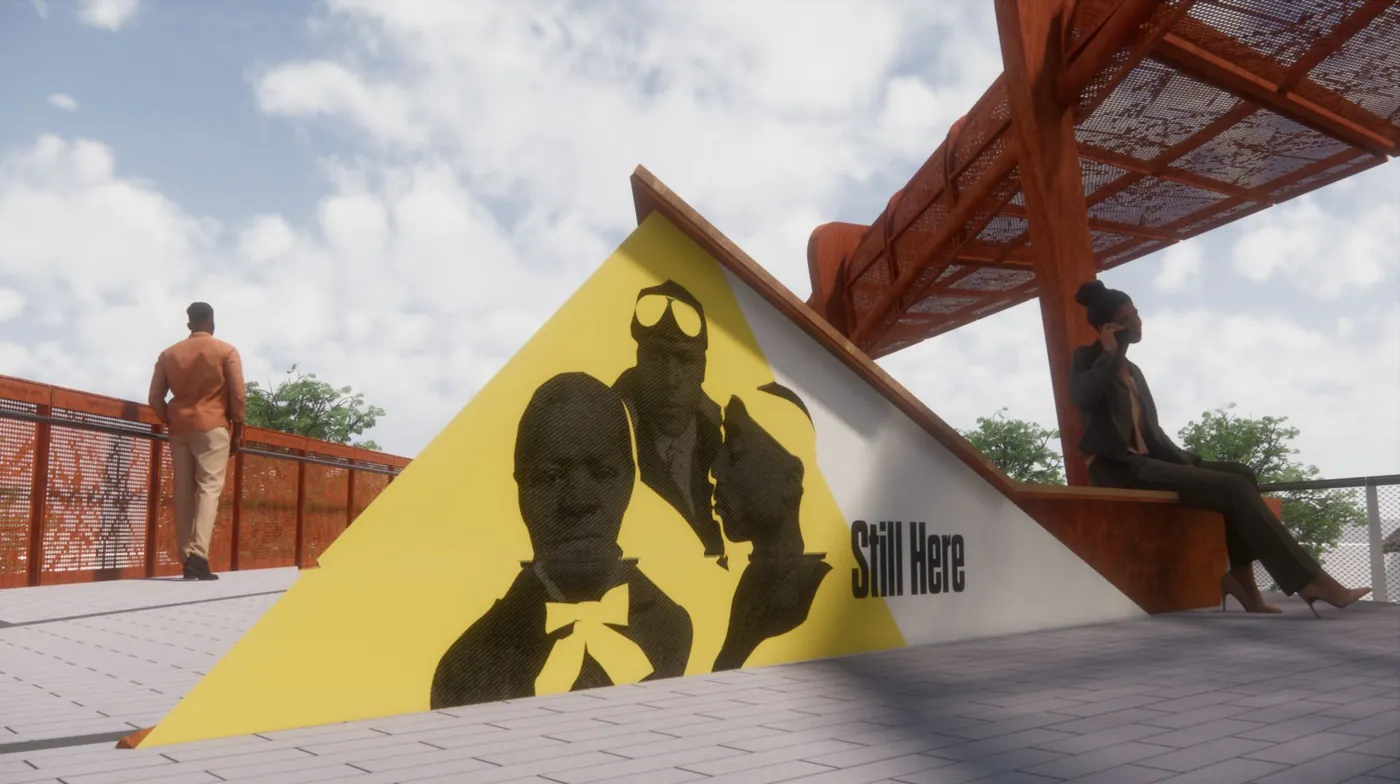
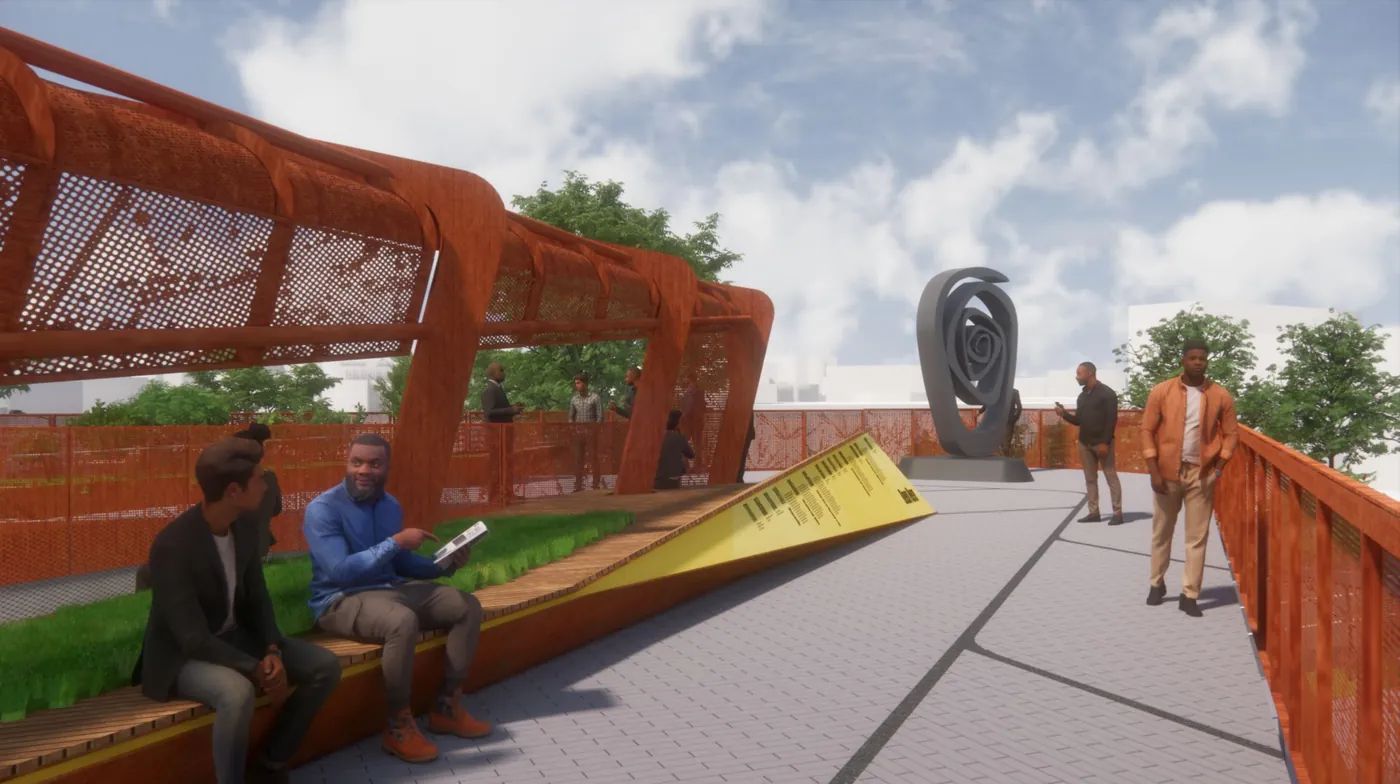
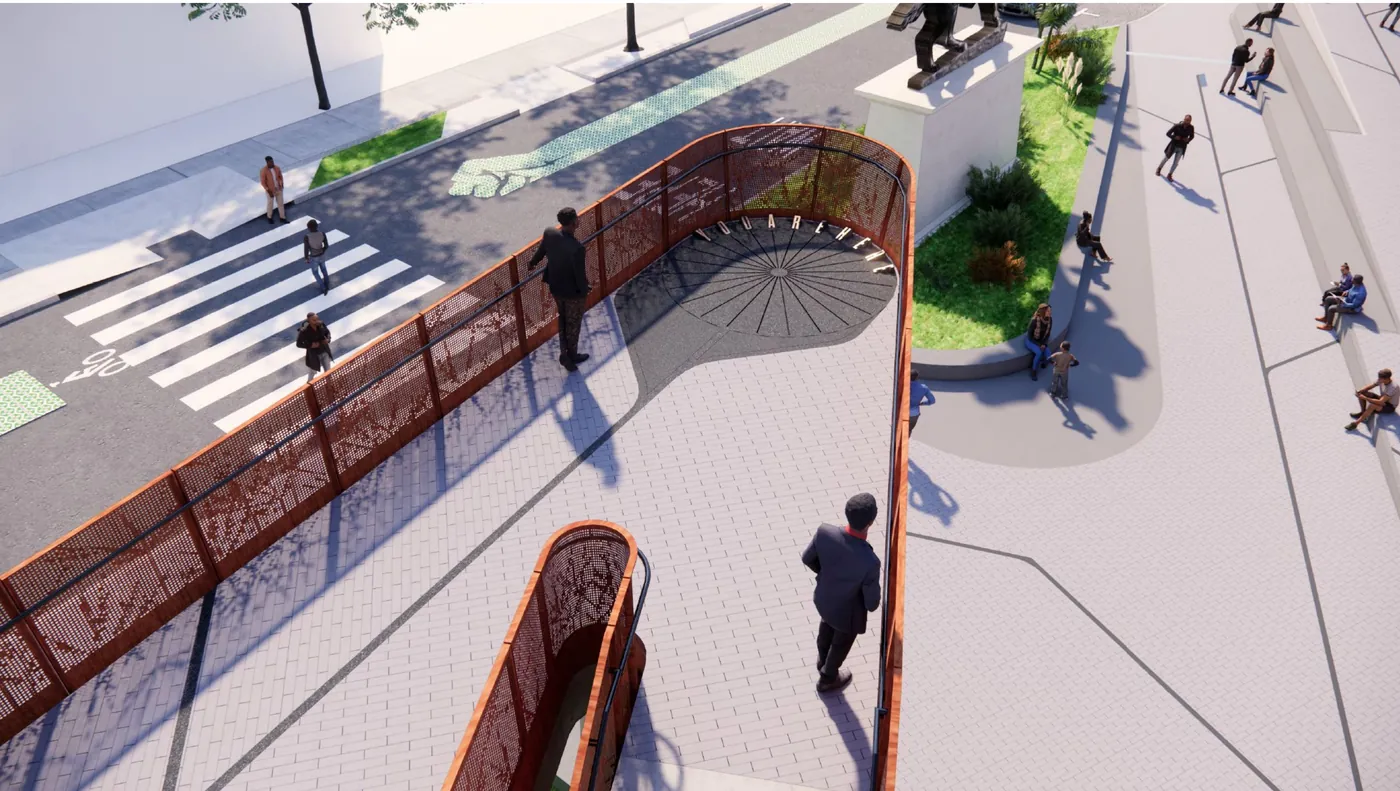
At the top of the ramp, a 40-foot timeline set into the bench seating plots events from stories across the mile, zooming from the diaspora to right here, right now. Its message is Sankofa Park’s own: Been Here, Still Here.
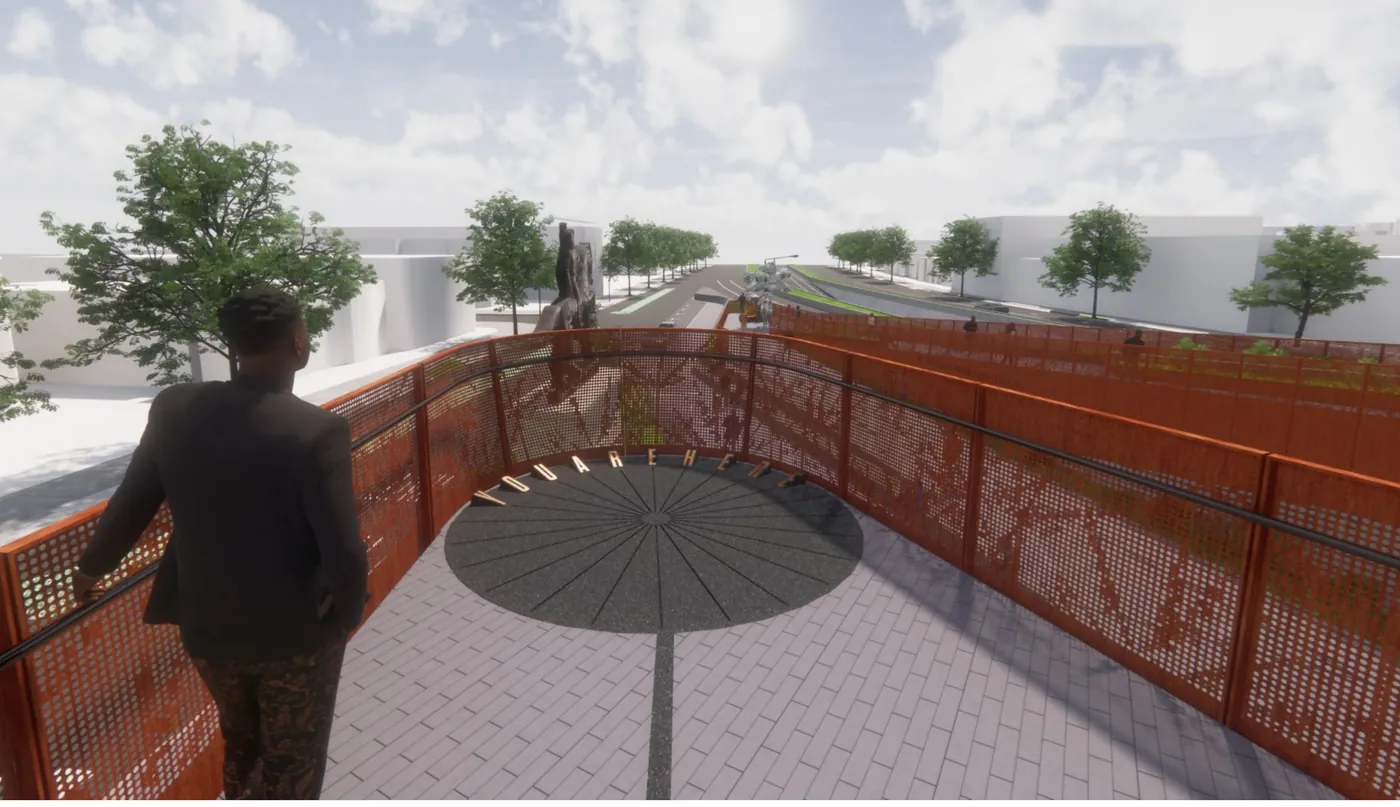
At the bow, where the ramp looks out over the neighborhood, a compass in the ground points toward the story sites, and the app overlays the view with the landmarks that remain and the ones that have been lost.
The Firestation and BLACK
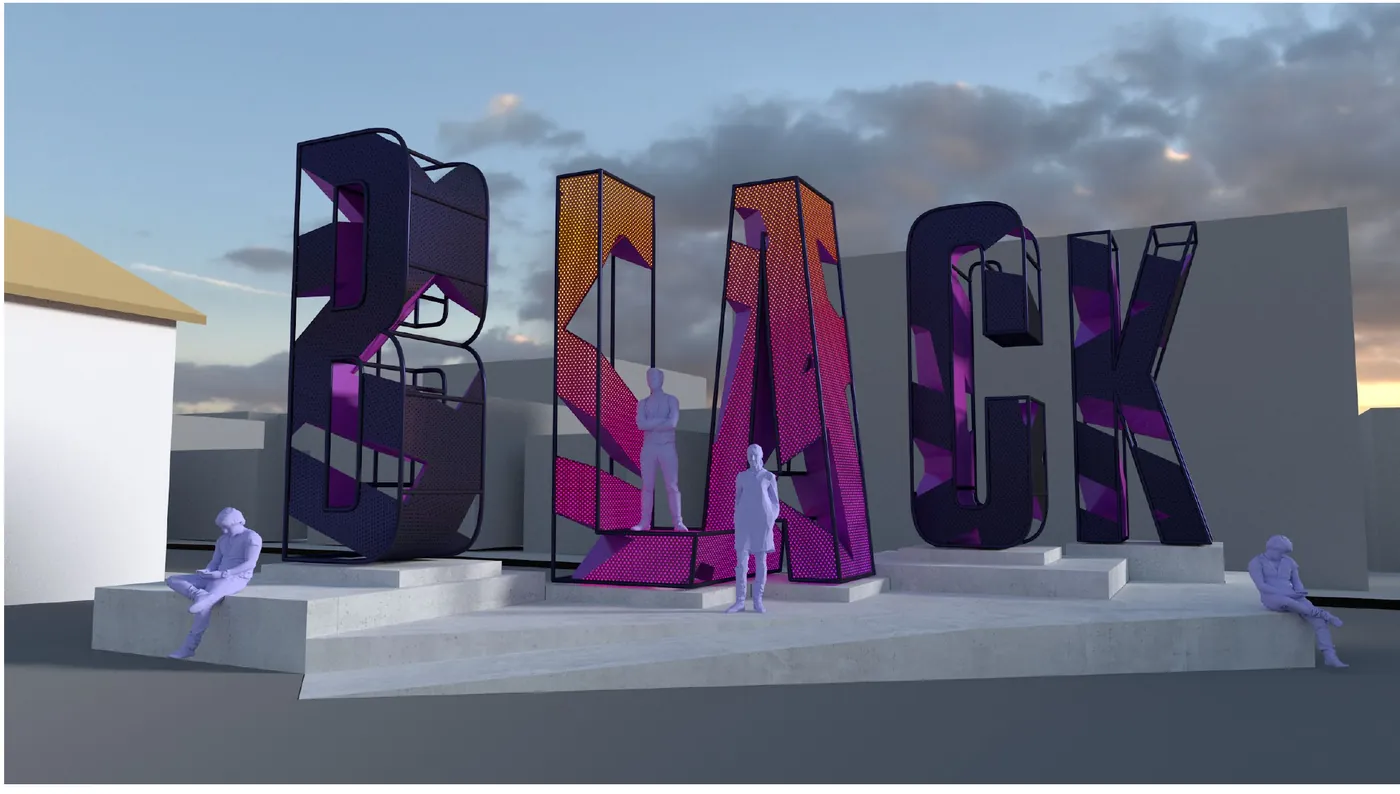
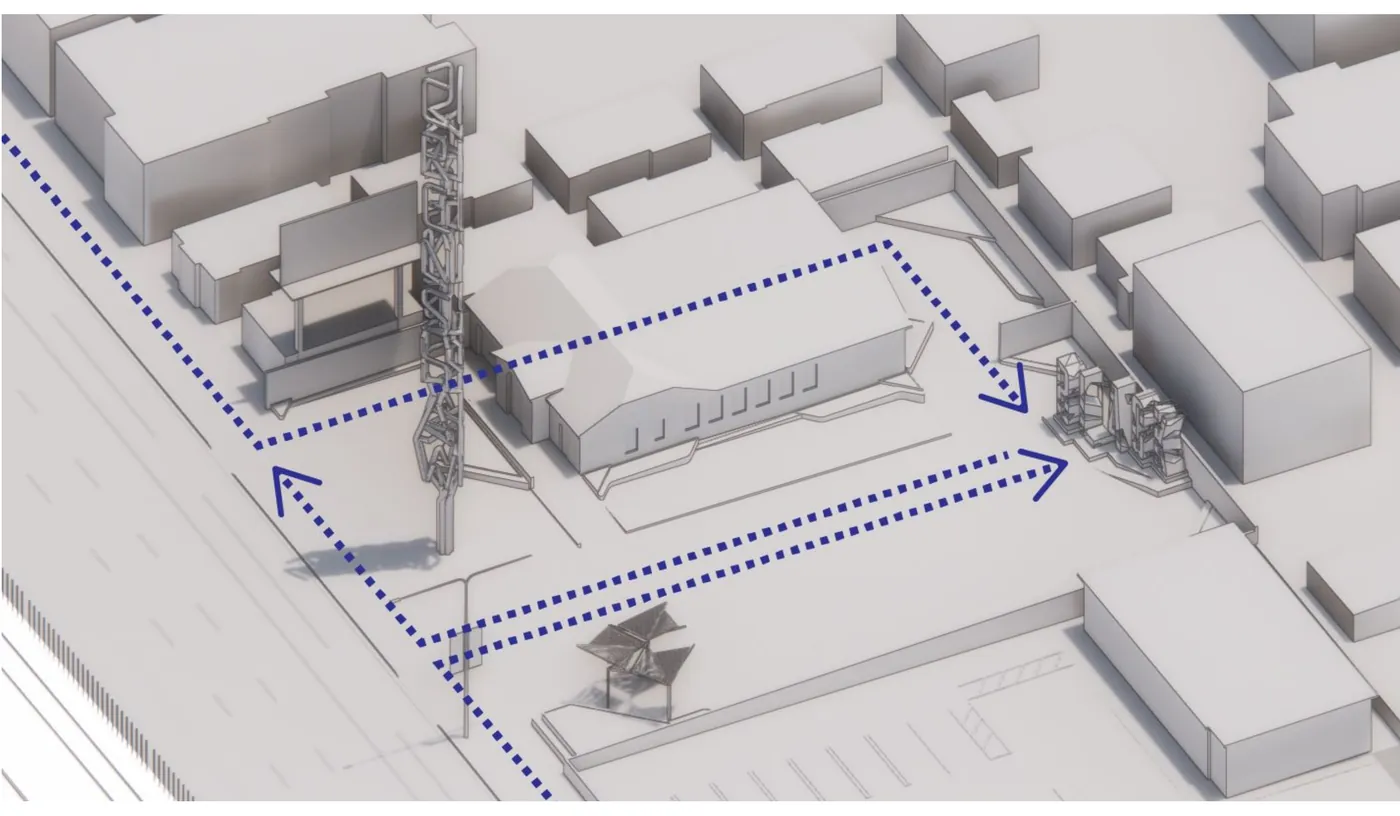
At the corridor’s southern end, near Hyde Park station, the old Firestation could become a cultural campus: visitor center, event hub, oral history studio, marketplace and home base for the trucks.
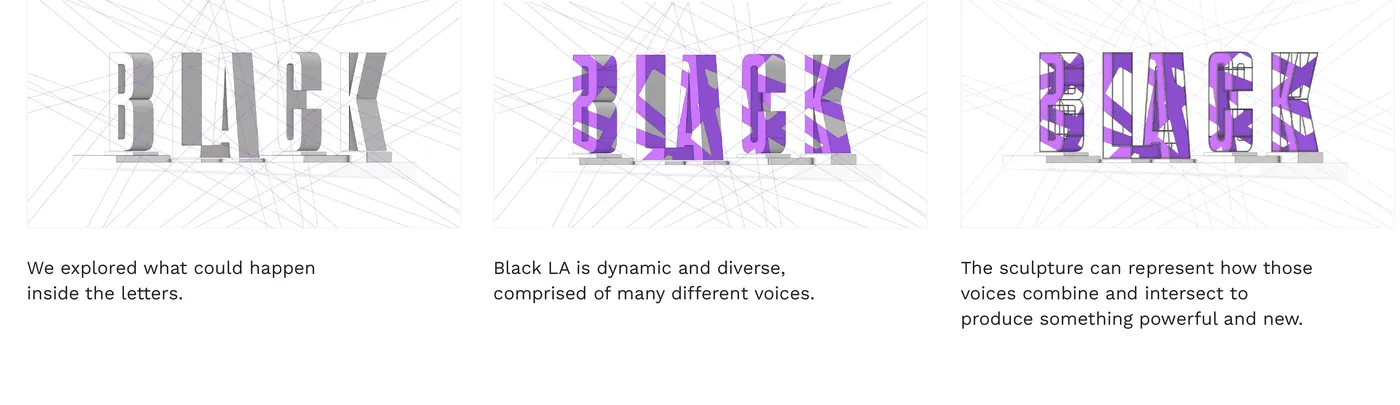
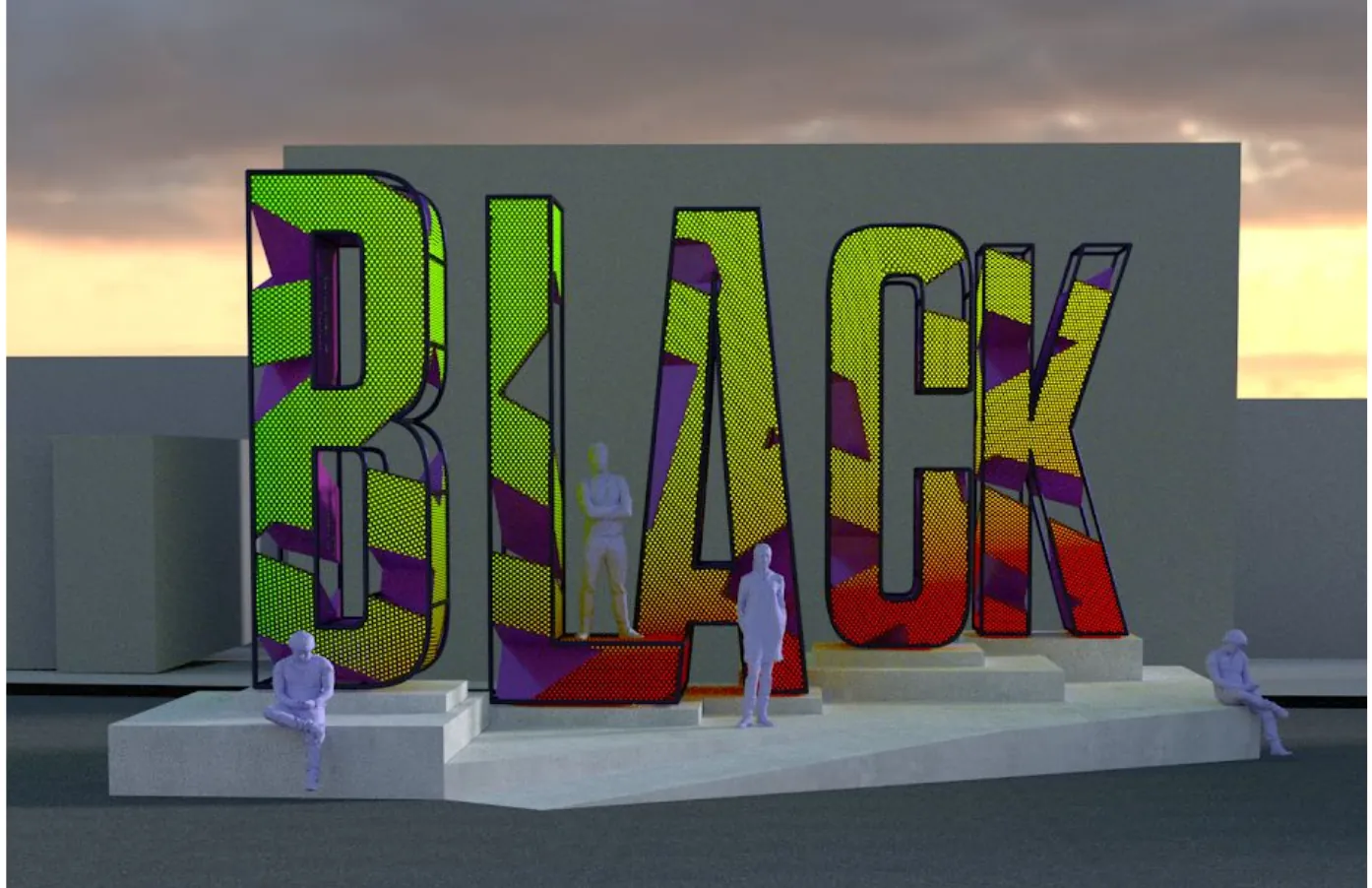
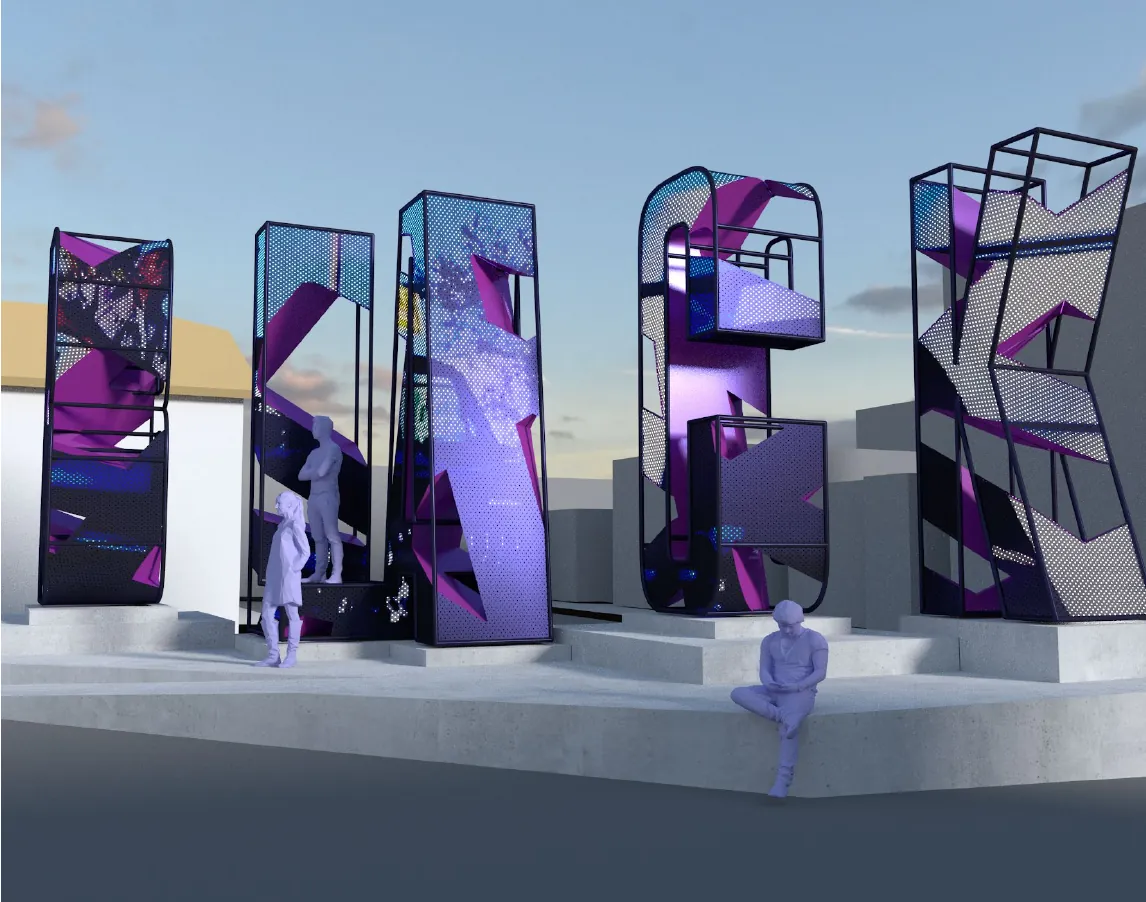
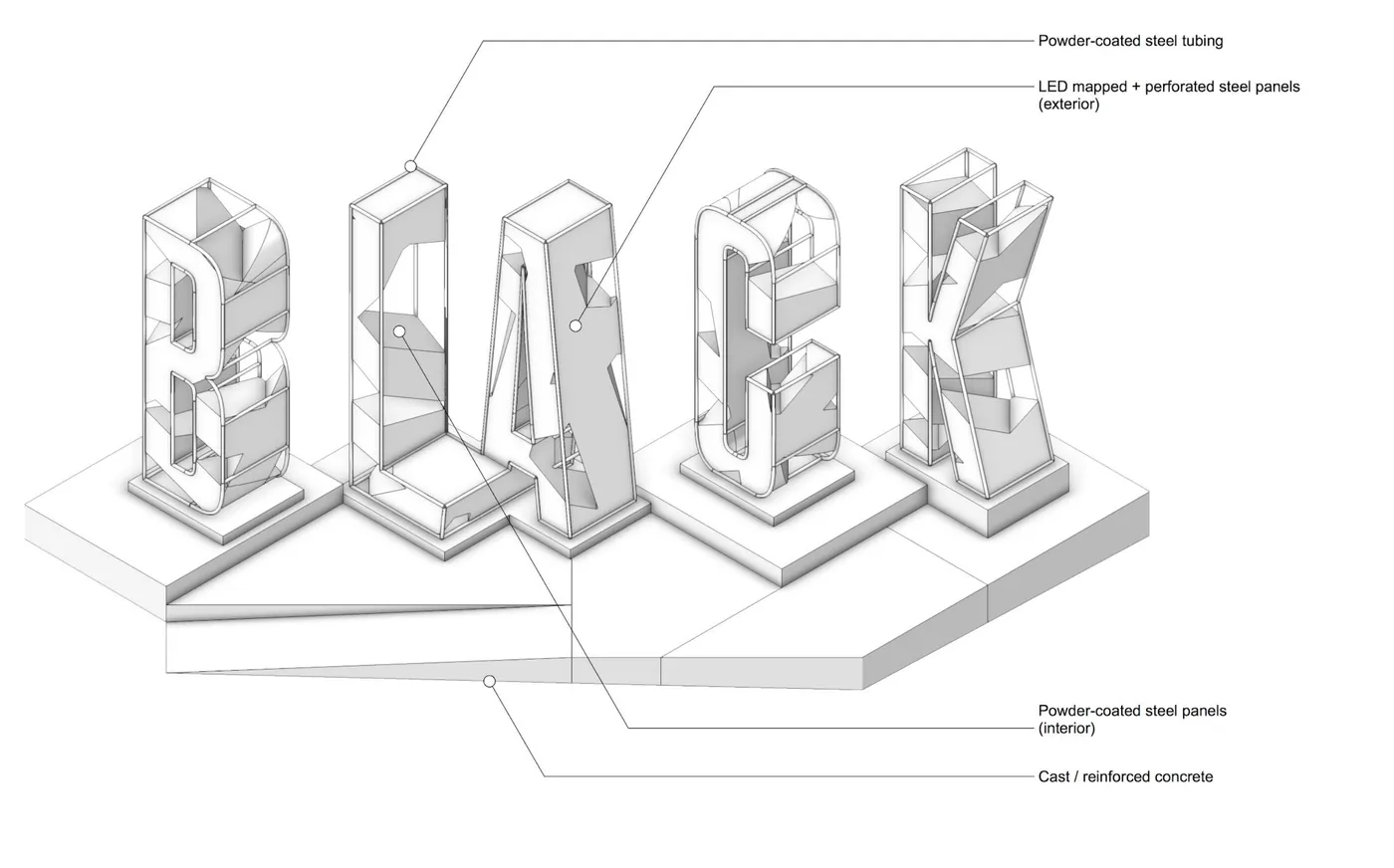
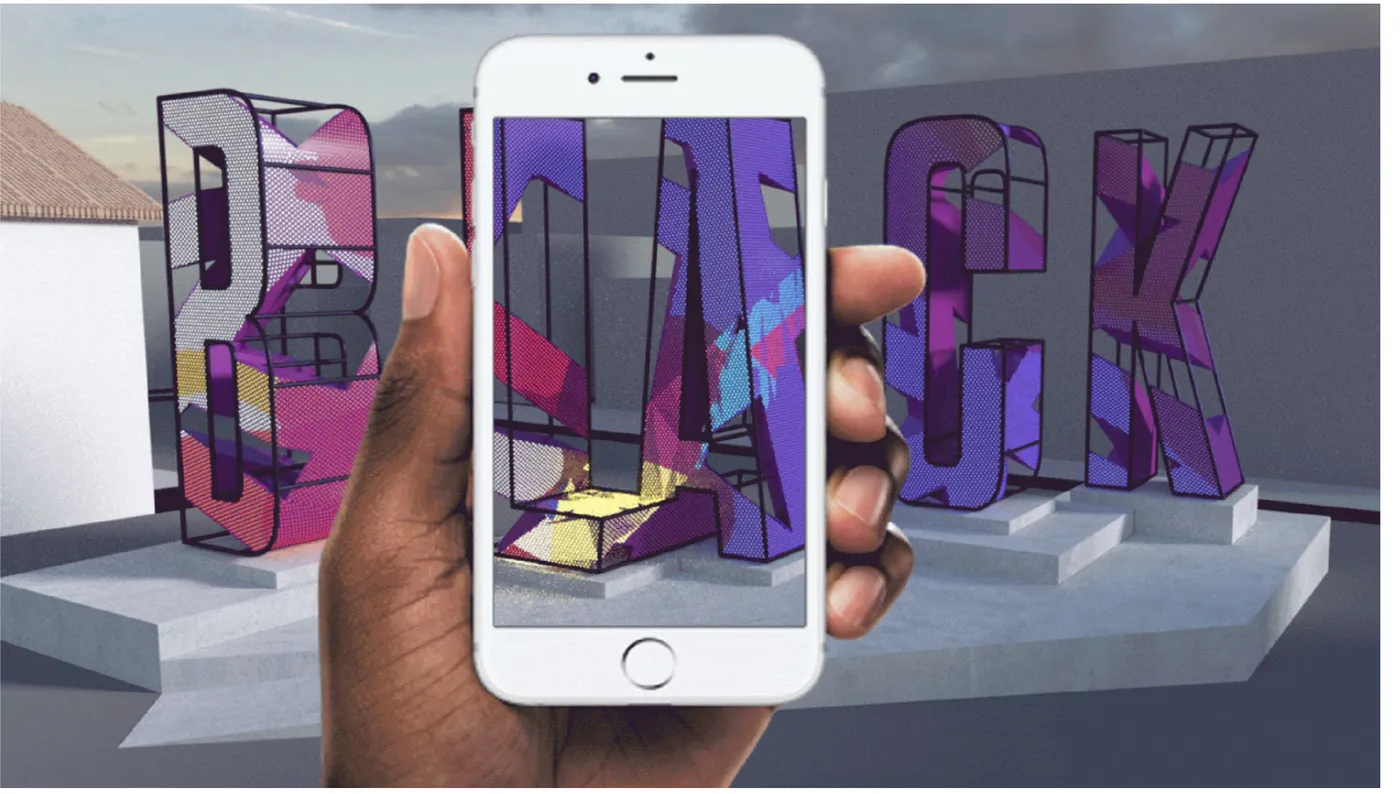
Workshop groups asked for iconic lighting and kinetic lettering that promotes pride. The answer was a sculpture with a double read. The letters LA sit in the middle of BLACK, and LED arrays mapped to perforated steel let the word change with every event. In the app, visitors design their own patterns and see them on the letters.
A museum that moves
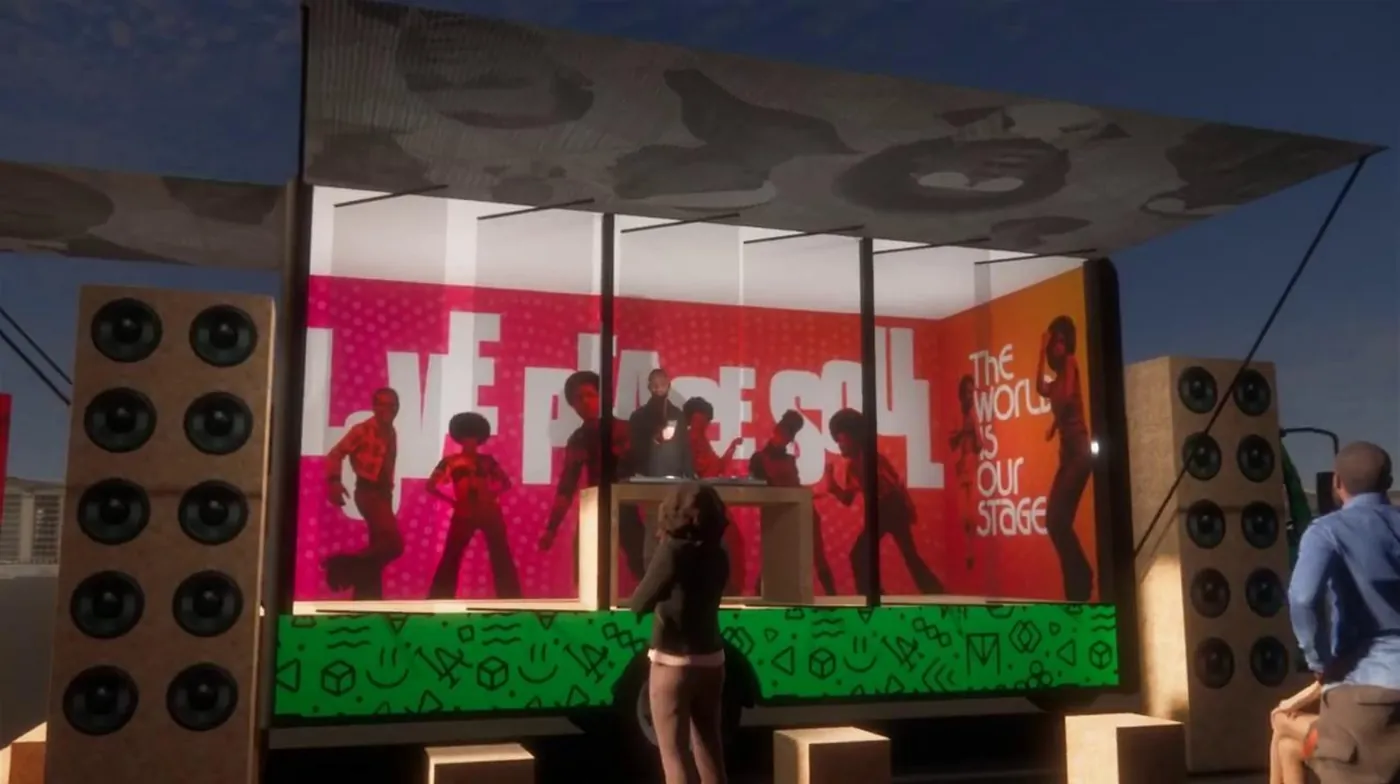
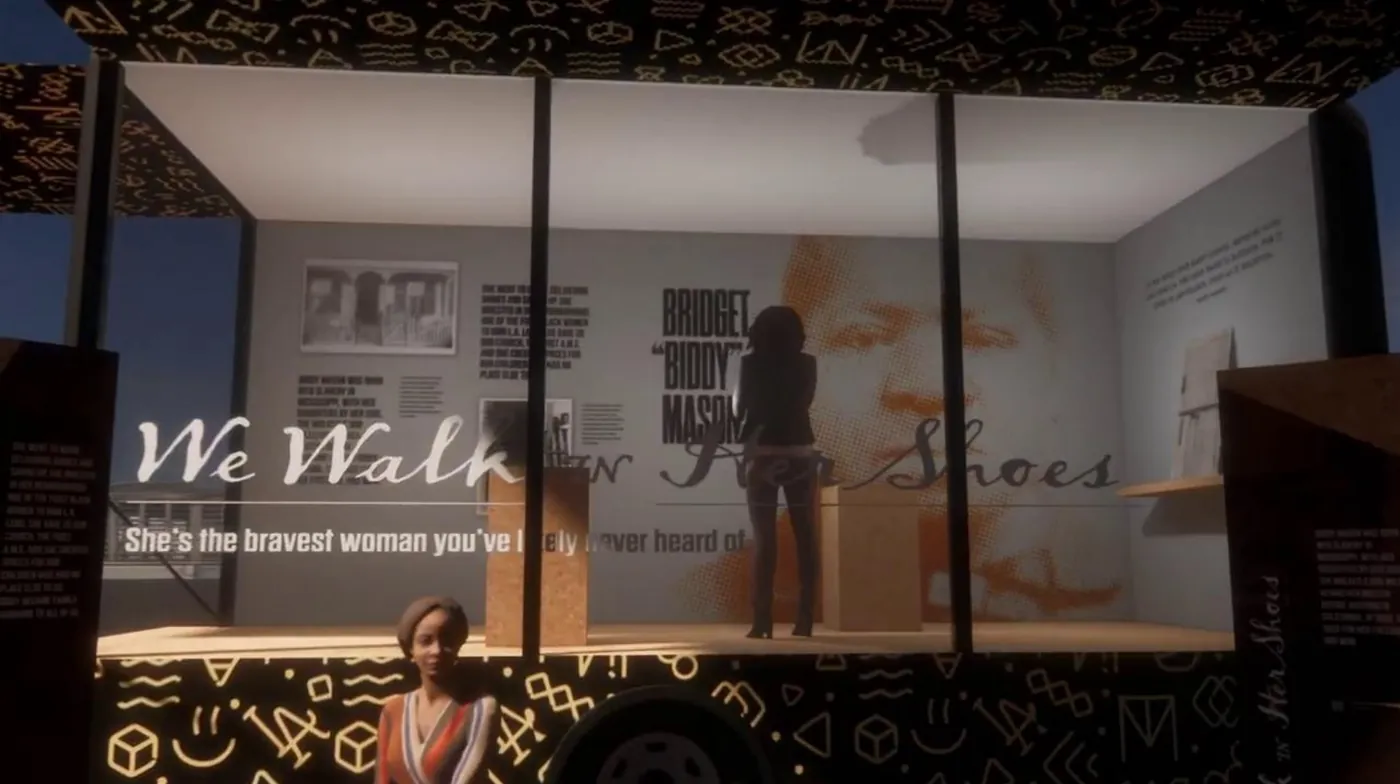
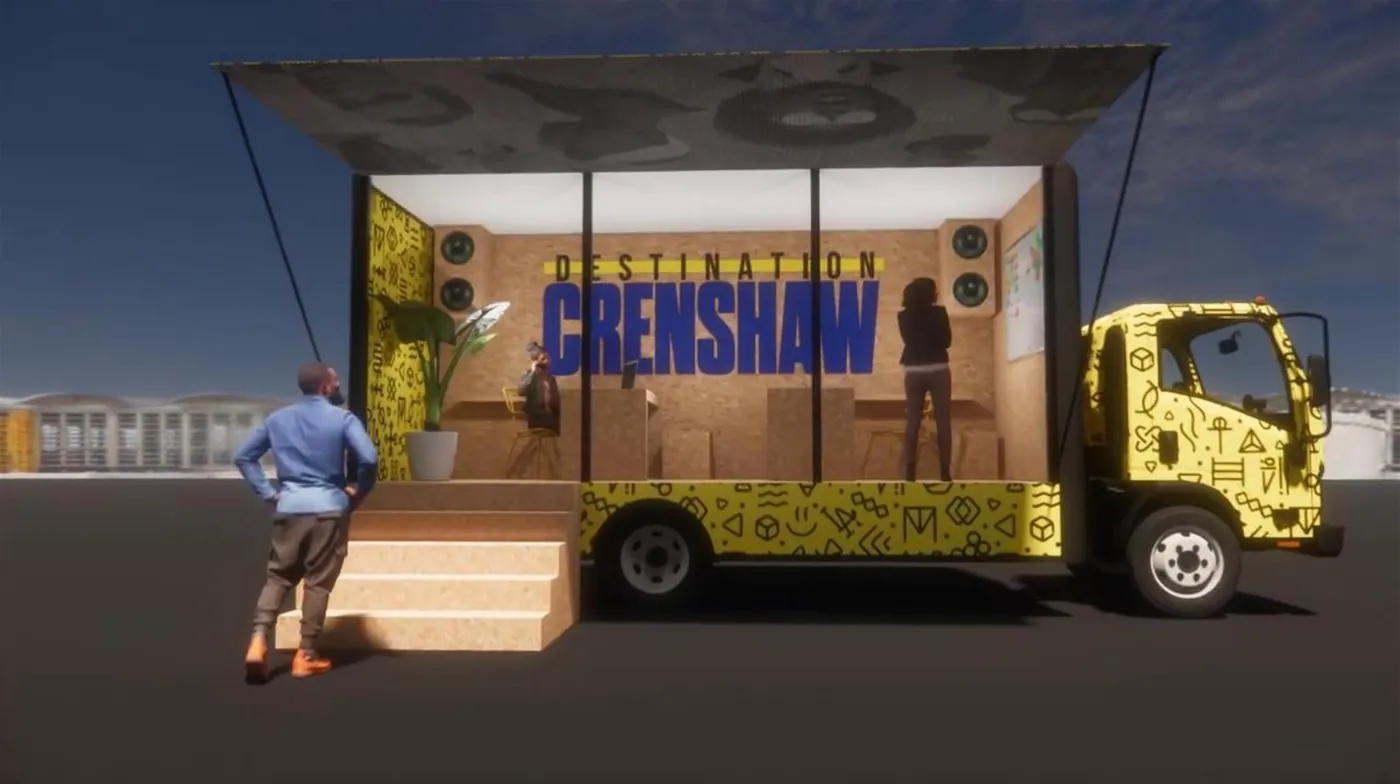
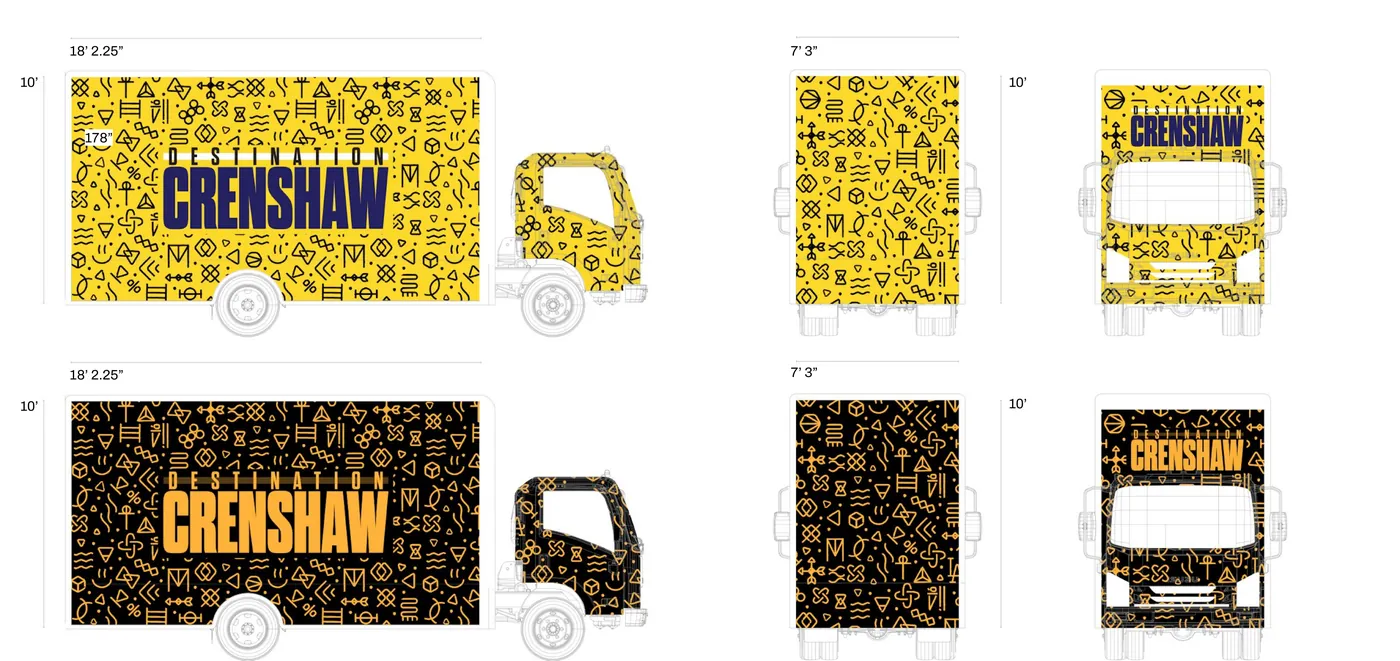
In a city built around the car, three branded trucks take the stories off the boulevard, to schools, churches and events across Los Angeles, and can respond to news within days.
The Digital Kit brings the party: a stage, a DJ, movie nights with a dash of Lincoln Motion Pictures, an oral history booth and a beat lab. The Micro Museum carries small rotating exhibitions. The third truck is a hub for services, books and voter drives. Every exterior doubles as a rotating canvas for local muralists.
A quilt for the mile
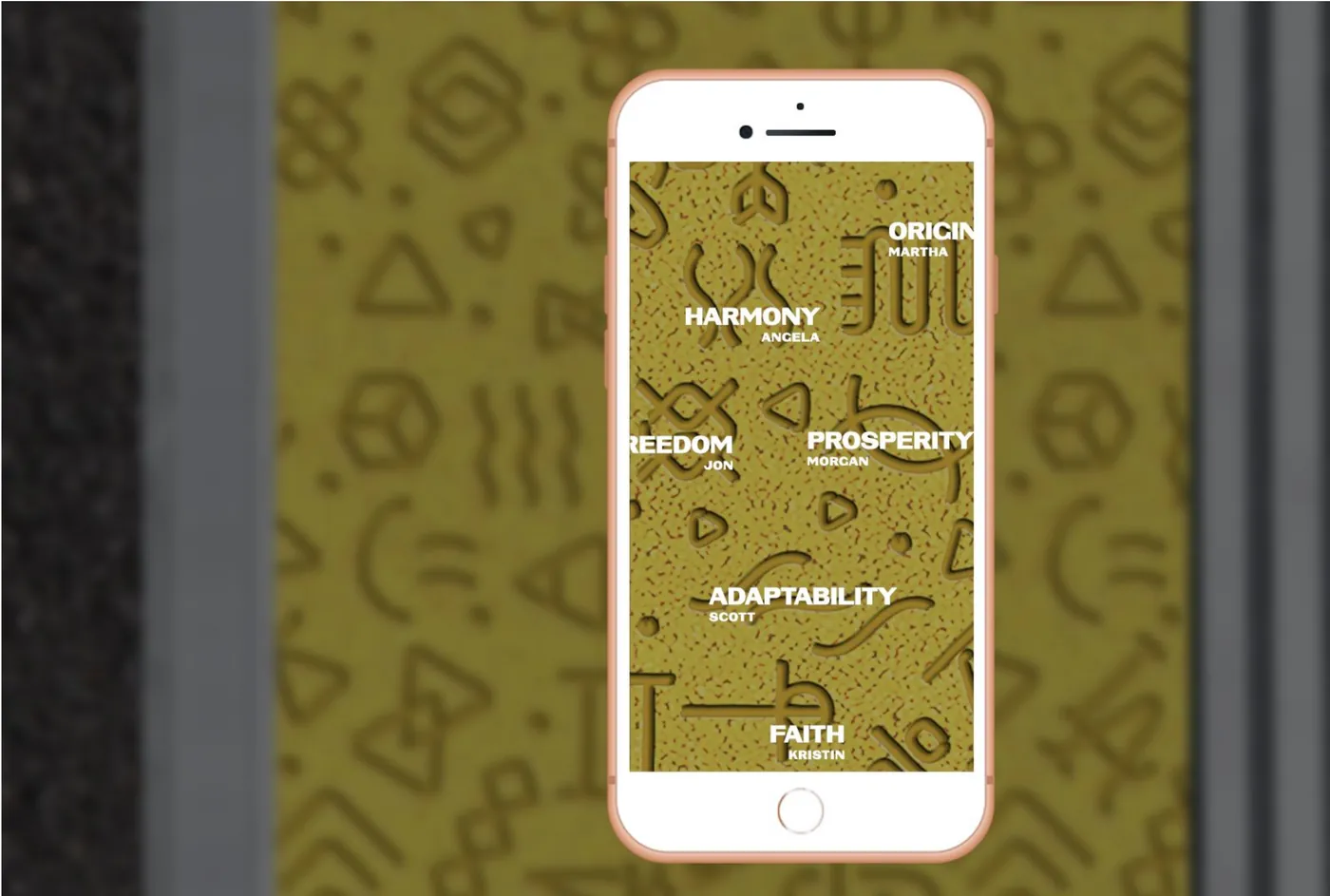
African American quilts recorded family milestones in pattern, often in code. That tradition lives on in Lauren Halsey’s work, in graffiti and in tattoos.
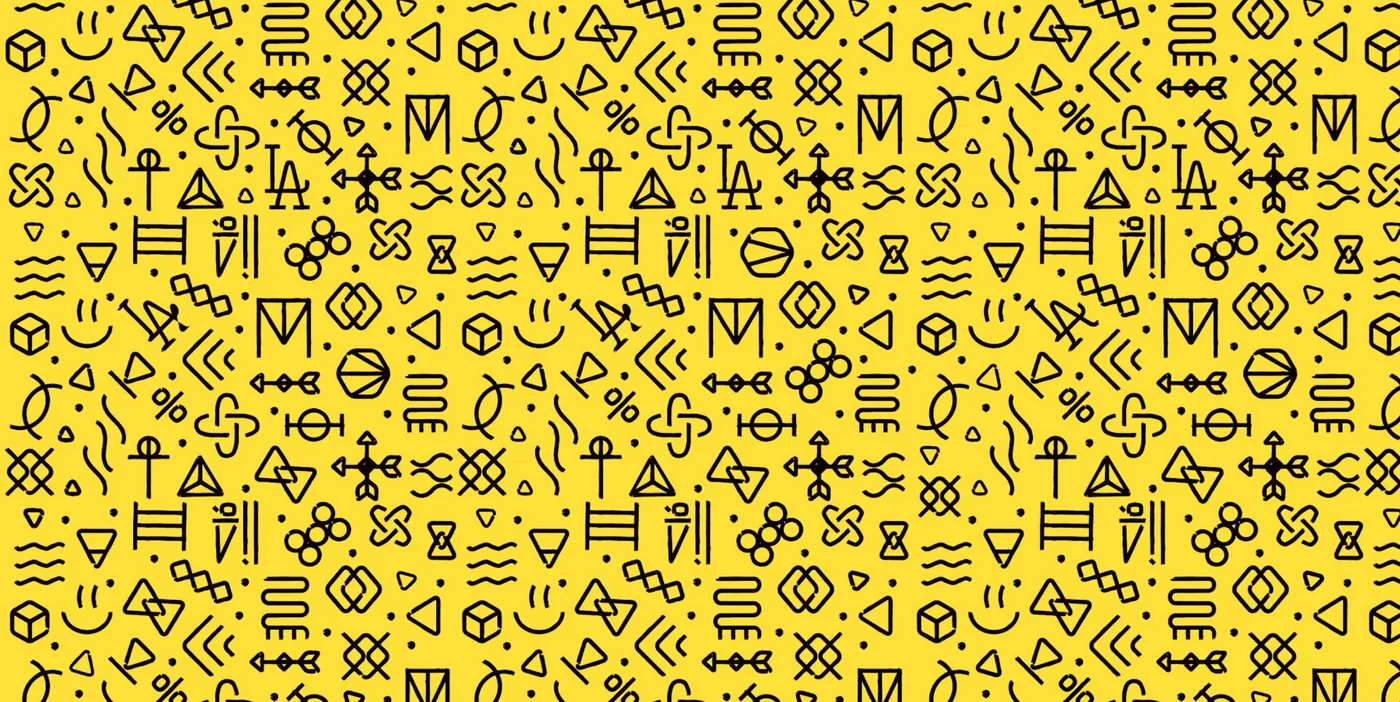
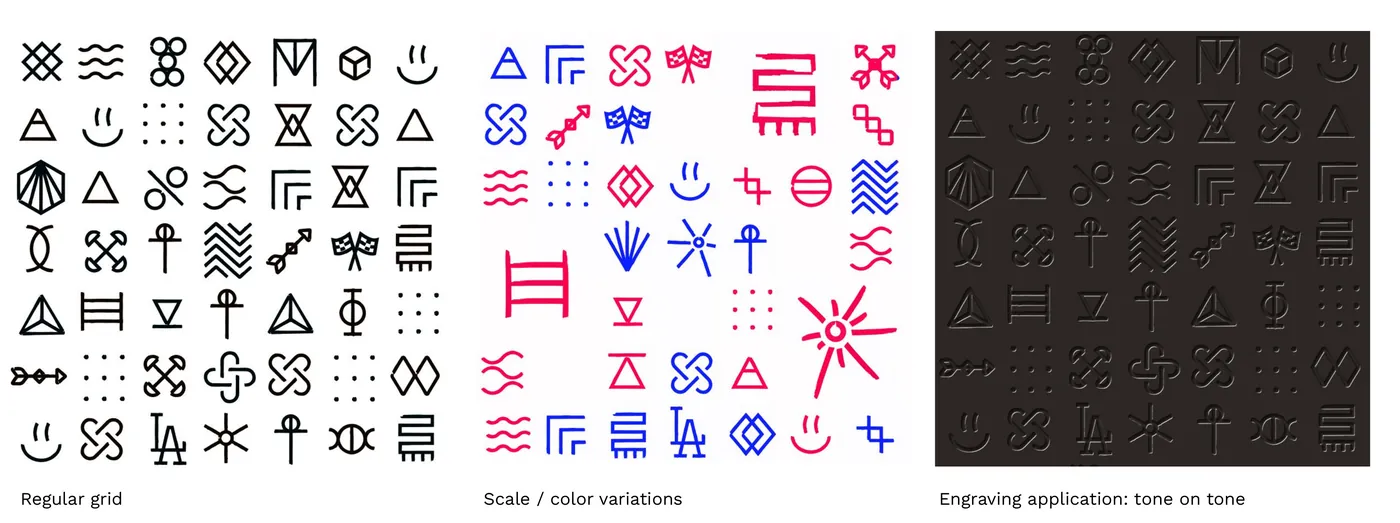
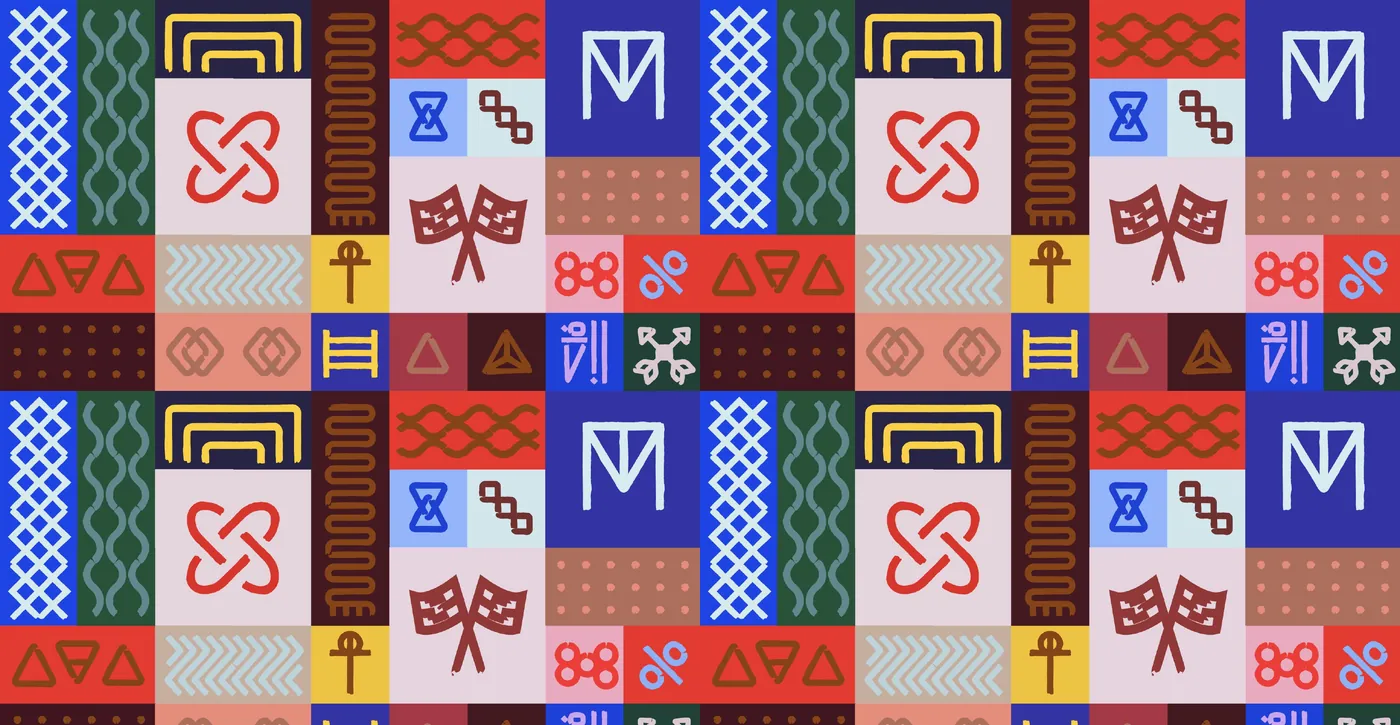
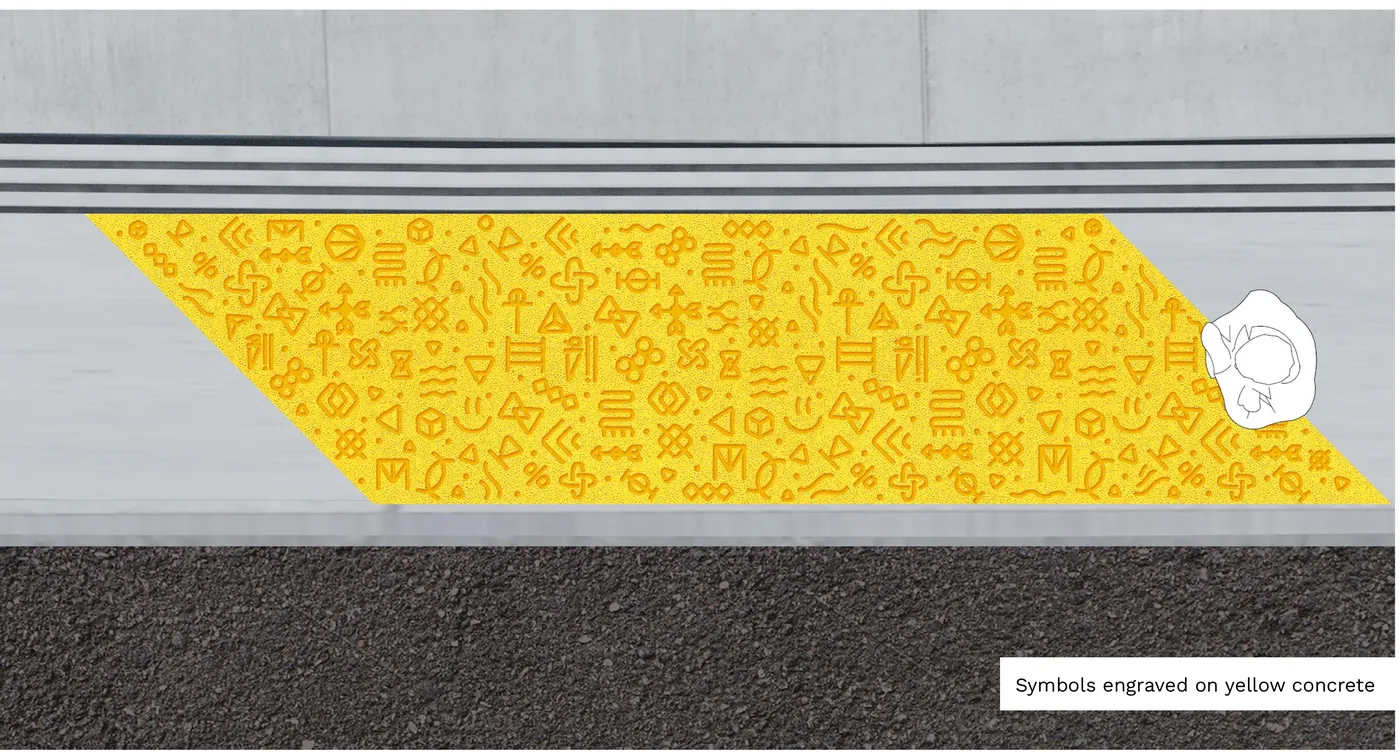
The community glyph project brings it to the street. Schools, churches and businesses contribute their own marks, which are moderated and combined into one pattern, engraved into pavers along the mile and tinted by node. On the mobile site, people draw their own glyphs and image recognition decodes the ones they find.
The layer on top
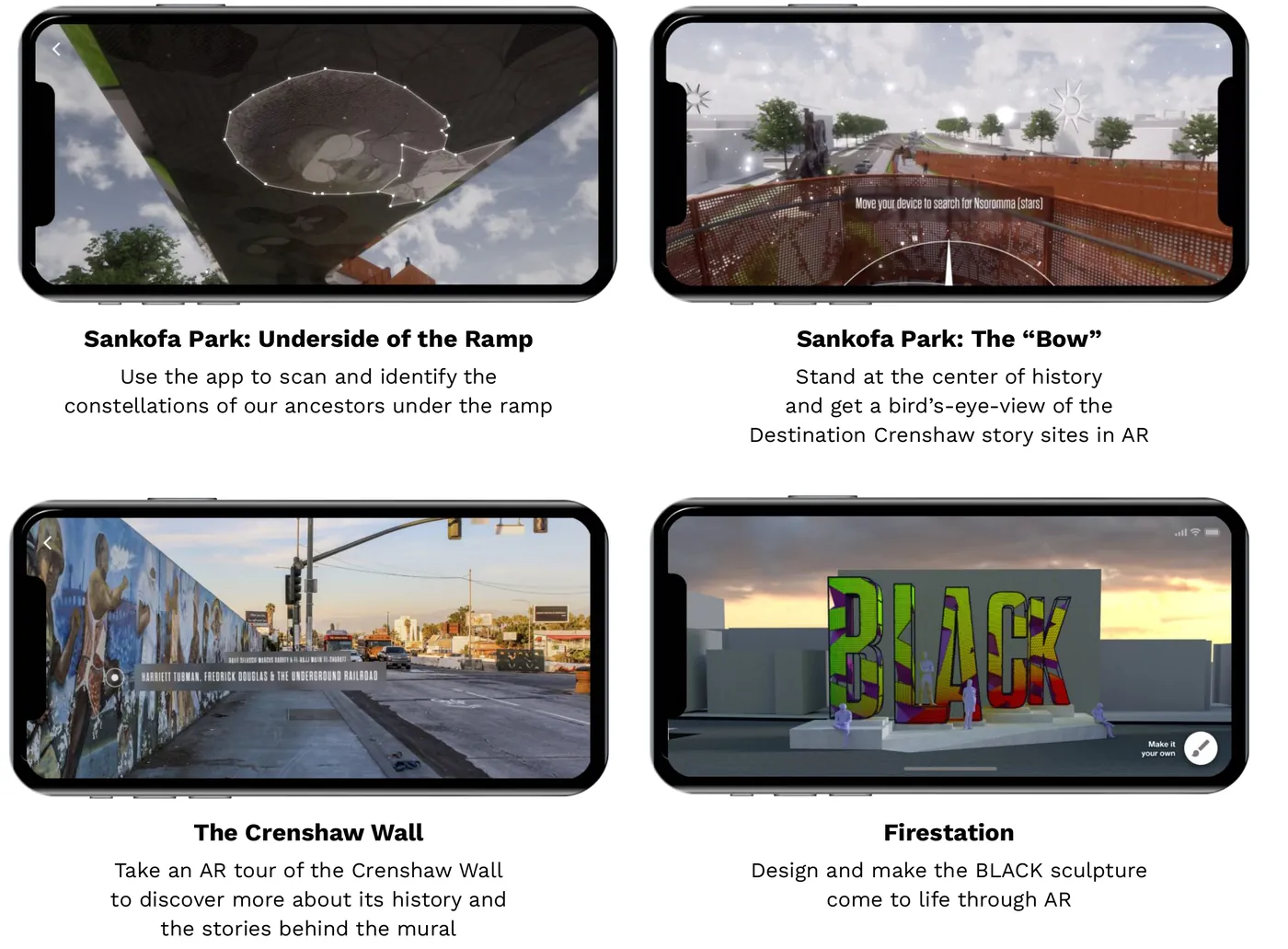
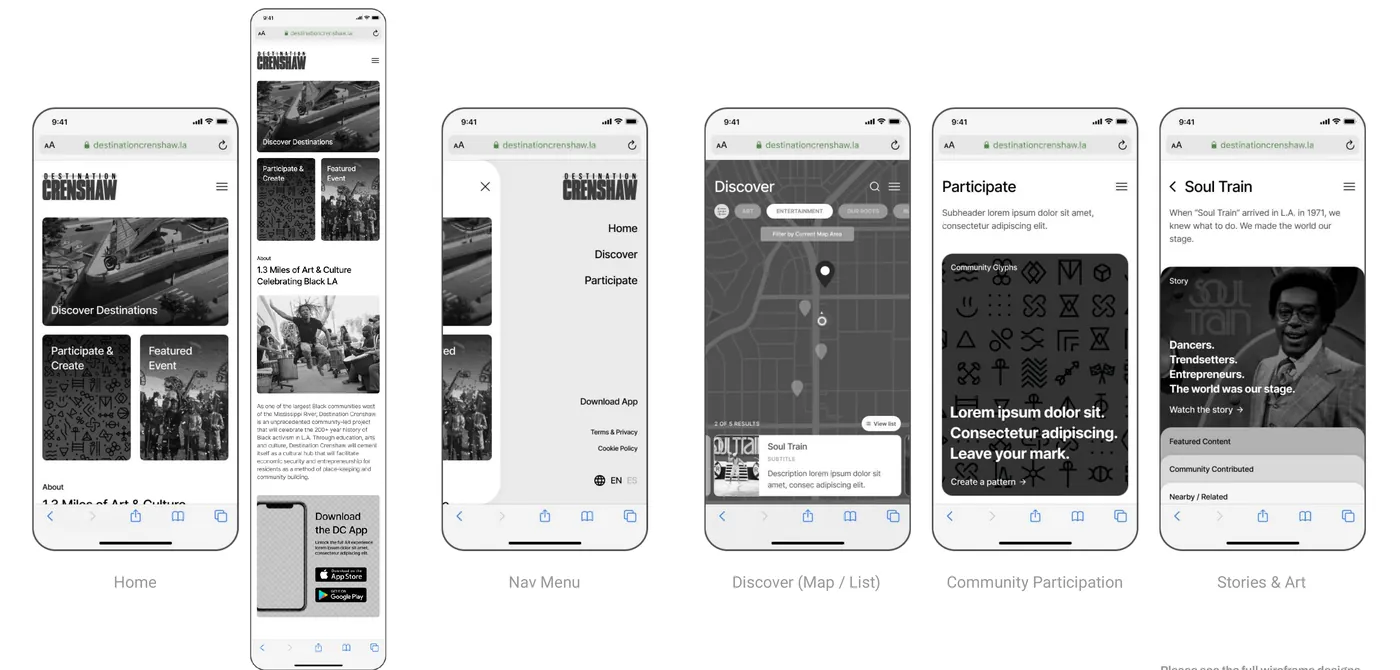
A mobile website anyone can open without downloading anything carries the full stories, the map and community participation. A native app adds augmented reality, saved places and return visits.
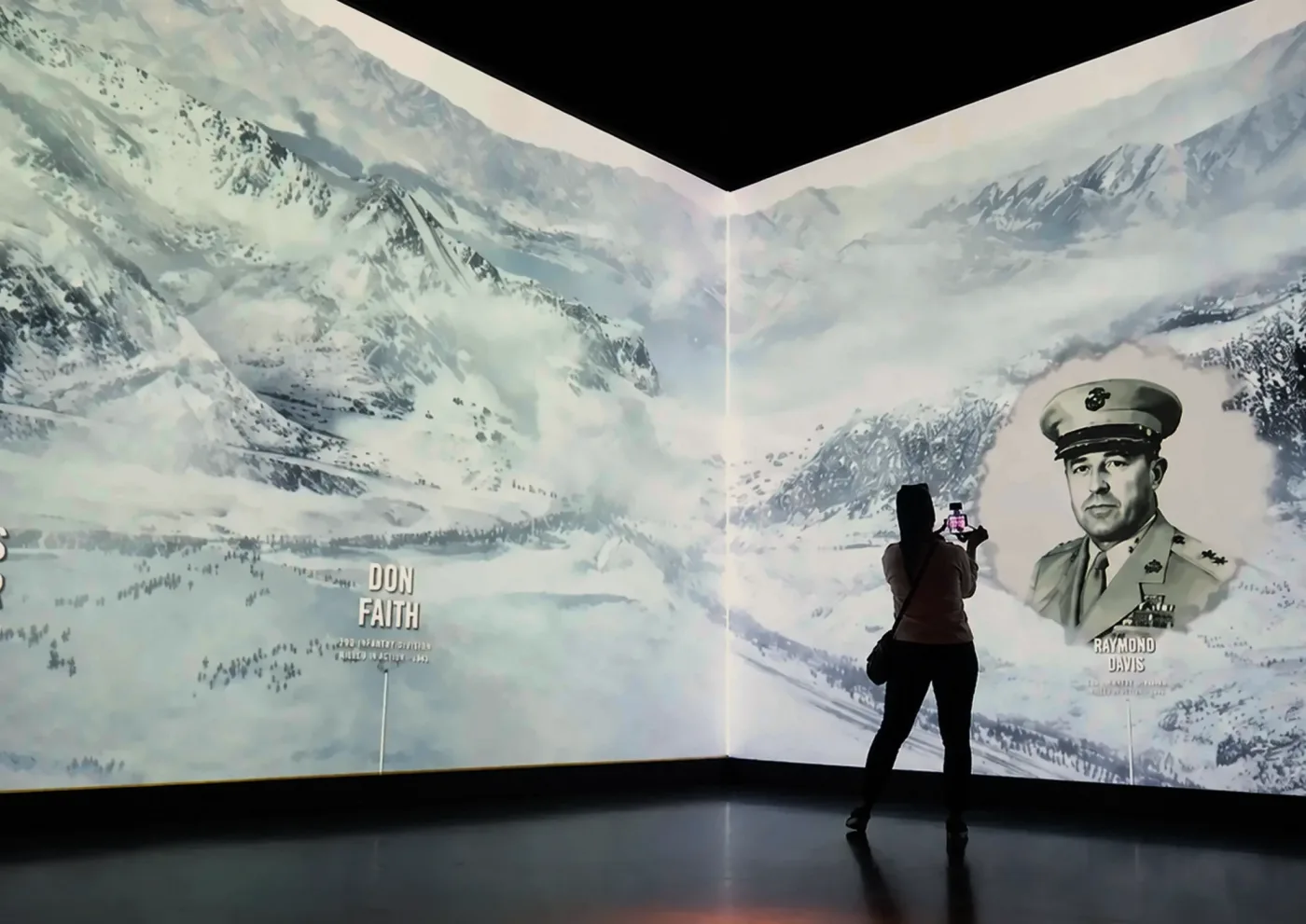
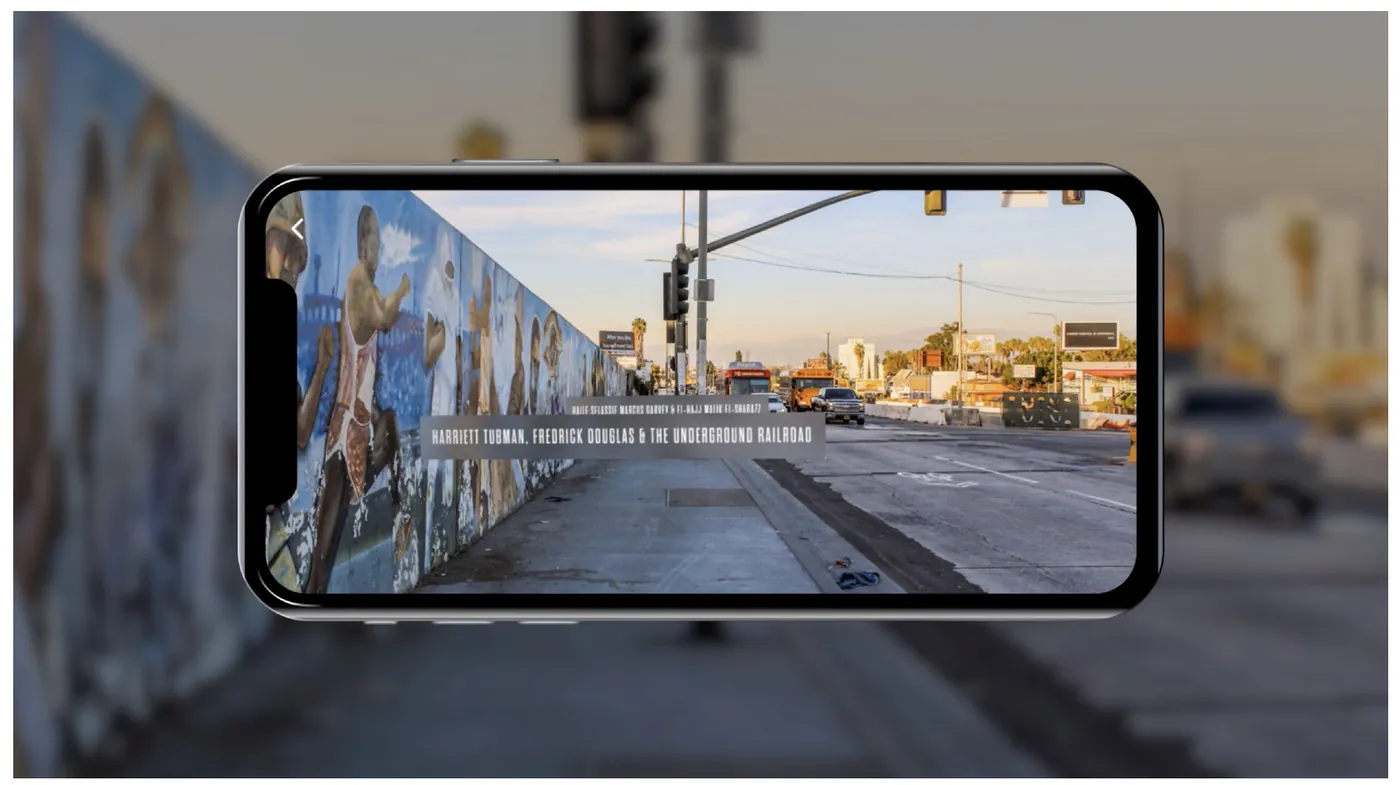
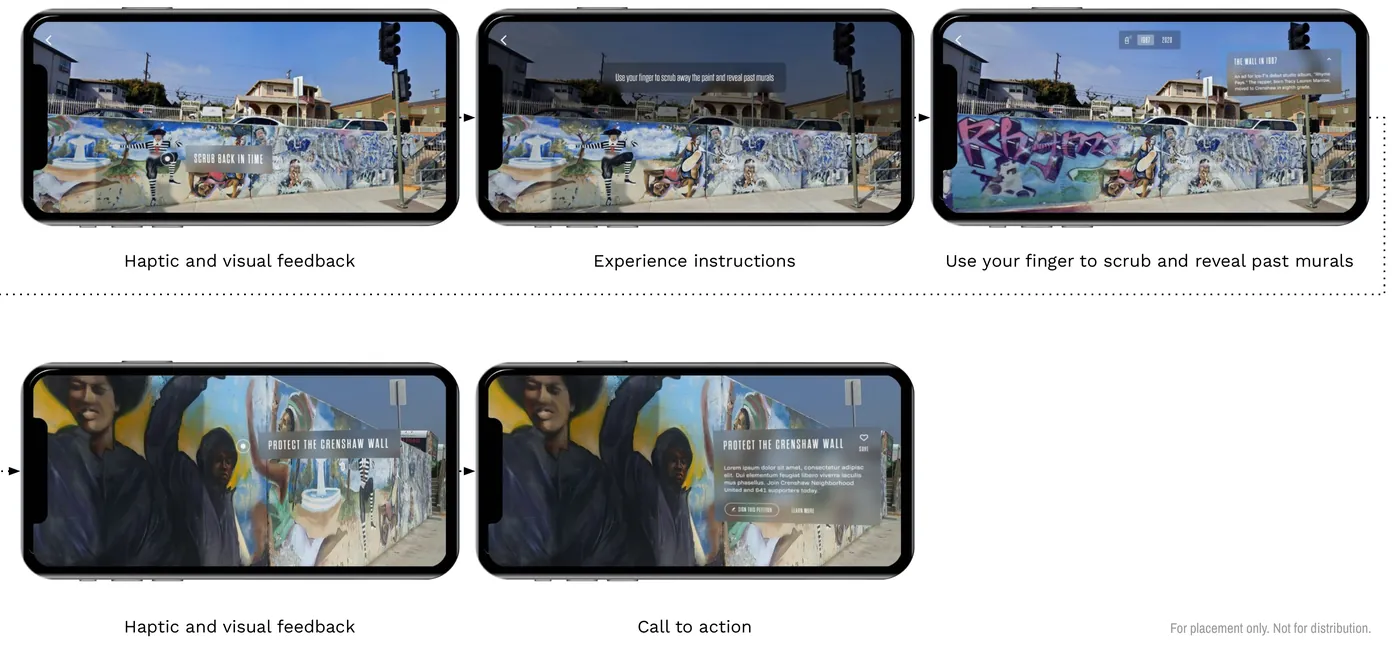
Each AR experience is tied to a place. Under the ramp, scan the constellations to meet the ancestors. At the bow, stand at the center of history. At the Wall, made in collaboration with the RTN Crew and Project West, scrub with a finger to reveal the murals painted there before. At the Firestation, design on the BLACK sculpture.
Holding a three-year project together
A three-year project with many partners needed one creative lead holding it together.
From ambition to something buildable
The final package turned the ambition into something vendors could price and build.
Ambition, made buildable
The final package documented every element at a level vendors could bid on, and the constraints were real. The ancestor ceiling had to fit within four and a half inches of depth and five pounds per square foot under a concrete ramp, with removable panels and LEDs driven from a control computer.
The AR was planned as a native app rather than on the web, for performance and for use with weak signal, with interaction patterns reused as templates so later updates would cost new content rather than new code. Street graphics were made removable so the mile could change without being rebuilt.
Built to keep changing
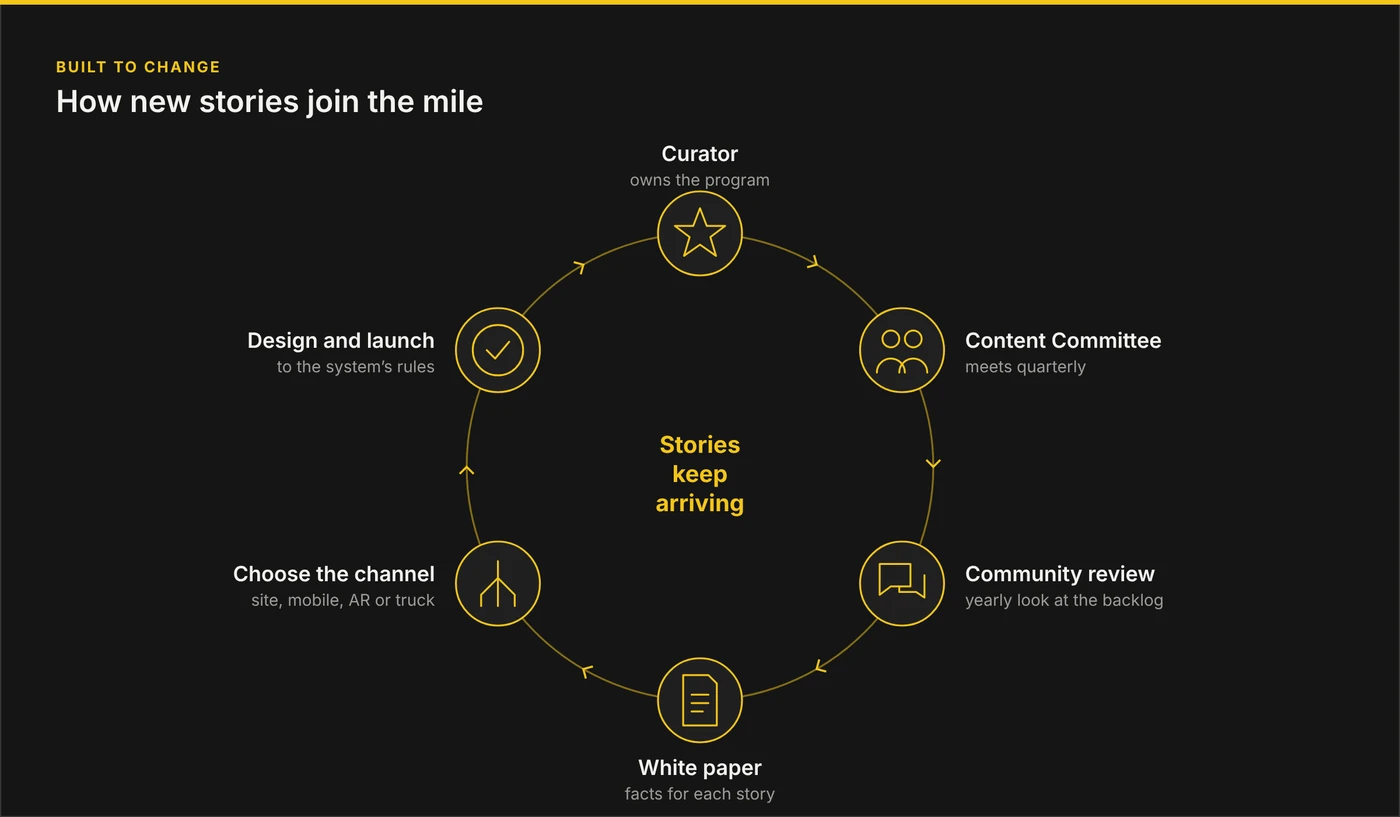
The launch stories are a beginning. The final package recommended a curator, a content committee meeting quarterly and a yearly community review of the story backlog. Each new story starts with a research white paper, then picks its channel: the street, the mobile site, AR or a truck.
Street panels are built for a three-to-four-year life, so the mile can be retold rather than rebuilt.
Three phases
The final design package set out delivery in three phases. First Sankofa Park and the story system, then the glyphs, the Firestation, the trucks and AR, then the full digital rollout.
It came with an artist call for local illustrators and photographers, with residents of Council District 8 encouraged to apply, and with budget for union and minority-owned installers.